The village of Panjrud sits quietly among low hills and fields, a place where time seems to move at its own unhurried pace. On its outskirts stands the mausoleum of Rudaki, a modest structure that holds the remains of a man often called the father of Persian poetry. More than a thousand years have passed since his death, yet his words still resonate in the literary traditions of Central Asia and beyond. The mausoleum itself is small, but its significance stretches far beyond its physical size—it is a place where history, culture, and memory converge.
Built in the mid-20th century, the mausoleum replaced an older structure that once marked this site. Its architecture reflects traditional Tajik design, with a simple yet elegant dome, an arched entrance, and a slender minaret reaching toward the sky. Inside, the space feels open and serene, with high ceilings and soft light filtering through narrow windows. The poet’s grave lies beneath a marble slab, while the walls bear carved verses from his works. There is no grand ornamentation here, only a quiet dignity that suits the man it honors.
Rudaki was born in this region in the late 9th century, though the exact year remains uncertain. What is known is that his life and work transformed Persian poetry. Before him, verse in Farsi existed, but it was Rudaki who shaped it into the form that would later be recognized as classical. He served at the court of the Samanid rulers in Bukhara, where his talent earned him both patronage and fame. His poetry celebrated love, nature, and wisdom, though only fragments of his vast output survive today. Yet even these remnants reveal why his name endures—his words carry a timeless quality, as if they were written not for his own era, but for all time.
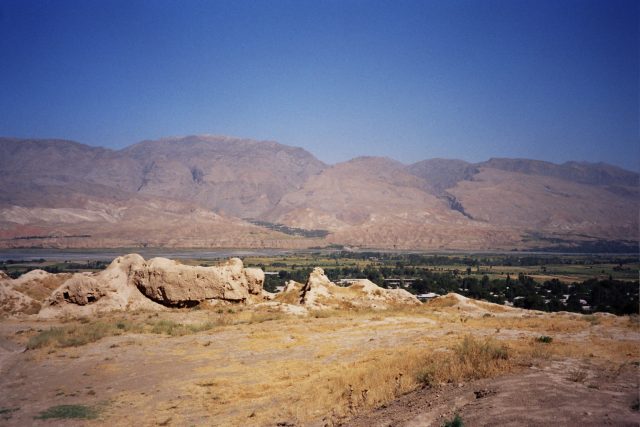
The mausoleum is more than a memorial; it is a place of quiet reflection. Visitors come not just to see, but to feel the weight of history in the air. Locals, too, make pilgrimages here, viewing Rudaki as a symbol of national pride. Around the mausoleum, a small park offers benches where one can sit and gaze at the same hills that may have inspired the poet’s verses. The landscape has changed little over the centuries—fields stretch into the distance, and the mountains stand as silent witnesses to the passage of time.
Occasionally, the mausoleum becomes a venue for cultural events. Poetry readings, traditional music performances, and gatherings of scholars take place here, keeping Rudaki’s legacy alive. For Tajikistan, he is not merely a figure from the past but a living part of its cultural identity. Even those who know little of poetry often leave with a sense of having touched something deeper than stone and mortar.
Panjrud itself is a typical Tajik village, with low houses, fruit gardens, and irrigation channels lined with mulberry trees. Life here moves at a slower rhythm, and the hospitality of the locals makes a visit feel personal. If you’re fortunate, you might hear stories about Rudaki passed down through generations or taste dishes prepared according to old recipes. The village, like the mausoleum, feels untouched by the rush of the modern world.
This is not a place to hurry through. The mausoleum invites lingering, allowing the atmosphere to settle around you. The air carries the scent of wild herbs, and the distant mountains frame the scene as they have for centuries. It’s easy to imagine Rudaki walking these same paths, drawing inspiration from the land around him. There are no crowds here, no tourist traps—just the quiet presence of history.
For those who seek more than just a landmark, the mausoleum offers something rare: a connection to the past that feels tangible. Standing by the poet’s grave, it becomes clear why his words still matter. They were written in a time when the world was different, yet they speak to universal truths—love, longing, the beauty of the natural world. In this quiet corner of Tajikistan, those truths feel closer than ever.