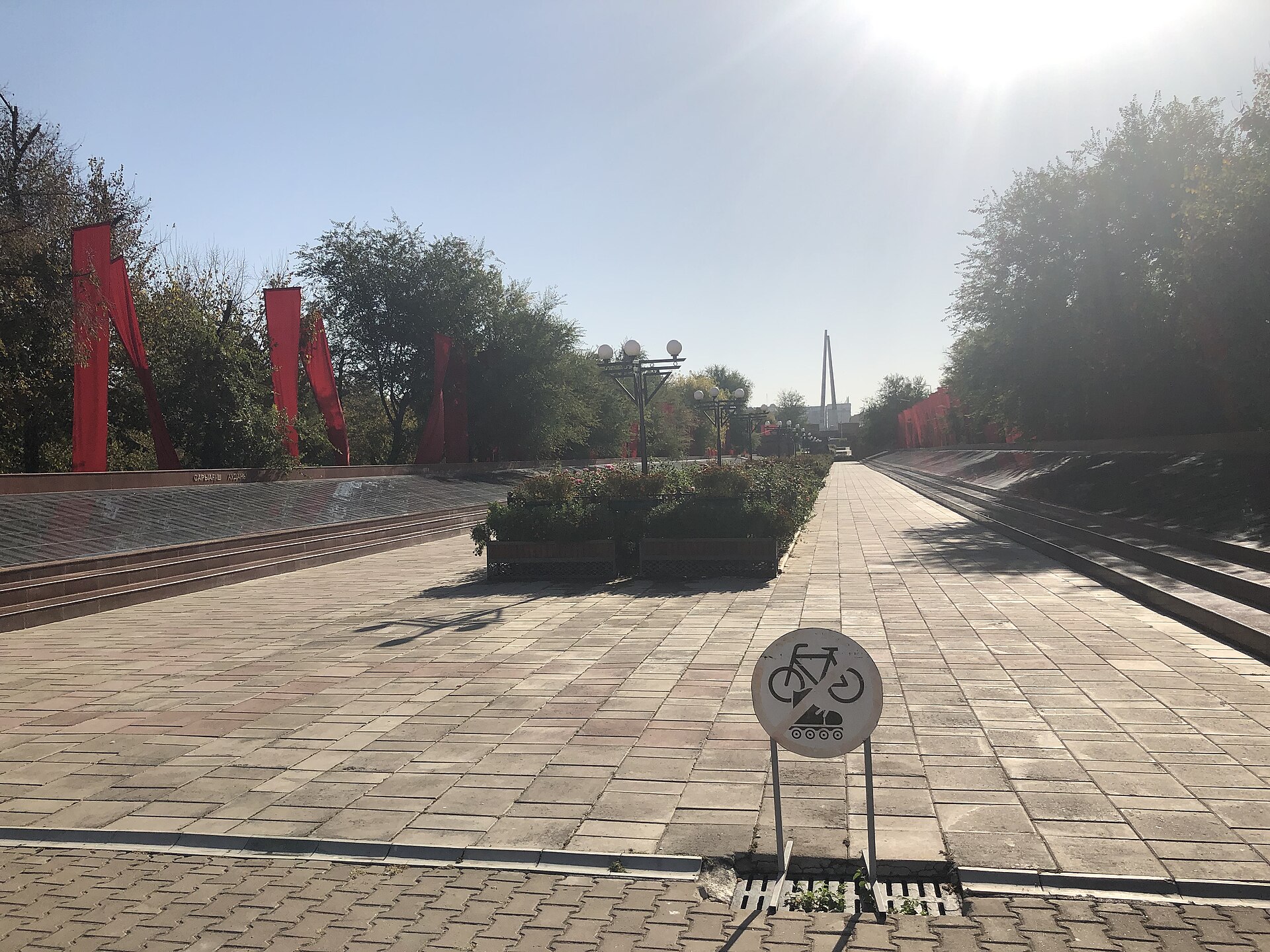
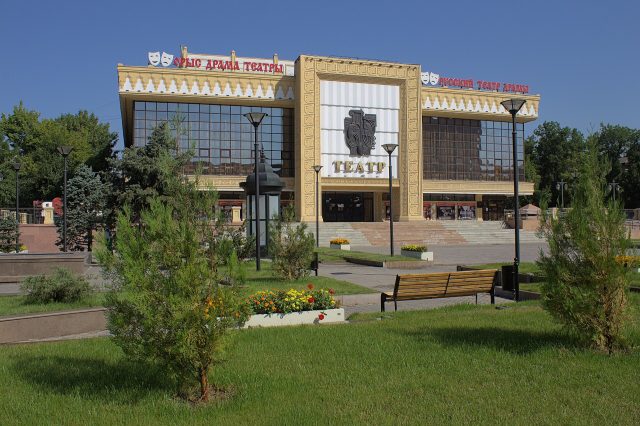
Abai Park in Shymkent is one of those rare urban spaces where the city’s usual hustle fades into the background, replaced by quiet and greenery. There are no flashy amusement rides or crowds of tourists here—just wide, tree-lined avenues, shaded benches, and the kind of unhurried atmosphere that invites you to sit and watch the world go by. It feels more like a large public garden than a traditional park, and that’s precisely what makes it special. Locals come to escape the heat, take their children for a stroll, or spread out a picnic on the grass, while visitors get a glimpse of the city’s relaxed, everyday rhythm.
The park is named after Abai Kunanbayev, the revered Kazakh poet, philosopher, and educator whose legacy is woven into the nation’s identity. For many in Kazakhstan, Abai isn’t just a historical figure but a symbol of cultural and spiritual heritage. A statue of him sits at the heart of the park, often adorned with flowers, especially on days commemorating his life. The bronze figure depicts Abai seated with a book in hand, as if momentarily distracted from reading to glance at the people passing by. Surrounding the statue are flowerbeds that burst into color in warmer months, creating a serene contrast with the statue’s patina.
The park’s history is closely tied to Shymkent’s growth as a city. It was established during the Soviet era when urban expansion made green spaces a priority. Many of the trees planted back then still stand along the main avenues, their branches forming a canopy over the paths. Over the years, the park evolved from a simple recreational area into a cultural hub, hosting festivals, concerts, and community gatherings. In the evenings, a brass band would sometimes play, filling the air with music. While those days are now memories, the park still carries the spirit of a time when life moved at a slower pace and people gathered more often.
The park’s design is understated and practical, with no grand architectural flourishes. The main avenue leads from the entrance straight to Abai’s statue, flanked by rows of tall poplars and maples. Benches line the path, and small pavilions offer shelter from the sun or rain. At the center of the park lies a pond with a fountain that comes alive in summer, its streams of water drawing children who try to dash through them. The pond is shallow but picturesque, with willows dipping their branches into the water and ducks gliding across the surface. The ducks have become a familiar sight, often gathering near visitors in hopes of a snack.
A summer stage near the pond serves as a venue for local performances, where traditional Kazakh music, dance, and live acts take center stage. On weekends, it becomes a gathering spot for families—parents sit on benches while children play nearby. Occasionally, the stage hosts fairs or exhibitions selling handmade crafts, local sweets, and fresh produce. These events add a lively dimension to the park, turning it into more than just a green space but a place where the community comes together.
Abai Park is also a small oasis of nature in the middle of the city. Squirrels dart between the trees, unafraid of approaching visitors in search of treats, while birdsong often drowns out the distant hum of traffic. In spring, the park is especially beautiful, with trees donning fresh green leaves and tulips—Kazakhstan’s national flower—blooming in vibrant clusters. Summer brings welcome shade, and autumn transforms the foliage into a tapestry of gold and crimson. Even in winter, the park has its charm, with frost dusting the branches and the pond freezing over, sometimes doubling as an impromptu skating rink.
For Shymkent’s residents, Abai Park is more than just a place to walk—it’s a part of daily life, a space where generations intersect. Young couples stroll along the paths, children chase each other in games, and elderly locals feed the pigeons or sit quietly on benches, watching the world go by. The park has witnessed countless personal stories: first dates, birthday celebrations, and moments of solitude. Its greatest value lies in its simplicity—it doesn’t try to be extraordinary but simply exists, offering people a place to pause and feel connected to something larger than themselves.
Shymkent is a city with a rich history, and Abai Park reflects its character: welcoming, unpretentious, and a little old-fashioned. There are no extravagant fountains or exotic plants here, just an authenticity that appeals to those tired of polished tourist attractions. The park asks nothing of its visitors except respect for the space. Whether you come with a book, friends, or alone, there’s something here for everyone. In the end, it’s places like this that give a city its soul, reminding us that beauty often lies in the simplest things.