Brasília’s City Park is one of those rare places where nature and urban life don’t just coexist—they complement each other so seamlessly that the transition between them feels almost imperceptible. Stretching across more than four hundred hectares in the heart of the capital, it forms a vast green expanse amid the city’s rigid geometric blocks. Unlike the grand monuments and government buildings that draw most visitors, this park remains quietly overlooked, yet it offers something far more intimate: a chance to see how Brasília breathes beyond its carefully planned facades.
The park was conceived in 1978 as part of the city’s broader vision for sustainability. Brasília was built to embody modernity, a city where functionality and harmony with the environment were not just ideals but necessities. The park was designed as the city’s lungs—a space where residents could escape the concrete and glass, even if just for a moment. Over the decades, it has grown into one of the largest urban parks in the world, a testament to the belief that even in a meticulously designed capital, nature should have its place.
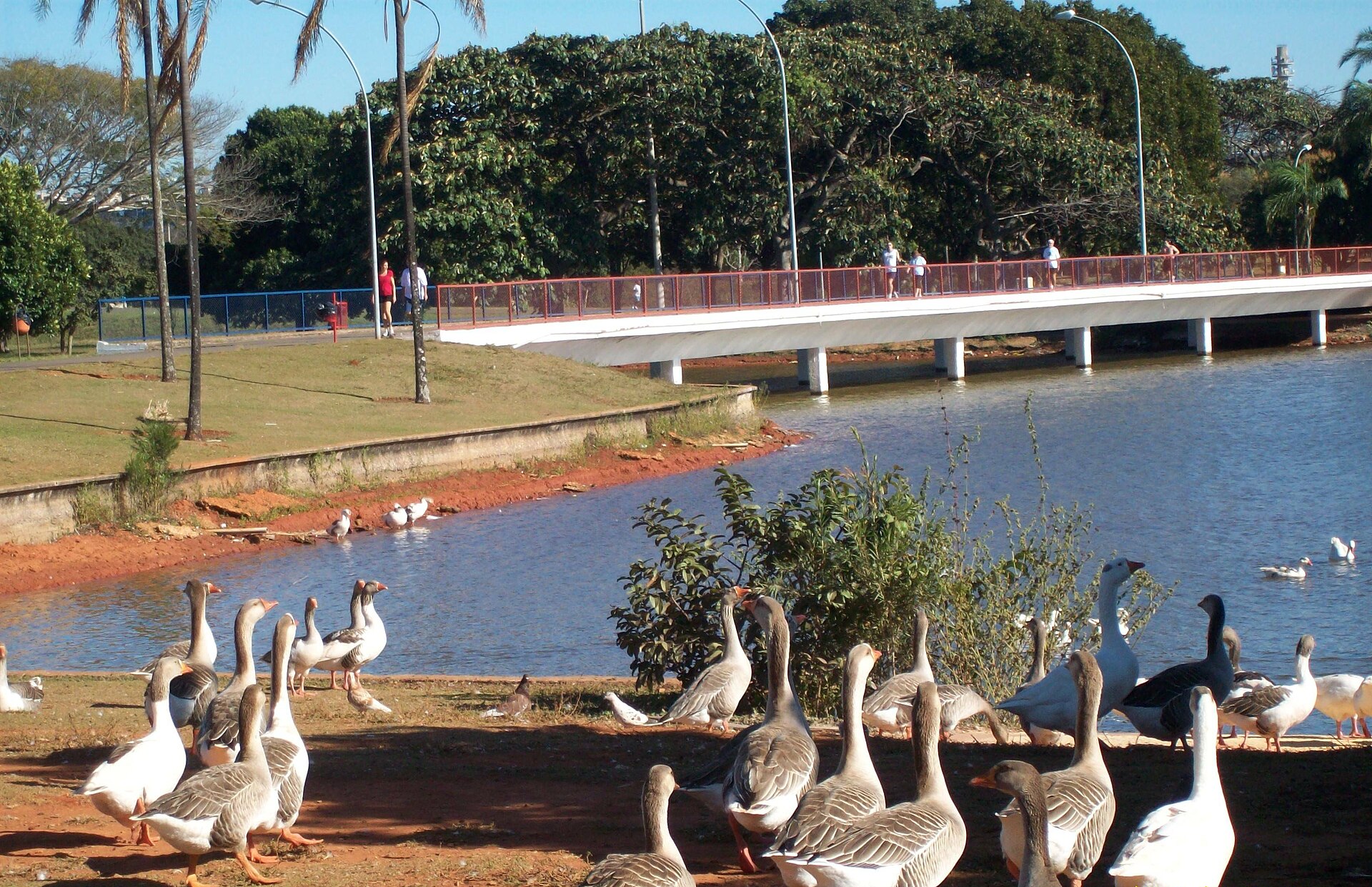
Walking through the park feels like stepping into a different rhythm. Wide, shaded paths wind past clusters of native flora, while artificial lakes mirror the sky above. Open meadows invite visitors to lie down and listen to the rustle of leaves, a rare luxury in a city where space is often measured in straight lines. The park also preserves patches of cerrado, the savanna ecosystem native to central Brazil. It’s not just a green space but a small sanctuary, a reminder of the landscape that existed long before the city’s foundations were laid.
Lake Paranoá forms the park’s natural boundary, its calm waters occasionally disturbed by ducks or the gentle glide of a rowboat. In the summer, when Brasília’s heat becomes oppressive, the lake becomes a gathering spot for picnics and leisurely strolls. During the dry winter months, the water recedes, exposing tree roots and moss-covered stones along the shore—a stark but beautiful contrast to the lushness of the wet season.
The park’s architecture is as understated as its purpose. Bridges spanning small ravines follow the same minimalist principles that define much of Brasília’s design—clean lines, functionality, and an absence of unnecessary ornamentation. There are no grand fountains or sculptures here. Instead, simple wooden benches, tiled-roof gazebos, and stone-paved paths create an atmosphere of quiet retreat. The lack of distractions makes it easier to notice the small details: the way sunlight filters through the trees, the distant hum of the city fading into the background.
This park is deeply tied to Brasília’s history. When the capital moved from Rio de Janeiro in 1960, the city was built from scratch, every element carefully planned to serve a purpose. The park was no exception—it was meant to be more than just green space. It was a statement: even in a city designed for efficiency, there should be room for nature, for stillness, for the unplanned. Today, it remains a place where locals and visitors alike come to escape the rigidity of urban life, if only for an hour or two.
There are no strict rules here, just unspoken traditions. Early mornings belong to runners and yoga enthusiasts who gather by the lake. Some bring a thermos of coffee and a book, while others simply sit on a bench, watching the city wake up. In the evenings, the park empties, though occasionally, groups of friends might linger with a guitar, the soft strumming blending into the night. It’s a place where people come to be alone, or to be together without the usual noise and crowds.
What makes the park special is its ability to offer solitude without isolation. Unlike the bustling beaches of Rio or the vibrant streets of Salvador, this is a space where you can lose yourself in thought, or simply in the quiet. That might be why it resonates so deeply with Brasília’s residents. The city, with its wide avenues and monumental architecture, can sometimes feel imposing, even cold. But the park serves as a reminder that even in a city built on logic and order, there’s room for something softer.
The park changes with the seasons. During the dry winter months, the grass turns golden, trees shed their leaves, and the landscape takes on a stark, almost desert-like quality. Yet there’s a quiet beauty in this transformation—the crisp air, the open skies, the sense of space. When the rains return, the park bursts back to life, filling with the hum of cicadas and the scent of blooming trees. It’s a cycle that mirrors the rhythm of the cerrado itself, a reminder that even in the heart of a capital, nature follows its own pace.
More than just a park, this place is part of Brasília’s identity. It’s a counterpoint to the city’s grand ambitions, a space where the human scale is restored. There’s nothing forced or artificial about it—just silence, space, and the simple act of being. Maybe that’s why those who visit once often find themselves returning. It doesn’t demand attention; it simply offers a place to pause, to breathe, and to remember that even in a city of the future, some things remain timeless.