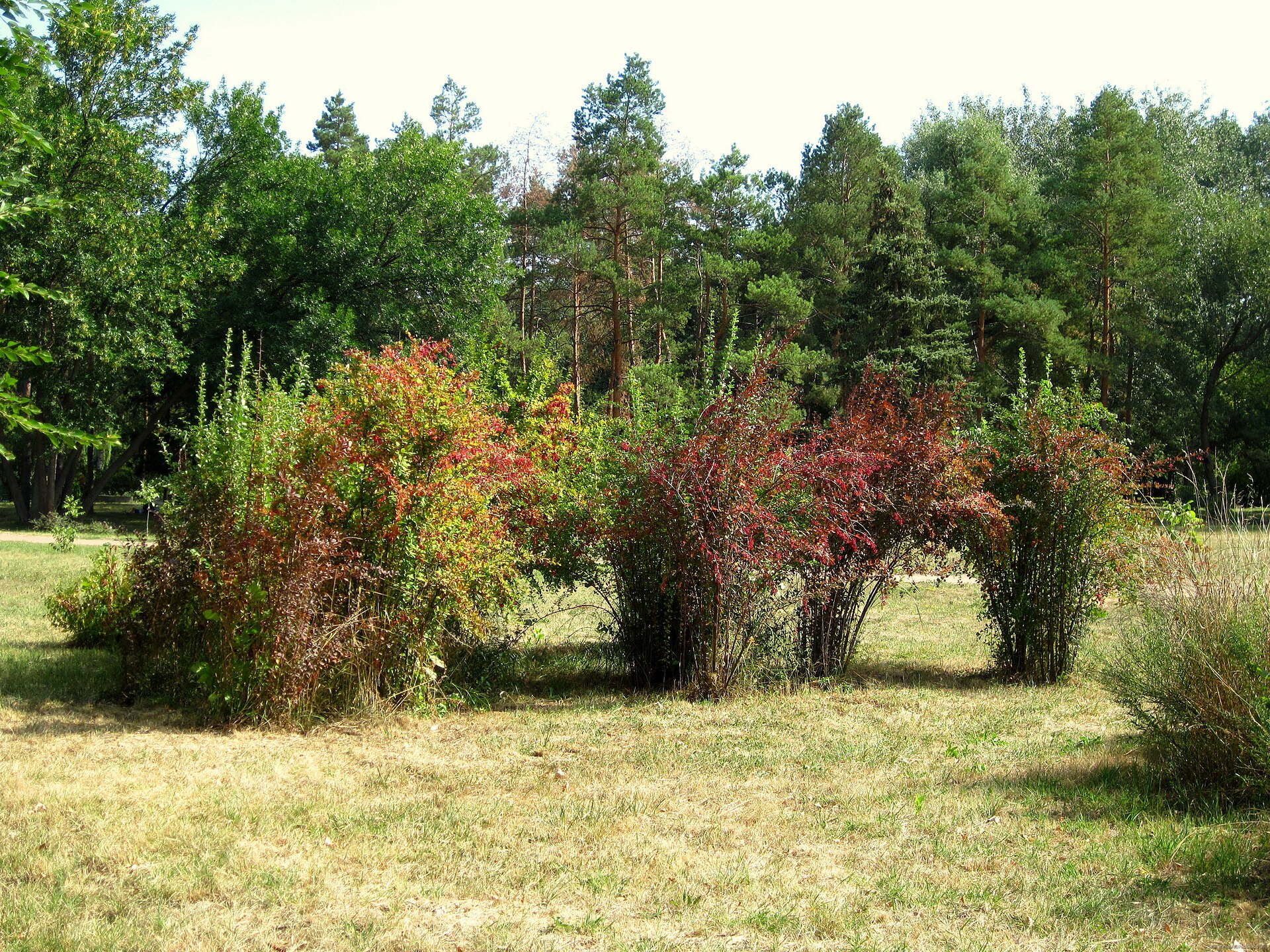
Old Orhei’s Dendrarium isn’t the kind of place that announces itself with grand gestures or tourist crowds. It unfolds quietly along the slopes above the Răut River, where the trees seem to have grown there forever, though the park itself is barely more than half a century old. Originally planted as a scientific experiment—testing which foreign species could thrive in Moldova’s climate—it has since become something far simpler: a place where people come to walk, to sit, or to do nothing at all. There’s no agenda here, no must-see sights, just the slow rhythm of nature reclaiming its space.
The park took shape in the Soviet era, when botanists brought in saplings from across the world—Japanese maples, North American pines, and shrubs from the Caucasus. Some took root, others didn’t, but those that survived created an accidental forest, one that feels wild despite its man-made origins. The original paths still wind through the trees, though many have softened with time, overgrown by moss or fallen leaves. A few weathered signs remain, their botanical names barely legible, as if the park itself has decided which details are worth remembering.
What makes the Dendrarium special is how effortlessly it blends into the landscape. From the higher trails, you can see the Răut winding through the valley below, its banks lined with willows and the occasional fishing boat. The river’s presence is constant but unobtrusive, a murmur beneath the rustling leaves. In spring, the air is thick with the scent of blossoming magnolias and wild cherries, while autumn turns the park into a patchwork of gold and crimson. Even in winter, when the branches are bare, there’s a quiet beauty to the way the light filters through the trees, casting long shadows on the snow.
There are no grand monuments here, no architectural marvels—just a few traces of human hands at work. A set of stone steps leads to a viewpoint overlooking the valley, their edges worn smooth by decades of use. Nearby, a small pond attracts ducks and the occasional child with a toy sailboat, though the water is often left to its own devices. The park’s design, if it can even be called that, feels more like an afterthought than a plan, as if the trees were always meant to dictate the terms.
This lack of pretense is what draws people in. The Dendrarium isn’t a place for Instagram moments or guided tours; it’s for those who prefer to wander without a map, letting curiosity lead the way. The paths fork and loop, sometimes dead-ending at a cluster of birches or a sudden clearing with a bench. In summer, the canopy offers shade even on the hottest days, while winter brings a hush so deep it feels like the park is holding its breath. Locals come here to escape the noise of the city, to walk their dogs, or to sit with a book, though often they do nothing at all—just listen to the wind in the leaves.
In a country known for its medieval monasteries and cave churches, the Dendrarium offers something different: a sense of everyday Moldova. Not the postcard version, but the one that exists in the spaces between the famous landmarks—the quiet corners where life moves at its own pace. It’s a place that doesn’t try to impress, which might be why it feels so genuine. The park has become a kind of local secret, though not in the way that implies exclusivity. Rather, it’s a space that belongs to whoever happens to be there, whether for an hour or an afternoon.
Over the years, the Dendrarium has changed in small, almost imperceptible ways. Some trees have grown tall and sturdy, while others have succumbed to age or disease, their absence creating new gaps in the canopy. The park’s caretakers tend to it lightly, pruning here, clearing paths there, but always with an eye toward preserving its unpolished charm. New benches appear now and then, and the occasional sign points visitors toward the river, but these additions feel more like afterthoughts than improvements. The park doesn’t need much—just time, and the patience to let nature do its work.
If you visit Old Orhei, the Dendrarium might not be the first place you’re told to see. The monasteries and caves have their own stories, their own weight in history. But the park offers something those places can’t: a chance to step outside of time for a little while. To walk beneath trees that have seen generations come and go, to sit by the river and watch the light change, to feel the quiet pulse of a place that exists for no other reason than to be itself. It’s not the Moldova of guidebooks, but it might be the one that lingers in your memory long after you’ve left.