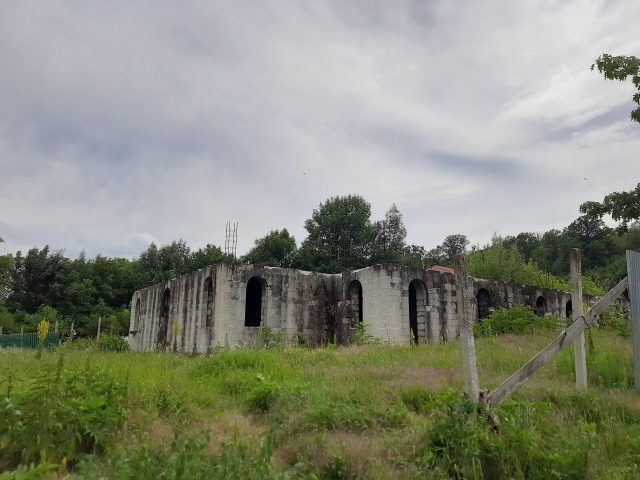
Old Orhei is one of those rare places where history doesn’t just exist in books or museums—it lingers in the air, in the stones underfoot, in the quiet rhythm of daily life. Tucked into the rolling hills of central Moldova, where the Răut River carves a deep, winding path through the landscape, this site has been a crossroads of cultures for centuries. It’s not a reconstructed theme park of the past, nor is it a forgotten ruin left to decay. Instead, it’s a living landscape where layers of time coexist: medieval fortresses crumble beside 19th-century houses, cave monasteries whisper of monastic solitude, and the river still flows as it did when merchants and armies passed through these lands.
The story of Old Orhei begins in earnest in the 14th century, when the region was part of the Principality of Moldavia. Back then, the settlement was a strategic stronghold, perched on a cliff overlooking the Răut—a natural vantage point for controlling trade routes that connected the Black Sea to Central Europe. The Genoese, the Golden Horde, Moldavian princes, and later the Ottomans all left their mark here, each era adding to the patchwork of influences that define the place today. The fortress built by Prince Petru Mușat in the 1300s was once a formidable structure, its walls stretching across the ridge to defend against invaders. Now, only fragments remain: weathered stones, the outlines of towers, and the occasional underground passage that hints at the scale of what once stood here. From the top of the hill, the view hasn’t changed much over the centuries—the river bends lazily below, fields stretch into the distance, and the same winds that once carried the sounds of battle now rustle through the grass.
Just a short walk from the fortress ruins lies one of Old Orhei’s most intriguing features: the cave monastery. Carved into the limestone cliffs in the 17th century, it’s a place of quiet persistence. The narrow corridors, small cells, and tiny church were once home to monks who sought solitude in these rocky heights. Faded frescoes still cling to the walls, their colors muted by time, and the air inside is always cool, even in the heat of summer. The monastery was abandoned in the 19th century, and though there have been attempts to restore it, the sense of isolation remains. It’s easy to imagine the monks moving through these dim passages, their footsteps echoing in the silence.
Old Orhei isn’t just an open-air museum—it’s a place where people still live, work, and go about their days. The town center is a cluster of 19th-century houses with wooden shutters and tiled roofs, their facades worn but well-kept. There’s no rush here, no hum of traffic or crowds of tourists. Instead, life moves at its own pace: old men play backgammon in the shade, women sell fresh bread and cheese from roadside stalls, and children ride bicycles down quiet streets. In the summer, the central square comes alive with markets where locals trade honey, wine, and hand-embroidered linens. Winter brings a different kind of stillness, when snow dusts the rooftops and the bare branches of trees frame the river below.
The Jewish community once played a significant role in Old Orhei’s history. By the 18th century, the town had become home to one of the largest Jewish populations in Bessarabia, with hundreds of families living and working here. The early 20th-century synagogue still stands, though it’s no longer in use, and the old Jewish cemetery is a quiet, overgrown place where moss-covered headstones tell silent stories. Before World War II, Jewish life was woven into the fabric of the town—merchants, artisans, and scholars contributed to its culture. Today, their presence is remembered in fragments: a Star of David etched into a crumbling wall, the occasional Yiddish word still spoken by an elderly resident.
The Răut River has always been the lifeblood of this place. In medieval times, it was a vital trade route, carrying goods between distant markets. Now, it’s a place for leisure—locals fish from its banks, children swim in its shallows, and families picnic along its shores. In autumn, the river becomes a mirror for the surrounding hills, which blaze with gold and crimson as the leaves turn. Even in winter, when the water runs dark and swift, there’s a stark beauty to the landscape, as if the land itself is holding its breath.
What makes Old Orhei special isn’t just its history, but the way that history feels alive. There are no grand reconstructions or tourist traps here—just the quiet persistence of a place that has seen empires rise and fall, that has been home to generations of people who lived, loved, and left their mark. It’s the kind of place that doesn’t reveal itself all at once. You might walk past a crumbling wall and not realize it was once part of a fortress, or glance at a cave opening without knowing it leads to a monastery. But if you take the time to look closer, to sit by the river or wander the backstreets, the layers of the past begin to unfold.
This isn’t a destination for those seeking spectacle or instant gratification. There are no neon lights, no guided tours with scripted stories, no souvenir shops selling mass-produced trinkets. Instead, Old Orhei offers something quieter: the chance to step into a place where time moves differently. It’s in the way the light falls on the old stones at dusk, in the laughter of children playing near the river, in the stories shared over a glass of local wine. It’s a reminder that history isn’t just something that happened long ago—it’s still here, in the land, in the people, in the very air you breathe.