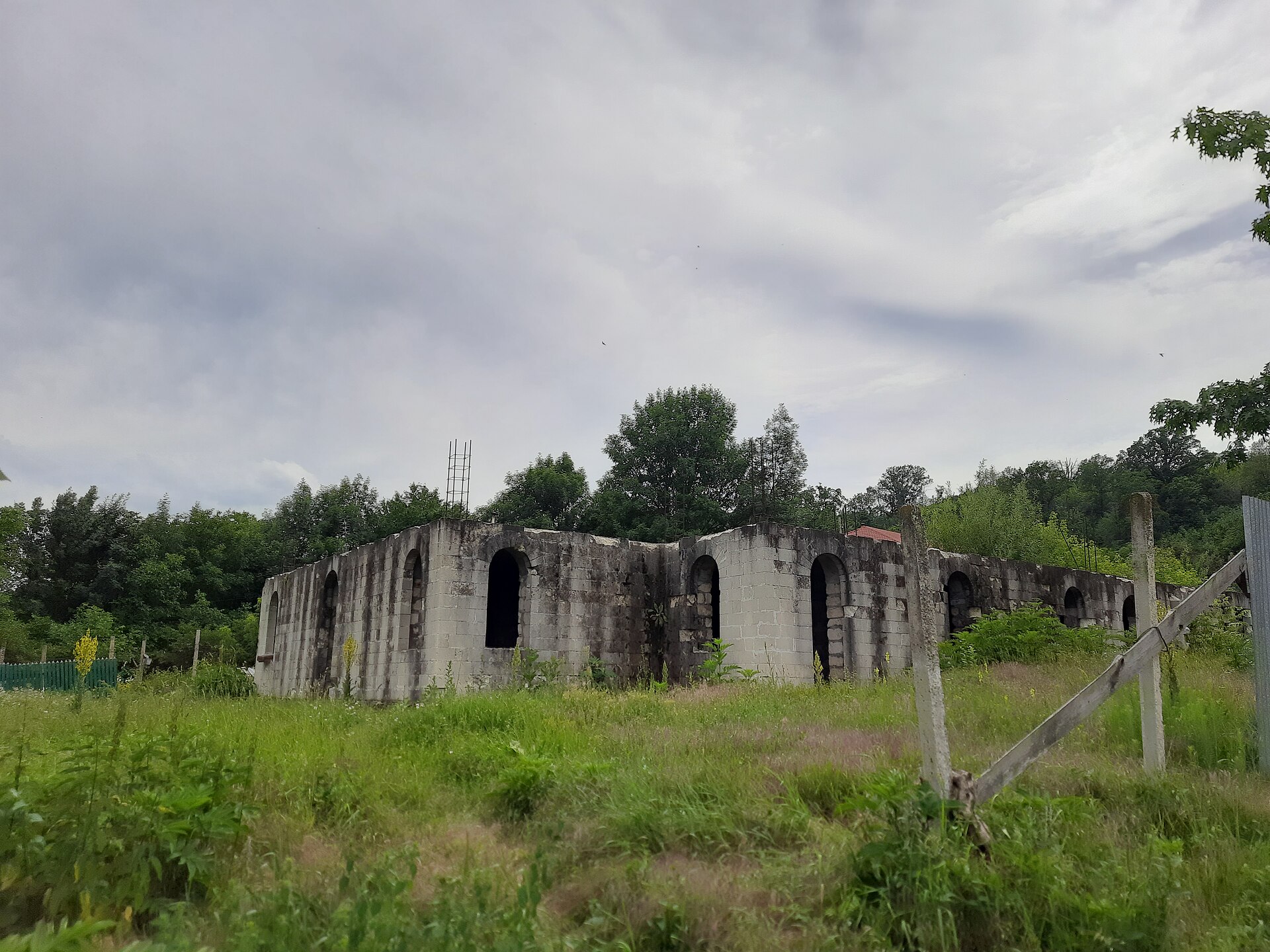
Old Orhei is a place where the past lingers in the quiet corners of the landscape, and nowhere is that more evident than at the Curchi Monastery. Tucked away in the rolling hills outside the town, it feels like a world apart—one where the only sounds are the rustle of leaves and the distant call of birds. There are no crowds here, no hurried footsteps or tourist chatter, just the stillness of centuries-old walls and the sense that time moves differently within this secluded sanctuary.
The monastery’s origins stretch back to the fifteenth century, when these lands were part of the Principality of Moldavia. While the exact year of its founding has been lost to history, records from the sixteenth century already mention it as an active spiritual center. In those turbulent times, monasteries often served as both places of worship and fortresses, offering refuge during raids and invasions. Curchi was no exception. Its walls bore witness to battles, and the network of underground passages leading to nearby caves provided shelter for monks and villagers alike. These tunnels, carved into the rock, still exist today, a silent testament to the monastery’s dual role as a place of faith and survival.
The architecture of Curchi reflects the blend of Moldavian traditions and Byzantine influences that shaped religious buildings in the region. The main church, dedicated to the Dormition of the Mother of God, is built from local stone and adorned with modest yet striking frescoes. Inside, some of the seventeenth-century paintings have faded with time, their colors softened by dampness and age. Yet even in their worn state, they carry the weight of history, offering a glimpse into the lives of those who once prayed beneath them. The simplicity of the design—uncluttered by excessive ornamentation—only adds to the sense of reverence that permeates the space.
One of the most intriguing aspects of the monastery is its cave complex. Hewn directly into the rock, the underground cells and chapels remain much as they were when ascetic monks lived here centuries ago. Narrow corridors lead to low-ceilinged chambers, where stone niches once held icons and flickering oil lamps. In one of the caves, a well still stands, its water said to have never run dry, even in the driest years. Locals still regard it as sacred, and some believe it possesses healing properties. Whether or not that’s true, the well adds to the mystique of the place, a tangible link to the past that feels almost untouched by the modern world.
Like many religious sites in the region, Curchi has seen its share of hardship. In the nineteenth century, after Bessarabia was annexed by the Russian Empire, the monastery fell into decline. Monks were forced to leave, and the buildings began to crumble. It wasn’t until the early twentieth century, when the area came under Romanian rule, that efforts were made to restore the monastery. Services resumed, and once again, it became a destination for pilgrims. Yet even after its revival, Curchi never regained the bustling activity of its earlier years. Instead, it settled into a quieter existence, one that continues to this day.
Today, the monastery remains active, though only a handful of monks live here. They tend to the grounds, maintain the church, and welcome visitors with quiet hospitality. There are no guided tours or souvenir stalls, just the chance to step inside the church, light a candle, or sit in the courtyard and take in the view. The monks are approachable if they’re not occupied with their duties, and conversations with them often feel more like exchanges with neighbors than formal encounters. The lack of commercialization makes the experience feel genuine, as if you’ve been invited into a home rather than a tourist attraction.
The landscape around Curchi is as compelling as the monastery itself. The Orhei hills stretch out in every direction, covered in forests and vineyards that have shaped the region’s identity for centuries. On clear days, the view from the monastery’s elevated position reveals the winding course of the Răut River below. The area is rich in history beyond the monastery walls—ancient settlements, burial mounds, and remnants of Dacian fortresses dot the countryside. In summer, the fields burst with wildflowers, and the air carries the scent of herbs and warm earth. Evenings bring a golden haze over the hills, softening the contours of the land and making it easy to imagine how this place must have looked to those who lived here hundreds of years ago.
Visiting Curchi is less about ticking off a sightseeing box and more about stepping into a slower rhythm. There’s no agenda here, no rush to move on to the next attraction. You can wander the paths, explore the caves, or simply sit by the well and let the silence settle around you. For some, it’s a place of spiritual reflection; for others, a chance to escape the noise of modern life. And for many, it’s simply a beautiful corner of the world that invites return visits, not because it’s grand or famous, but because it feels real.
What sets Curchi apart from other monasteries is its unassuming authenticity. It hasn’t been polished for tourists or turned into a spectacle. Instead, it exists as it always has—quietly, unobtrusively, carrying on its traditions without fanfare. That lack of pretense is what makes it so memorable. There’s no need for grand gestures or dramatic backdrops; the monastery’s power lies in its simplicity. The ancient stones, the hushed atmosphere, and the people who care for this place all contribute to a sense of continuity, as if the past and present coexist here without conflict. It’s the kind of place that stays with you long after you’ve left, not because of anything it demands, but because of what it quietly offers.