Chele La is one of those rare places where the world feels both vast and intimate at the same time. Perched nearly four thousand meters above sea level, this mountain pass in Bhutan doesn’t just connect two valleys—it bridges the gap between the everyday and the extraordinary. The air here is thin, sharp with the scent of pine and damp earth, and the views stretch so far that the horizon seems to curve with the shape of the Earth itself. There’s no grand monument or man-made spectacle, just raw, unfiltered nature in all its quiet grandeur.
The pass serves as a natural divide between the Paro and Haa valleys, two regions that have shaped Bhutan’s history in their own ways. Long before paved roads wound their way up the slopes, Chele La was part of ancient trade routes, where merchants and travelers carried goods between remote villages and bustling settlements. Today, the road is still a lifeline, though the caravans of yesteryear have been replaced by four-wheel drives and the occasional motorbike. For locals, it’s just another part of the landscape, a place where they’ve driven countless times, but for visitors, every turn reveals something new—a sudden glimpse of a snow-capped peak, a cluster of prayer flags fluttering in the wind, or a herd of yaks grazing on the high pastures.
On clear days, the view from Chele La is dominated by Mount Jomolhari, Bhutan’s most iconic peak. Its jagged summit rises like a sentinel against the sky, its snowfields catching the light in a way that makes it seem almost alive. For the Bhutanese, Jomolhari is more than just a mountain—it’s a sacred presence, a guardian of the land. Even for those who don’t share the spiritual connection, there’s something undeniable about the way it commands attention, as if the entire landscape revolves around it. When clouds roll in, the mountain vanishes behind a veil of mist, and the pass takes on a different character, softer and more mysterious, as if the world beyond has been temporarily erased.
Chele La isn’t just a place to look at—it’s a place to move through. The pass is the starting point for some of Bhutan’s most rewarding hikes, where the trails lead to hidden lakes and alpine meadows that feel untouched by time. One of the most popular routes takes you to Kila Tso, a small lake so clear it reflects the sky like a mirror. The walk there is steady but not strenuous, winding through forests of rhododendron and past rocky outcrops where the wind whistles through the cracks. In the warmer months, the meadows burst with wildflowers, and the air hums with the sound of bees. If you’re lucky, you might cross paths with a herder leading a flock of sheep or a group of women gathering medicinal herbs, their baskets filled with the fragrant leaves and roots that have been used in Bhutanese medicine for centuries.
Winter transforms Chele La into a different kind of place. The road becomes a challenge even for experienced drivers, its surface slick with ice and snowdrifts piling up along the edges. The pass is quieter then, the usual trickle of visitors reduced to a handful of hardy souls who brave the cold for the chance to see the mountains draped in white. The silence is profound, broken only by the occasional gust of wind or the distant call of a bird. The lakes freeze over, their surfaces smooth and glassy, and the trees wear coats of frost that glint in the weak winter sun. At night, the stars feel close enough to touch, their light unfiltered by the haze of lower altitudes.
When spring arrives, the pass shakes off its winter slumber. The snow melts into rivulets that feed the streams below, and the slopes erupt in color as wildflowers push their way through the thawing earth. The air is thick with the scent of pine and damp moss, and the sound of birdsong fills the valleys. This is the best time to explore the area on foot—whether it’s a short walk to a nearby ridge for a panoramic view of the Paro Valley or a longer trek to one of the high-altitude pastures where yaks graze. Locals sometimes come here for picnics, spreading out blankets on the grass and cooking simple meals over open fires. There’s no need for elaborate plans; just being here, watching the clouds drift over the peaks, is enough.
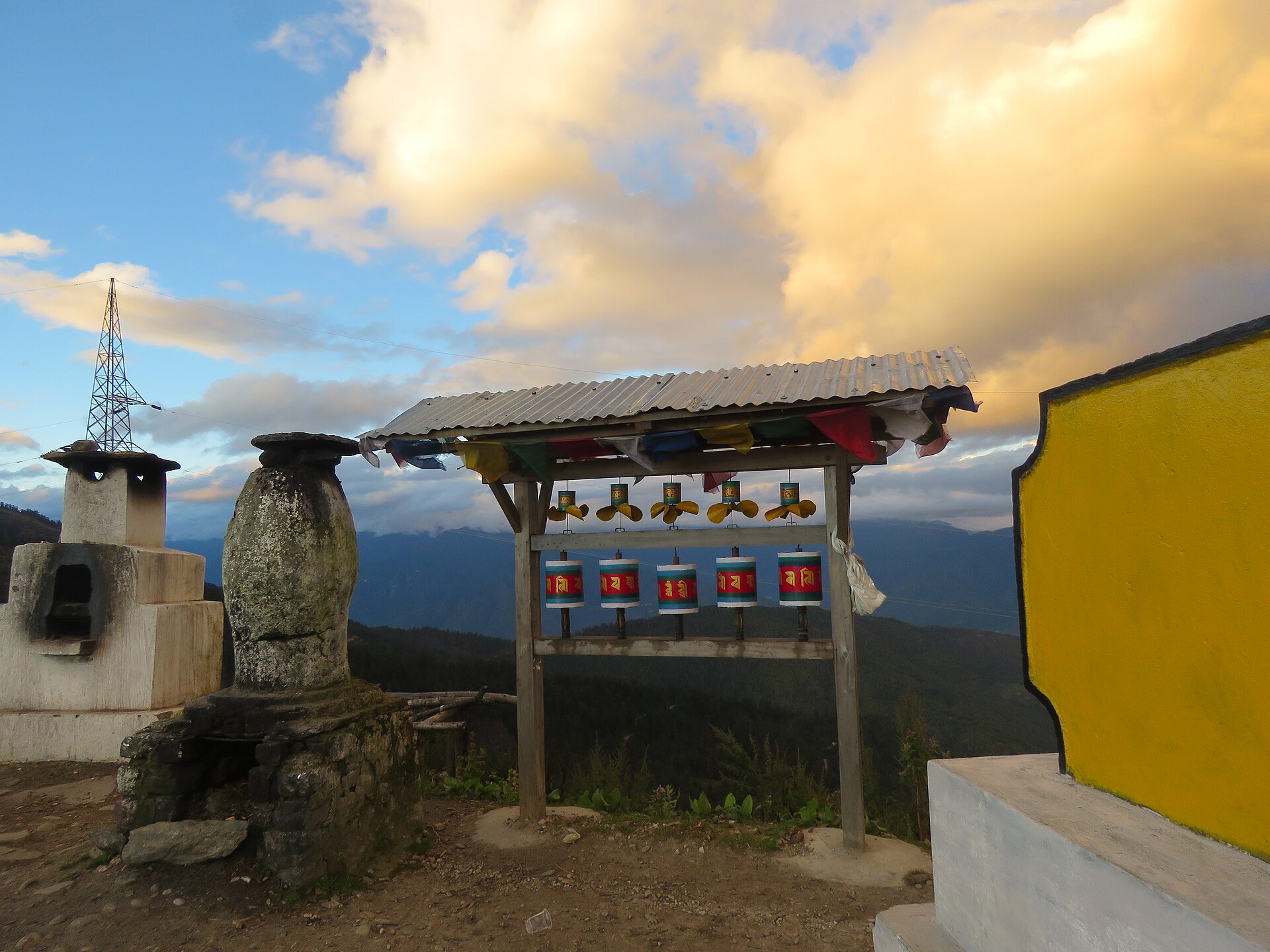
What makes Chele La special is its lack of pretense. There are no souvenir stalls, no guided tours with scripted commentary, no crowds jostling for the best photo spot. Instead, there’s space—physical and mental—to simply be. The pass has a way of making even the most restless traveler slow down, to sit on a rock and watch the way the light changes over the mountains, how shadows stretch and shrink with the movement of the sun. It’s the kind of place where you can lose track of time, where the hours slip by unnoticed as you listen to the wind rustling through the grass or the distant chime of a prayer wheel turning in the breeze.
The journey to Chele La is as much a part of the experience as the pass itself. The road begins in Paro, where the streets are narrow and the buildings wear the traditional Bhutanese style of whitewashed walls and intricately painted wooden windows. As you climb, the landscape shifts—first the terraced fields of the valley floor, then the dense forests of oak and rhododendron, and finally the open expanses of the high passes. Along the way, small shrines and clusters of prayer flags appear like markers, reminding you that this isn’t just a scenic drive but a route steeped in history and meaning. The higher you go, the more the world below seems to fade away, until all that’s left is the road ahead and the sky above.
Chele La isn’t a place you can fully capture in words or photographs. It’s something you have to experience—the way the cold air stings your cheeks, the way the wind carries the faint scent of woodsmoke from a distant village, the way the mountains seem to breathe with the changing light. Some visitors come for the views, others for the solitude, and some just for the quiet thrill of standing at the edge of something vast. But no matter what draws you here, the pass has a way of leaving its mark. It’s the kind of place that lingers in your memory long after you’ve left, a reminder of how small we are in the face of the natural world—and how lucky we are to witness its beauty.