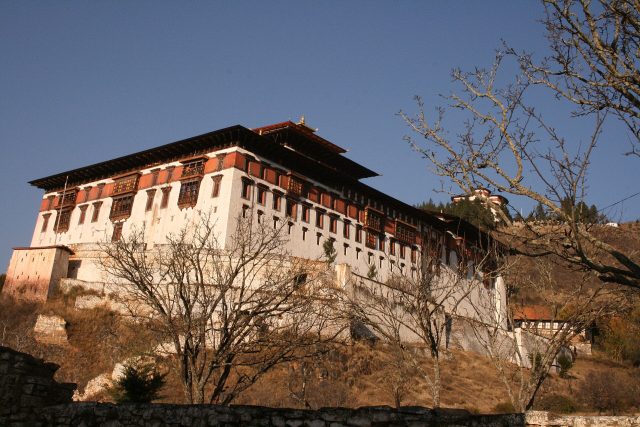
Perched above the Paro Valley, the National Museum of Bhutan is a place where the past lingers in the air, not as something distant or forgotten, but as a living presence. The building itself, known as Ta Dzong, was once a watchtower, built in the 17th century to guard the valley below. Its thick stone walls and circular design were meant to withstand sieges, and though the battles it once faced are long over, the structure still stands as a testament to resilience. From the top floors, the view stretches across the valley, where terraced fields and whitewashed houses blend into the landscape, much like the artifacts inside blend into the story of Bhutan.
The museum opened in 1968, at a time when Bhutan was cautiously stepping onto the world stage. There was a sense that if the country’s traditions were not preserved, they might slip away unnoticed. The exhibits are arranged without the slick curation of modern museums—no flashy displays or interactive screens, just a quiet invitation to wander and observe. The collection spans centuries, from Bronze Age tools to objects tied to Buddhism and the monarchy. Among the most striking are the masks used in cham dances, still performed in monasteries today. These aren’t just relics; they’re part of a living tradition, where every movement carries meaning.
One of the most captivating sections holds the thangkas—Buddhist scroll paintings that depict deities, saints, and cosmic scenes with meticulous detail. These aren’t merely religious artifacts; they’re works of art that reflect the spiritual ideals of Bhutan. Nearby, ritual objects like bells, vajras, and offering bowls are displayed, each with its own symbolic weight. Even without knowing the intricacies of Buddhist philosophy, there’s a sense of reverence in the way these items are arranged, as if their purpose still hums in the air.
A separate gallery is dedicated to Bhutan’s monarchy, a story of how a small Himalayan kingdom managed to remain independent while the world around it changed. Photographs of the first kings hang alongside personal belongings and documents that trace the country’s careful navigation between tradition and modernity. The third king, Jigme Dorji Wangchuck, stands out in this narrative—his reforms opened Bhutan to the outside world, yet he ensured the country’s cultural identity remained intact. Traditional robes, still worn at official events, and weapons from Bhutan’s defensive past are displayed nearby, bridging the gap between history and the present.
Unexpectedly, the museum also houses a natural history section, where taxidermied animals from the Himalayas—snow leopards, red pandas, musk deer—remind visitors of Bhutan’s commitment to preserving its environment. The country is one of the few places where nature is constitutionally protected, and this collection underscores that ethos. Alongside the animals are samples of minerals and medicinal plants, still used in traditional healing practices. It’s a subtle reminder that Bhutan’s relationship with nature isn’t just about conservation; it’s woven into daily life.
What makes the museum unique is how it blurs the line between past and present. Many of the traditions on display aren’t just historical footnotes—they’re still alive. Pottery, weaving, and handmade paper are crafts that Bhutanese people continue to practice, and in one of the halls, visitors can sometimes see artisans at work. The museum isn’t just about looking at objects; it’s about understanding how they fit into the rhythm of life in Bhutan. There’s a sense that the items here aren’t frozen in time but are part of an ongoing story.
The gallery dedicated to Buddhist festivals is particularly atmospheric. Masks and costumes used in cham dances are displayed alongside videos of the festivals themselves. These dances aren’t performances in the usual sense; they’re spiritual rituals where every gesture carries significance. Watching the footage, it’s easy to see why these festivals are so central to Bhutanese culture—they’re moments when the sacred and the communal intersect, where history and faith come alive in movement and color.
The National Museum of Bhutan doesn’t try to dazzle with grandeur or technology. Instead, it offers something rarer: authenticity. The building, the artifacts, and the stories they tell all reflect a country that has carefully balanced change with tradition. For those who want to understand Bhutan beyond its landscapes and monasteries, the museum is an essential stop. It’s not just a place to learn about the past; it’s a place to feel the continuity of a culture that has endured, adapted, and remained uniquely itself.