Vidin is a city where history lingers in quiet corners, and Baba Tonka Park is one of those places where the past feels close enough to touch. Tucked away in the old part of town, not far from the Danube’s edge, the park is a green retreat for locals and a subtle tribute to one of Bulgaria’s most revered figures. There are no grand monuments here, no forced solemnity—just shaded paths, benches, and the kind of calm that makes you want to slow down and stay awhile.
The park is named after Tonka Obretenova, known affectionately as Baba Tonka, a woman whose life became woven into Bulgaria’s struggle for independence in the 19th century. She was a mother of five sons, all of whom joined the fight against Ottoman rule, and three of them never returned. Baba Tonka herself was no passive observer; her home in Ruse was a hub for revolutionaries, and later, in Vidin, she continued to support the cause. The park now stands where her house once did, a quiet memorial not just to her, but to the countless others who risked everything for the country’s future.
The design of the park is unassuming, almost understated. There are no elaborate flowerbeds or ornate fountains, just straight paths lined with trees and benches arranged for comfort. At its center stands a modest bronze statue of Baba Tonka, dressed in traditional clothing, her gaze fixed on some distant point as if lost in thought. The statue doesn’t dominate the space—it blends in, a natural part of the surroundings rather than a spectacle.
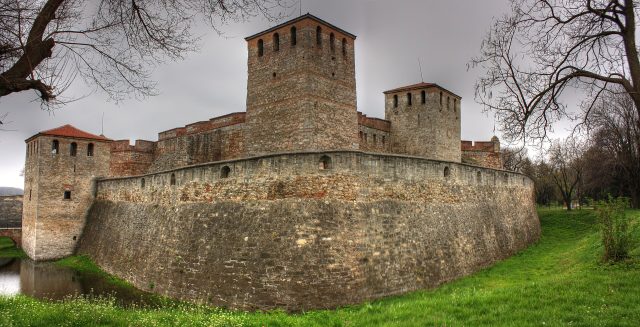
Vidin has always been a city of layers, and Baba Tonka Park is deeply connected to its past. In the 19th century, the town was a vital Danube crossing, a place where trade routes intersected and empires clashed. Merchants, soldiers, and revolutionaries all passed through here, and the park sits near Baba Vida Fortress, one of the best-preserved medieval strongholds in the Balkans. The proximity of the two sites—one a symbol of ancient power, the other a tribute to modern resistance—creates a quiet dialogue between different eras. Walking through the park, it’s easy to imagine the hushed conversations that once took place here, the plans made in secret, the news shared in hurried whispers.
Today, the park is a place where life unfolds at its own pace. Locals come here to stroll with their children, meet friends, or sip coffee at the small outdoor cafés that spring up in warmer months. In summer, the park hosts concerts and festivals, while in winter, strings of lights add a festive glow. Despite its historical weight, the park hasn’t become a static monument—it’s still very much a part of everyday life. That’s what makes it special: it doesn’t feel like a relic, but a living space where the past and present coexist.
For visitors, Baba Tonka Park might come as a surprise. Vidin isn’t a typical tourist stop, and most people come for the fortress or the Danube promenade. But places like this offer something different—a chance to experience the city as it really is. There are no crowds, no souvenir stands, just the quiet rustle of leaves and the occasional laughter of children playing. The history here isn’t shouted; it’s felt in the way the light filters through the trees or the way the statue seems to watch over the park like a silent guardian.
If you find yourself in Vidin, take a moment to visit the park. Bring a coffee, find a bench near the statue, and just sit for a while. You might see elderly men playing chess under the trees, kids racing down the paths, or couples walking hand in hand. It’s an ordinary scene, but it’s also a reminder of what Baba Tonka and her sons fought for—a life where people could gather freely, without fear. The park doesn’t tell that story in words, but it carries the memory all the same. And that’s what makes it worth visiting.