April 21st Park is one of those quiet corners in Riobamba where the city’s usual hum fades into something softer. Tucked between busy streets in the heart of town, it offers a moment of stillness the moment you step inside. There are no grand flowerbeds or elaborate sculptures here—just wide lawns, shaded paths, and benches where people sit with books, coffee, or simply watch the world go by. The park doesn’t demand attention; it invites you to slow down.
The name carries weight in Ecuadorian history. April 21, 1822, marks the Battle of Tapi, fought near Riobamba, where Antonio José de Sucre’s forces defeated Spanish colonial troops. That victory was a turning point in South America’s fight for independence, paving the way for Gran Colombia. The park isn’t just a green space—it’s a quiet monument to the people who shaped the country. A simple stone memorial at its center lists names and dates, and fresh flowers often appear at its base, left by those who still remember.
The design is unassuming, built for function rather than spectacle. The main path leads to the memorial, surrounded by low flowerbeds filled with native plants that bloom year-round. There’s no grand architecture, just a sense of practicality—this is a place for people, not postcards. The air feels lighter here, a reminder that Riobamba sits over 2,500 meters above sea level. Mornings bring a thin mist that softens the edges of the park, making it feel like a step back in time. By midday, the sun warms the benches, and the space fills with students, families, and older locals, each finding their own rhythm.
Weekends bring a different energy. Small markets pop up, selling homemade sweets, handcrafted goods, and fresh flowers. Musicians sometimes play, their guitars and flutes blending with the rustle of leaves. Children run across the grass while older men set up chessboards under the trees. The park becomes more than a place to rest—it’s where the city gathers, where generations mix without ceremony.
Despite its historical roots, April 21st Park never feels like a museum. There are no rigid rules, just the unspoken understanding of shared space—no littering, no late-night noise. People come for different reasons: some to reflect, others to meet friends, or just to sit with a thermos of coffee and watch the clouds drift over the mountains. The park doesn’t impose meaning; it lets you find your own.
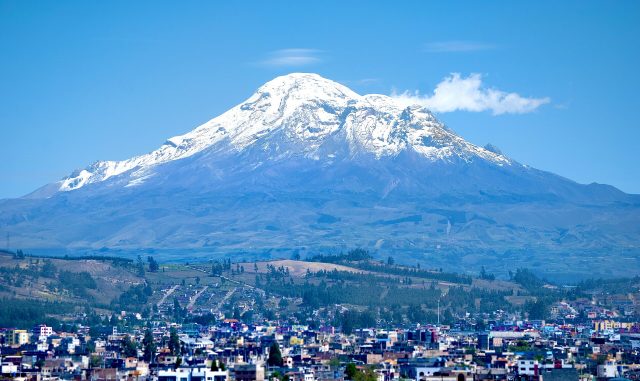
Beyond the trees, the view opens up to Chimborazo, Ecuador’s tallest peak. On clear days, its snow-capped summit glows in the sunlight, a constant presence in the lives of Riobamba’s residents. For many, the volcano is more than a landmark—it’s a symbol of home, visible from almost anywhere in the city. Here, it becomes part of the scenery, a silent backdrop to afternoons spent reading or chatting with neighbors.
Like the city itself, the park has changed over time. Paths have been repaved, new benches added, but its essence remains. It’s a place where history and daily life overlap, where the past isn’t preserved behind glass but lived alongside the present. Riobamba has other parks and plazas, but April 21st feels different. It doesn’t just decorate the city—it gives it a pulse, a place where people return not out of obligation, but because it feels like home.
Some come for the quiet, others for the memories. A few just want a breath of mountain air. The park doesn’t offer grand experiences, just the small, unremarkable moments that make a place matter. That’s enough.