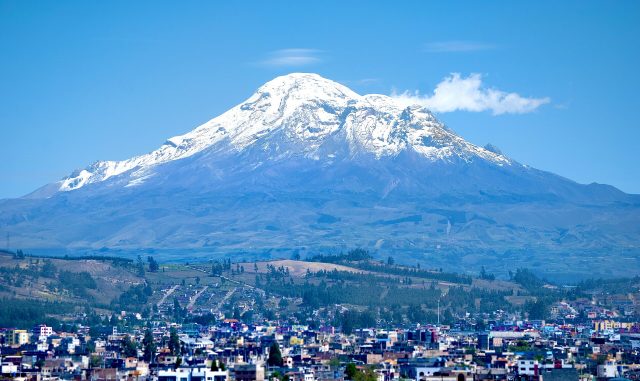
Riobamba sits in the heart of Ecuador’s Andean highlands, a town where the past lingers in the shadows of towering volcanoes and the rhythm of daily life moves at its own unhurried pace. It’s a place where history isn’t confined to textbooks or grand monuments but lives in the details—the way the light falls on cobblestone streets, the scent of woodsmoke in the evening air, the stories passed down through generations. The Museum of Puruhá Culture, tucked away in this quiet corner of the Andes, offers a rare glimpse into the lives of the Puruhá people, an indigenous group whose presence in these mountains predates the arrival of the Spanish by centuries.
The Puruhá were never the kind of civilization that built empires or left behind monumental ruins. Their legacy is quieter, woven into the fabric of everyday existence—into the way the land was tilled, the way cloth was dyed and woven, the way communities marked the passage of time through rituals tied to the seasons. The museum doesn’t try to compete with the grandeur of Inca sites or the opulence of colonial churches. Instead, it does something far more intimate: it invites visitors to step into a world where history isn’t just observed but felt. The exhibits aren’t arranged behind glass or labeled with detached academic descriptions. They’re displayed as if they’ve just been set down by someone who used them that very morning—a clay pot still bearing the faint imprint of fingers, a loom with threads half-woven, a wooden plow leaning against a wall as if waiting for the next planting season.
Agriculture was the backbone of Puruhá life, and the tools on display tell a story of resilience and adaptation. The high-altitude terrain of the Andes is unforgiving, yet the Puruhá learned to coax life from its slopes, cultivating crops that could withstand the thin air and unpredictable weather. Corn, potatoes, and quinoa—staples that still sustain the region today—were grown using simple but effective implements: wooden digging sticks, stone-bladed hoes, and woven baskets for harvesting. The museum’s collection of farming tools isn’t just a record of labor; it’s a testament to a deep understanding of the land, one that allowed the Puruhá to thrive where others might have struggled. Nearby, displays of traditional clothing reveal another layer of their culture. The intricate geometric patterns woven into ponchos and shawls weren’t merely decorative; they carried meaning, signaling everything from marital status to spiritual protection. Textiles were more than functional items—they were a form of storytelling, a way to preserve identity in a world where change was constant.
Spirituality was equally central to Puruhá life, and the museum dedicates space to the beliefs that shaped their relationship with the natural world. The Andes are a place of raw, untamed beauty, where the line between the earthly and the divine has always felt thin. The Puruhá saw the sacred in the mountains, rivers, and storms that defined their environment, and their rituals reflected this reverence. Ceramic vessels adorned with animal motifs, small stone figurines, and musical instruments used in ceremonies offer clues about how they understood their place in the cosmos. Some of the pottery on display wasn’t just for practical use; it played a role in offerings to the earth, a way of giving back to the forces that sustained them. The absence of written records means much of their spiritual world remains mysterious, but the artifacts hint at a cosmology where humans, animals, and the elements existed in a delicate balance.
What makes the museum particularly compelling is its refusal to treat the Puruhá as a relic of the past. Their culture didn’t vanish with the arrival of the Spanish or the march of modernity—it evolved, adapting to new circumstances while retaining its essence. In the villages surrounding Riobamba, some families still speak the Puruhá language, wear traditional clothing, and practice the same crafts their ancestors did. The museum serves as a bridge between these communities and the wider world, hosting workshops where local artisans demonstrate weaving, pottery, and other skills. These aren’t performances for tourists but living traditions, passed down through hands that have shaped clay and spun wool for generations. For younger Ecuadorians, especially those of indigenous descent, these encounters can be a revelation—a reminder that their heritage isn’t something confined to history books but a living, breathing part of who they are.
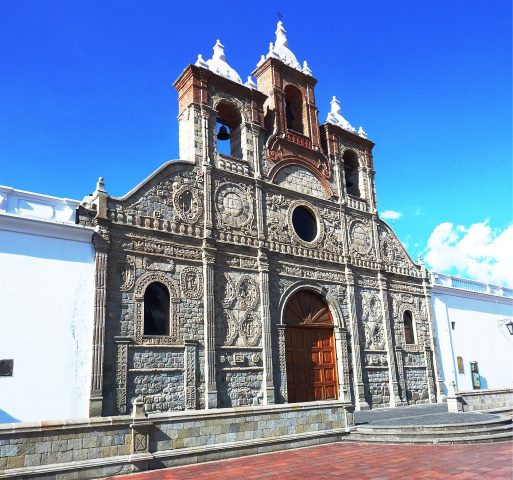
The building that houses the museum is itself a piece of history. Unlike the sleek, modern structures that dominate many cultural institutions, this is an old colonial-era home, its thick walls built from volcanic stone and its wooden beams darkened by time. The central courtyard, with its trickling fountain and potted plants, feels like a private sanctuary, a place where the outside world’s noise fades into the background. There’s no rush here, no crowds jostling for space. Visitors are encouraged to linger, to pick up a piece of pottery and imagine the hands that shaped it, to run their fingers over the rough texture of a woven textile and wonder about the person who made it. The museum’s unassuming scale is part of its charm—it doesn’t overwhelm with spectacle but instead offers a quiet, thoughtful space for reflection.
For travelers who think they’ve seen all Ecuador has to offer after visiting Quito’s colonial churches or the Inca ruins of Ingapirca, the Museum of Puruhá Culture presents a different kind of history—one that’s less about conquest and more about endurance. The Puruhá weren’t empire-builders, but they were survivors, their way of life persisting through centuries of upheaval. Their story is written into the landscape itself: the terraced fields that still climb the mountainsides, the irrigation channels that have carried water for generations, the villages where old customs coexist with modern life. The museum doesn’t just preserve artifacts; it preserves a way of seeing the world, one where the land isn’t just a resource to be exploited but a living entity deserving of respect.
What lingers after a visit isn’t the memory of a single standout exhibit but the sense of having touched something authentic. There’s no grand narrative here, no attempt to package history into a neat, digestible story. Instead, the museum offers fragments—objects, images, and stories—that together form a mosaic of a people who shaped, and were shaped by, the harsh beauty of the Andes. It’s a reminder that history isn’t always made by kings and conquerors; sometimes, it’s made by farmers tending their fields, by weavers at their looms, by families gathering to celebrate the harvest. The Puruhá may not have left behind pyramids or palaces, but their legacy is no less profound. It lives in the land they cultivated, in the traditions they passed down, and in the quiet dignity of a museum that refuses to let their story be forgotten.