The village of Rudaki is home to a quiet monument that marks the birthplace of a literary legacy. It honors Abu Abdullo Rudaki, a poet who lived in the late ninth and early tenth centuries and is often called the father of Persian poetry. His work laid the foundation for modern Tajik literature, bridging ancient traditions with the cultural identity of the region today.
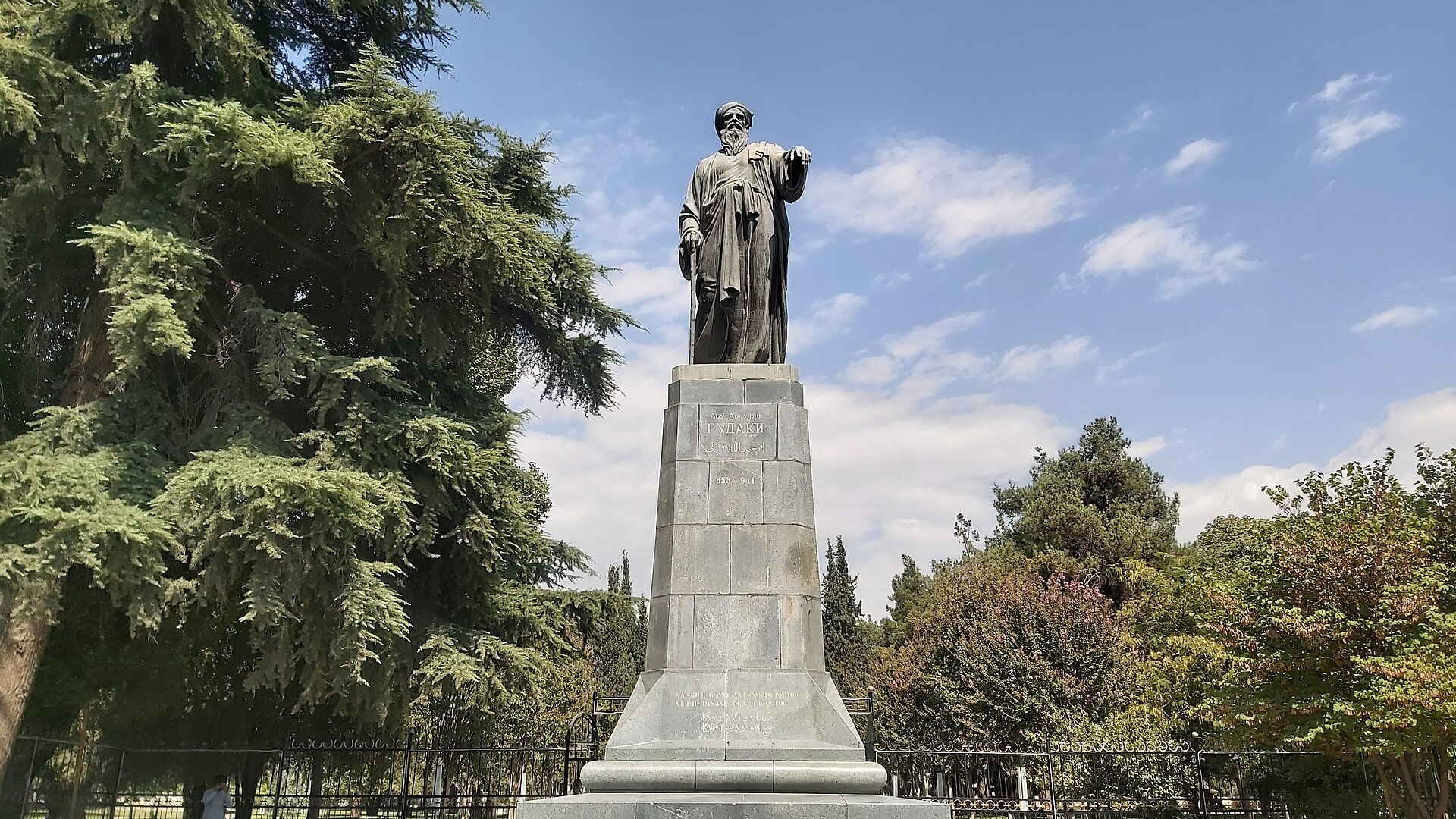
There’s no definitive proof that Rudaki spent his final years here, but the village has embraced the legend as its own. His name appears on street signs, his verses are taught in schools, and his presence lingers in the air like an unspoken truth. The monument, unveiled in 1964, reflects a time when Tajikistan was shaping its national narrative. The sculpture depicts Rudaki seated, a pen in hand and a scroll resting on his lap. Unlike grand, heroic statues, this one feels understated—thoughtful, almost contemplative, as if capturing a moment of quiet reflection. The poet’s gaze seems fixed on something beyond the present, a fitting tribute to a man who wrote about life’s simple joys and sorrows.
For centuries, Rudaki’s legacy was nearly lost. Many of his poems were attributed to other writers, and much of his work vanished over time. It wasn’t until the twentieth century, as Tajikistan sought to reclaim its cultural heritage, that his name resurfaced. Today, his verses are recited not just in Tajikistan but across the Persian-speaking world—in Iran, Afghanistan, and Uzbekistan. The monument in Rudaki stands as a symbol of that revival, a reminder of how poetry can outlast empires and borders.
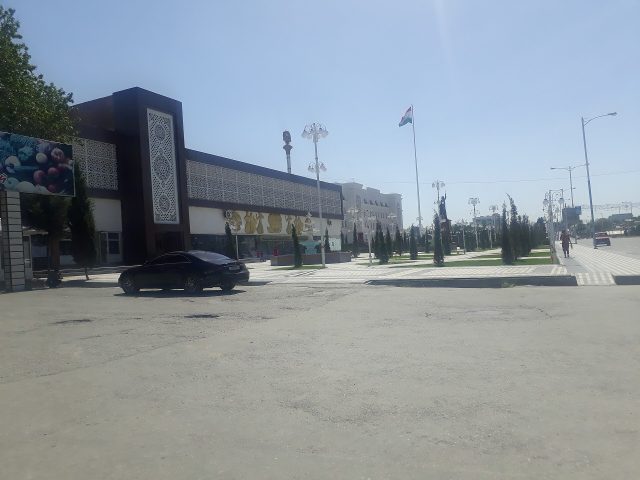
The statue rests on a low pedestal of pale stone, its dark metal figure contrasting with the surrounding greenery. A small park encircles it, with benches where locals gather in the summer. There are no crowds here, no tour groups snapping photos—just the occasional passerby or a group of children playing nearby. On special occasions, like Tajik Language Day, the square comes alive with poetry readings, music, and gatherings where schoolchildren meet contemporary poets. The atmosphere is unpretentious, the kind of place where history feels lived-in rather than preserved.
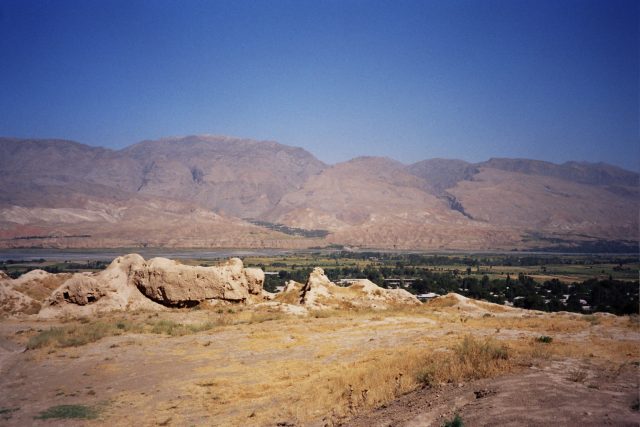
Rudaki itself is a typical village in Tajikistan’s central region, where life moves at the pace of the seasons. Gardens and vineyards stretch across the landscape, and the air carries the scent of fresh greenery and woodsmoke. The monument doesn’t feel out of place here; it’s as much a part of the scenery as the distant mountains or the Kafirnigan River. Locals treat it with quiet respect, not as a relic but as a familiar landmark, something as natural as the changing light over the hills.
Rudaki was more than a poet—he was also a musician, and his work was meant to be heard, not just read. His verses weave together nature, love, and philosophical musings, often in a language that was revolutionary for its time. Some scholars believe he was among the first to write poetry in a conversational style, breaking away from the formal, courtly traditions of his era. For modern Tajiks, his legacy isn’t just historical; it’s a living part of their culture, something that evolves with each generation rather than remaining frozen in time.
There’s nothing flashy about the monument. No plaques explain its significance, no guides offer tours. But that’s what makes it special. Visiting Rudaki isn’t about ticking off a sightseeing list; it’s about sitting on a bench, listening to the laughter of children, and watching the sunlight fade over the mountains. It’s about imagining a man who walked these same paths a thousand years ago, whose words still resonate in the hearts of millions. The monument doesn’t demand attention—it simply exists, a quiet testament to the enduring power of poetry.