Standing on the banks of the Tagus River in Lisbon, the Monument to the Discoveries is a striking tribute to Portugal’s golden age of exploration. It captures the spirit of an era when the country led the world in maritime adventure, its sailors venturing into uncharted waters to redraw the maps of the known world. The monument doesn’t just commemorate the past—it embodies the audacity of those who set sail into the unknown, driven by curiosity, ambition, and the promise of discovery.
Shaped like a caravel cutting through the waves, the monument is a masterful blend of art and symbolism. At its prow stands Prince Henry the Navigator, the visionary who inspired and organized many of Portugal’s early expeditions. His towering figure anchors the composition, flanked by a procession of explorers, cartographers, scientists, and missionaries—each a key figure in the age of discovery. Their statues, frozen in mid-stride, evoke the momentum of an era when Portugal’s influence stretched across oceans, connecting continents and cultures for the first time.
The monument’s origins trace back to 1940, when a temporary version was erected for the Portuguese World Exhibition in Lisbon, celebrating 800 years of independence and 300 years since the restoration of sovereignty. The structure was meant to be fleeting, but its powerful imagery resonated so deeply that a permanent version was commissioned. Today, it stands as a defining landmark, not just for Lisbon but for Portugal’s identity as a nation of explorers. The riverside location was chosen deliberately—this stretch of the Tagus was once a bustling hub where ships were outfitted, crews trained, and voyages launched. Though the docks are long gone, the river still flows past, carrying echoes of the past.
Inside the monument, a small exhibition offers a glimpse into the tools and triumphs of Portugal’s maritime history. Maps, navigational instruments, and replicas of ships’ logs trace the evolution of exploration, from the first tentative voyages along the African coast to the circumnavigation of the globe. The displays highlight Portugal’s pivotal role in shaping the modern world, from the spice trade to the spread of knowledge. It’s a modest but thoughtful collection, grounding the monument’s grandeur in the practical realities of seafaring life.
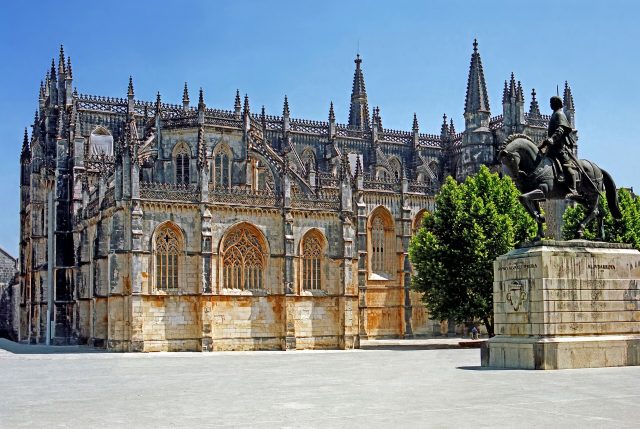
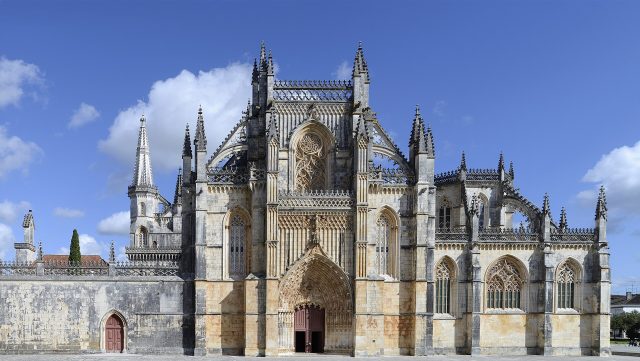
Beyond the monument, Lisbon itself is a city steeped in history, where every corner seems to whisper of past glories. Nearby, the Jerónimos Monastery and Belém Tower stand as UNESCO-listed testaments to Portugal’s golden age, their intricate stonework a stark contrast to the Monument to the Discoveries’ bold modernity. Yet the monument holds its own, bridging the centuries with a sense of motion and purpose. It doesn’t just honor the past—it invites reflection on what it means to explore, to push boundaries, and to seek the unknown.
Visiting the monument is a strangely humbling experience. There’s pride in the achievements of those who dared to sail beyond the horizon, but also a quiet melancholy in realizing how much of the world’s mystery has since been mapped and measured. In an age where travel is routine and the farthest corners of the globe are just a flight away, the monument serves as a reminder that discovery isn’t just about reaching new places—it’s about the courage to venture into the unknown. The figures carved into its stone may be frozen in time, but their legacy is anything but static.
The Tagus River, once the gateway to the world, still laps at the monument’s base, as if carrying the stories of those who sailed from its shores. On a clear day, the light catches the stone, casting long shadows that seem to stretch toward the horizon. It’s easy to imagine the bustle of the old docks, the creak of ships’ hulls, the shouts of sailors preparing for another voyage. The monument doesn’t just preserve history—it brings it to life, if only for a moment.
For all its grandeur, the Monument to the Discoveries is ultimately a deeply human tribute. It honors not just the famous names like Vasco da Gama or Ferdinand Magellan, but the countless others—cartographers, shipbuilders, sailors—whose contributions were just as vital. Their stories are woven into the fabric of the monument, a reminder that great achievements are never the work of one person alone. In that sense, the monument is as much about the collective spirit of exploration as it is about the individuals who led the way.
Lisbon has a way of making history feel alive, and the Monument to the Discoveries is no exception. Whether you visit at dawn, when the light is soft and the crowds are thin, or at dusk, when the stone glows in the fading light, the monument has a way of making you pause. It’s a place that invites you to look outward, to wonder what lies beyond the next bend in the river—or the next horizon. And perhaps that’s the point: to remind us that the world is still full of uncharted waters, waiting for those bold enough to set sail.