Batalha Monastery stands on a gentle rise above the quiet town of the same name, a place where time seems to move at its own unhurried pace. Built in the late 14th century, it was conceived as both a monument to victory and a sacred vow fulfilled. The story begins with King João I, who promised the Virgin Mary that if Portugal triumphed over Castile at the Battle of Aljubarrota, he would erect a grand monastery in her honor. The victory secured Portugal’s independence, and the monastery became more than just stone and mortar—it grew into a symbol of national resilience, a physical embodiment of the country’s hard-won sovereignty.
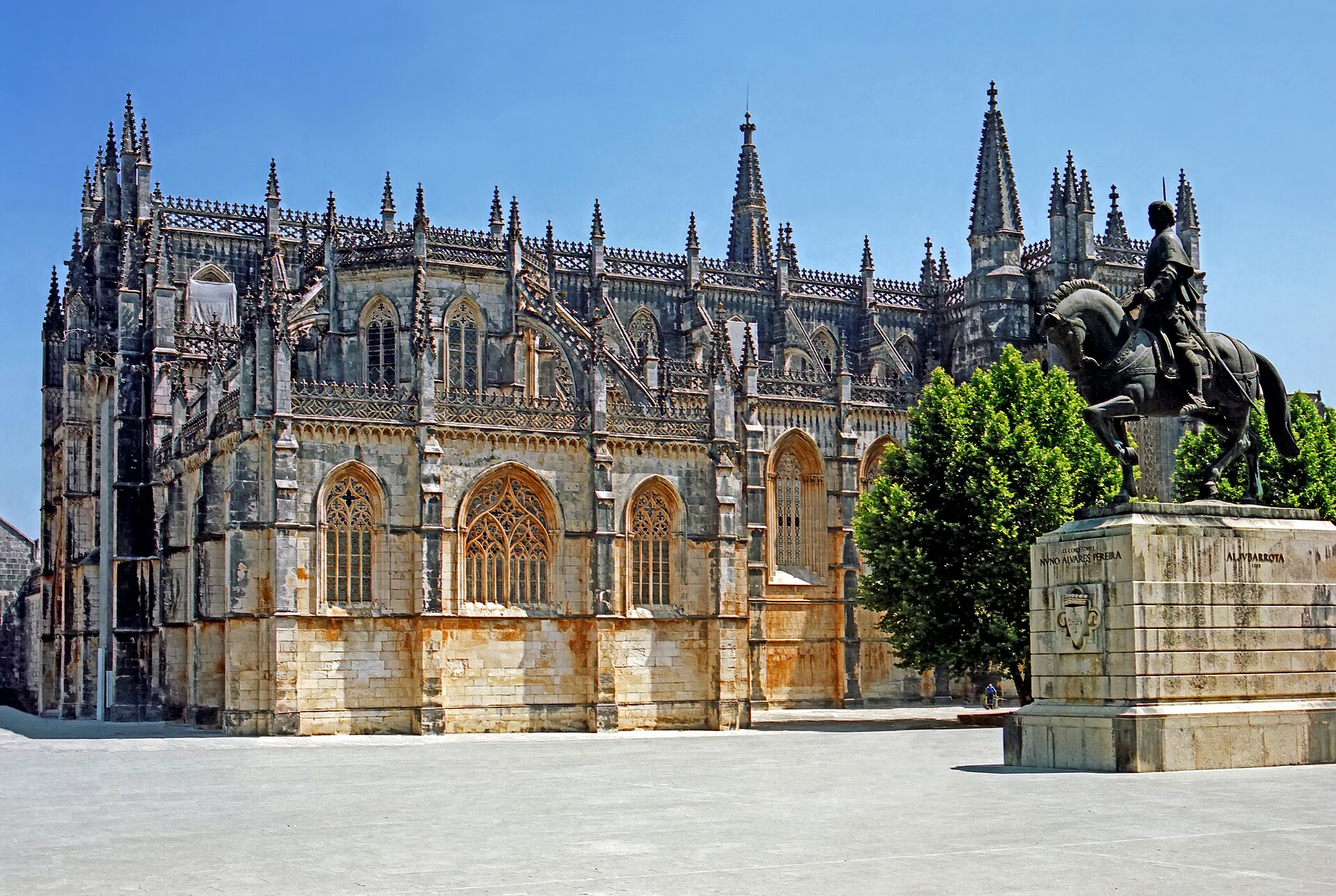
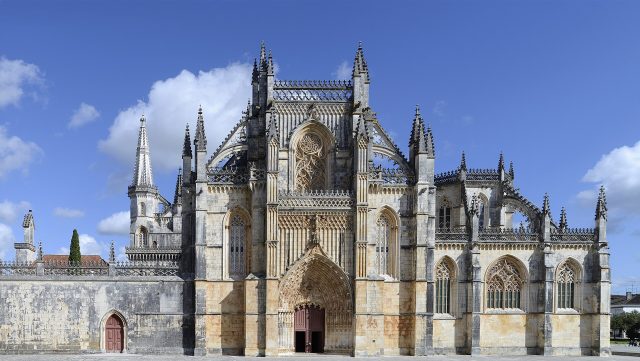
The architecture of Batalha is a striking blend of late Gothic grandeur and the intricate flourishes of Manueline style, which would later define much of Portugal’s artistic identity. The main façade is imposing yet delicate, with towering pointed arches, elaborate rose windows, and rows of statues—saints and kings watching over visitors with quiet authority. The most mesmerizing part, however, lies in what was never finished. The Unfinished Chapels, intended as the burial site for King Duarte and his family, remain a masterpiece of what might have been. Their lace-like stone vaults, seemingly weightless despite their mass, create an ethereal effect, as if the structure itself is suspended between earth and sky. Within these walls, João I and his English queen, Philippa of Lancaster, rest side by side, their tombs marking the beginning of the Aviz dynasty, which would shape Portugal’s golden age.
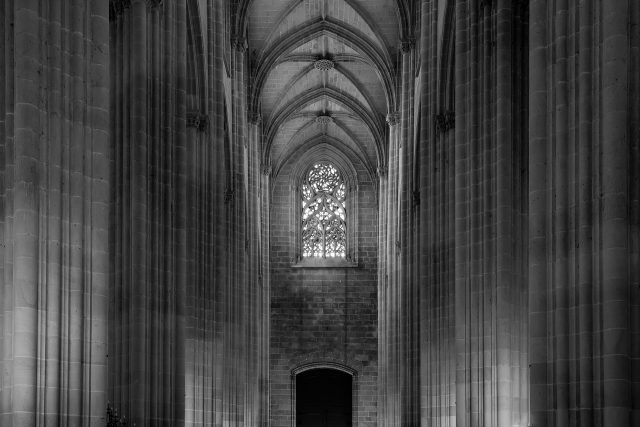
Inside, the monastery feels vast yet intimate. The nave of the church stretches upward, its height accentuated by slender columns that draw the eye toward the altar. Light filters through stained glass, casting shifting patterns across the stone, while the air carries a faint echo of centuries of prayer. The Chapter House, where Dominican monks once gathered, is a space of profound stillness. The acoustics are so precise that even the softest whisper lingers, as if the very walls are listening. The cloisters offer a different kind of quiet—here, the world outside fades, replaced by the rhythmic arches and columns of the King João I Cloister. Every surface is adorned with carvings: twisting vines, heraldic shields, and figures of saints, each detail a testament to the skill of medieval craftsmen.
What makes Batalha remarkable is how it balances grandeur with intimacy. There are no overwhelming crowds, no sense of being rushed through a checklist of sights. Instead, the monastery invites slow exploration. Visitors can trace the grooves of centuries-old carvings with their fingertips, decipher the heraldic symbols that speak of Portugal’s alliance with England, or ponder the meaning behind the enigmatic knots etched into the stone—perhaps a nod to the seafaring exploits that lay ahead, or simply the whim of a long-forgotten mason. The longer you linger, the more the place reveals itself, not through grand declarations, but in small, deliberate details.
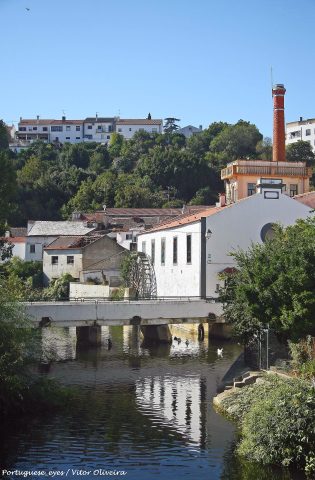
The town of Batalha is as unassuming as the monastery is grand. Unlike Lisbon’s bustling streets or Porto’s vibrant riverfront, this is a place where life moves at a gentler rhythm. The narrow lanes are lined with whitewashed houses topped with terracotta roofs, and the central square hums with the quiet routines of daily life. Locals go about their business without fanfare, and the monastery, though a point of pride, is not treated as a mere tourist attraction. In the evenings, when the day-trippers have left, the town reclaims its tranquility. Elderly men gather on benches to chat, children play in the square, and the monastery’s towering presence feels less like a relic and more like a natural part of the landscape.
For Portugal, Batalha is more than a historical site—it is a touchstone of national identity. The victory at Aljubarrota was a turning point, a moment when a young kingdom proved its strength and secured its future. The monastery became a physical manifestation of that triumph, a place where kings were crowned, where critical decisions were made, and where the most illustrious figures of the Aviz dynasty were laid to rest. Even now, centuries later, the Portuguese regard Batalha with a sense of reverence. It is a place where history is not just remembered but felt, where the past lingers in the cool stone and the hushed atmosphere.
Visiting Batalha is less about ticking off a landmark and more about stepping into a different era. There is no pressure to hurry, no scripted narrative to follow. You can stand in the nave and watch how the light shifts across the stained glass, or wander the cloisters, running your fingers over carvings worn smooth by time. On rainy days, the monastery takes on a brooding beauty, its gray walls blending into the mist, while sunlight transforms the stone into something almost golden, as if the building itself is alive with warmth. The experience is deeply personal, shaped by the weather, the time of day, and the quiet conversations—or lack thereof—of fellow visitors.
What sets Batalha apart from other grand European monuments is its lack of pretension. It does not demand awe or overwhelm with opulence. Instead, it offers something rarer: a sense of authenticity. The monastery does not try to be anything other than what it is—a witness to history, a keeper of memories, and a place of quiet reflection. It asks nothing of its visitors except a willingness to slow down, to listen to the silence that fills its halls, and to recognize that some stories are best told not in words, but in the weight of stone and the play of light. In a world that often feels rushed and disconnected, Batalha remains a place where time, for a little while, stands still.