Batalha Monastery stands on the edge of a quiet town, a place where Portugal’s history feels almost tangible. It was built in the late fourteenth century as a promise kept by King João I after his victory at Aljubarrota, a battle that secured the country’s independence from Castile. More than just a military triumph, that day became a symbol of national unity, and the monastery erected in its memory grew into a stone chronicle of an era when Portugal was forging its identity.
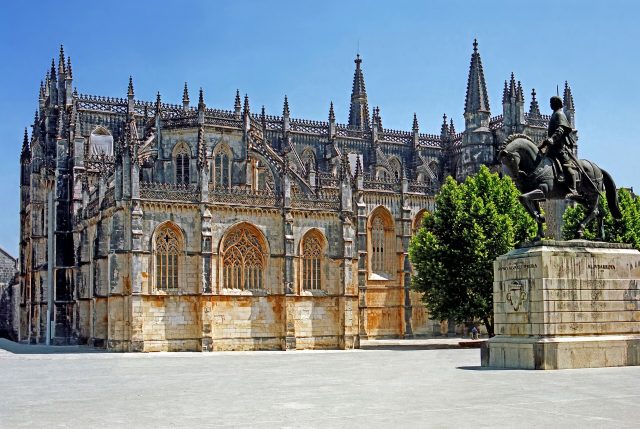
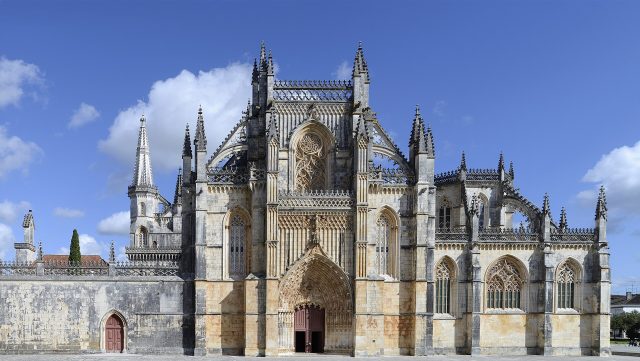
The architecture here is a conversation between two styles. The Gothic influence is clear in the monastery’s severe lines and towering presence, but look closer and you’ll find the first hints of Manueline, the ornate style that would later define Portugal’s Renaissance. The main façade is imposing in its simplicity, yet the details—twisting vines, maritime motifs, and royal coats of arms—whisper of the artistic flourishing to come. The portal, lined with statues of saints and biblical figures, seems to invite visitors into a world where faith and craftsmanship merge seamlessly.
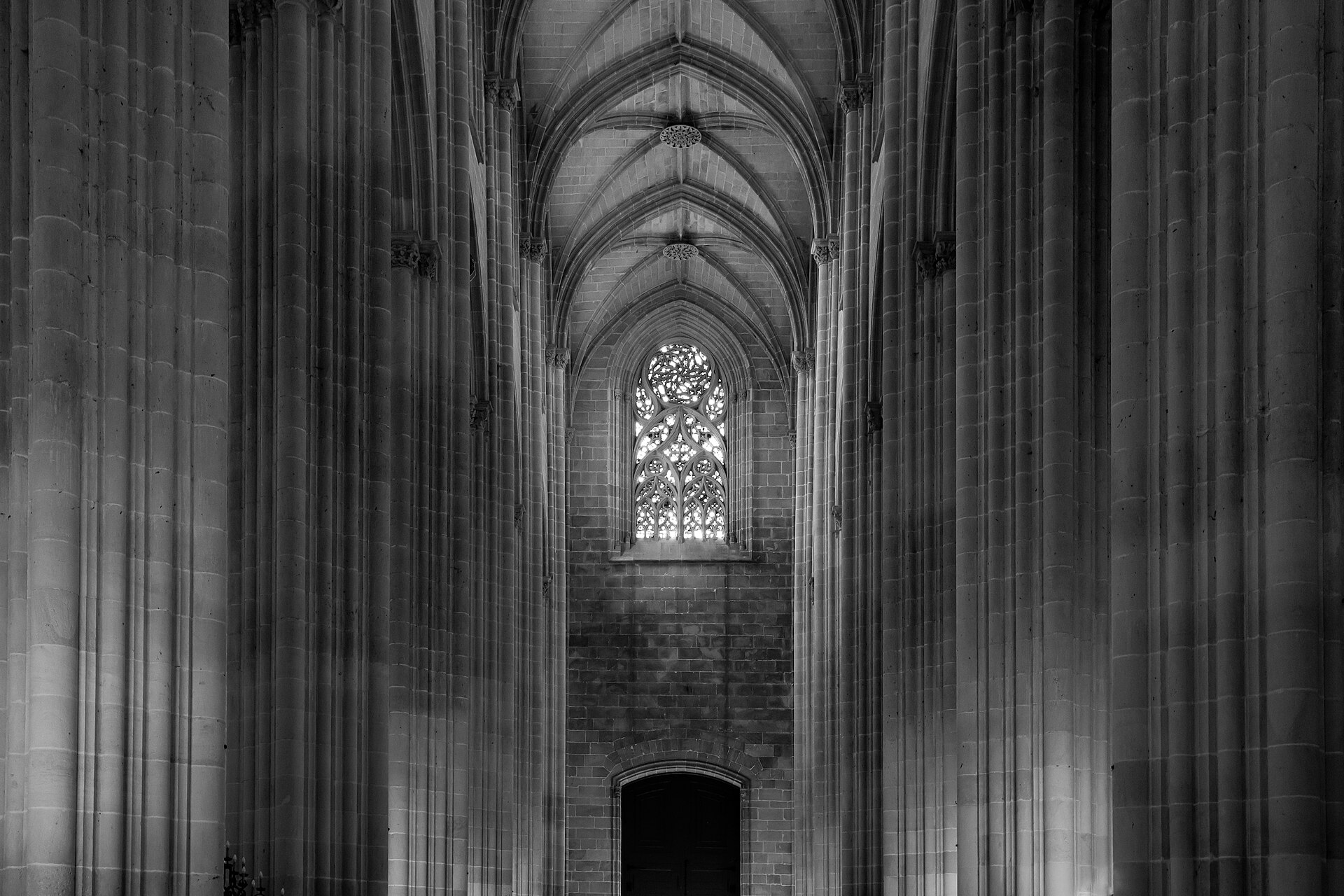
Inside, the space is filled with light and solemnity. The high vaults, supported by slender columns, create an airy sense of scale, while the stained glass—softer and more subdued than in northern Europe—bathes the interior in a gentle glow. The nave draws the eye toward the altar, but the real revelation is the Founder’s Chapel, the resting place of João I and his wife, Philippa of Lancaster. Here, Gothic architecture reaches its peak: the ceiling is a celestial map of stone rosettes, and the walls are covered in intricate carvings depicting scenes from the lives of Christ and the saints.
One of the monastery’s most intriguing features is the Unfinished Chapel. Construction began in the fifteenth century under King Duarte but was never completed. Today, its skeletal arches stand as a silent testament to the monastery’s shifting fortunes. Local legends claim a curse left the chapel unfinished, but the truth is more mundane—financial troubles and the king’s death halted the work, leaving behind a mystery that may never be solved.
Batalha is more than an architectural marvel; it’s a place where history lingers in the air. The monastery holds the tombs of many from the Aviz dynasty, the rulers who guided Portugal through the Age of Discoveries. In the crypt, the graves of princes and infantes tell stories of ambition and loss, of voyages to Africa and India. One of the most poignant is the symbolic tomb of Prince Henry the Navigator, though his remains lie elsewhere. Each inscription is a fragment of a larger narrative, one of triumphs and forgotten dreams.
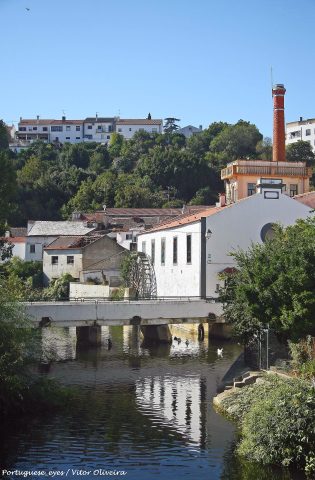
The town of Batalha itself is unassuming, its narrow streets and tiled-roof houses adding to the monastery’s quiet charm. Small cafés serve local wine and fresh bread, and the pace of life feels slower here, as if time itself has settled into the rhythm of the past. In summer, the monastery is framed by green hills; in winter, its white walls stand stark against the gray sky, a reminder of Portugal’s rugged beauty.
Visiting Batalha is less about ticking off a landmark and more about stepping into a moment when Portugal was still discovering its place in the world. Unlike Lisbon or Porto, it sees fewer crowds, allowing visitors to absorb the grandeur and stillness in their own time. Standing beneath the vaulted ceilings of the Founder’s Chapel or tracing the patterns on the portal, it’s impossible not to wonder about the lives and events woven into these stones. Batalha isn’t just mortar and rock—it’s a living memory, speaking in the language of architecture and art.