The Unknown Slave Monument in Port-au-Prince is one of those quiet places that carries more weight than its modest appearance suggests. Tucked away on Avenue de la Liberté, it doesn’t stand in the middle of a grand square or along a well-trodden tourist path. Instead, it exists almost unnoticed, a silent witness to a history that shaped Haiti and the world. There are no grand inscriptions or ceremonial speeches here, no polished plaques explaining its significance. That absence of fanfare makes it powerful—a tribute not to heroes with names, but to the millions whose identities were erased, whose lives were broken, and whose suffering became the foundation of Haiti’s freedom.
The monument itself is simple. A bronze figure kneels under the weight of chains, head lifted in quiet defiance. There’s no theatricality in the pose—just the raw truth of a person who endured cruelty yet refused to be broken. The sculpture sits on a low pedestal in a small park, where locals sometimes leave flowers or sit beneath the trees, as if paying respects to an ancestor. The lack of barriers around it gives the place an intimate feel, as though the monument belongs to the people whose families lived through that era.
Haiti’s struggle for independence was unlike any other in the Americas. In the late 18th century, the colony of Saint-Domingue—then the wealthiest in the world, built on the backs of enslaved Africans—became the stage for the largest slave revolt in history. For over a decade, enslaved people fought against French colonial forces, eventually declaring independence in 1804. Haiti became the first Black-led republic in the world and the second independent nation in the Western Hemisphere. The Unknown Slave Monument wasn’t erected until the late 20th century, but it stands because this victory wasn’t accidental. It was the result of courage, resilience, and a refusal to accept bondage.
Unlike many war memorials or statues of famous leaders, this monument doesn’t aim for grandeur. There’s no marble, no gold, no elaborate symbolism—just a single figure rendered with realism. That simplicity is its strength. It doesn’t romanticize the past. The enslaved person depicted here isn’t idealized; there’s no attempt to soften the brutality. Instead, the sculpture forces you to confront what happened on this island. Perhaps that’s why it doesn’t draw crowds of tourists. But for Haitians, it holds a significance beyond aesthetics.
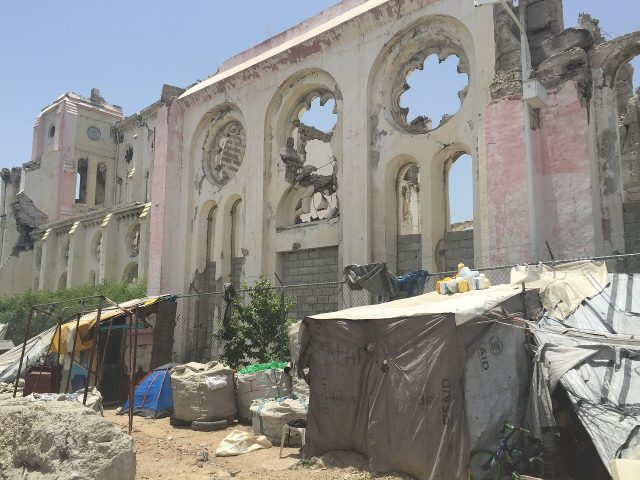
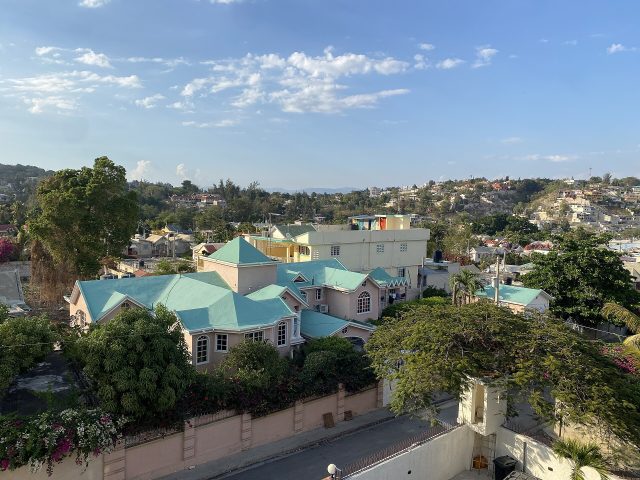
Port-au-Prince is a city of contrasts, where wealth and poverty exist side by side, and where the past is never far away. The monument sits in one of those in-between spaces, where colonial-era buildings—some still grand, others crumbling—hint at the city’s layered history. This part of town doesn’t hide its scars. The streets are lined with structures that have seen better days, their facades bearing the marks of time. History isn’t confined to museums here; it spills out onto the sidewalks, where every corner seems to whisper stories of those who lived, fought, and died.
For Haitians, the monument is more than just a statue. It’s a reminder of the price of freedom in a country where that freedom is still fragile. Haiti remains one of the poorest nations in the Western Hemisphere, grappling with political instability, economic struggles, and the effects of centuries of exploitation. The memory of slavery isn’t just taught in schools or commemorated on holidays—it’s woven into daily life. You hear it in the rhythms of kompa music, see it in traditional dances, and feel it in Vodou rituals, which preserved African traditions despite attempts to erase them. The Unknown Slave Monument is part of that living history, a place where people can pause and reflect on what freedom truly means.
This isn’t a place you visit to tick off a tourist attraction. There are no guided tours, no gift shops, no curated narratives. What you’ll find instead is silence—broken only by the hum of the city—and a figure that seems to look back at you, as if asking: Do you remember what it took to get here? The monument doesn’t offer easy answers. It doesn’t wrap history in a neat package. It simply stands for those whose names were lost but whose legacy shaped a nation.
Around the monument, life goes on. Vendors arrange piles of mangoes and avocados on makeshift stalls, children kick a worn-out soccer ball in the dust, and old men sit on benches, debating the news. It’s an ordinary corner of the city, yet here the past feels closer than ever. Maybe that’s why the monument isn’t a major tourist draw. It doesn’t offer spectacle. But for those who come seeking something deeper—an understanding of Haiti beyond the headlines—it remains one of the most important places on the island.
Haiti is often reduced to images of poverty and disaster, a narrative that overshadows everything else. But those who look beyond the surface discover a country where history isn’t just preserved in museums—it’s alive in the streets, in the people, in the land itself. The Unknown Slave Monument is one of those places where that history becomes real. It doesn’t tell the story of famous battles or celebrated leaders. Instead, it honors the nameless, the faceless, the millions whose forced labor built an empire and whose rebellion changed the world. Without them, Haiti wouldn’t exist. And without this monument, their memory might have faded entirely.