Gračanica sits outside Pristina. The past here feels closer than in most of Kosovo. The town doesn’t draw crowds, but it holds the Gazimestan Monument, a memorial to the 1389 Battle of Kosovo. That day, the medieval Serbian state clashed with the advancing Ottoman Empire. Over time, the battle became more than an event—it turned into a symbol, a legend, and a point of memory in the Balkans.
The monument stands on a gentle hill. Open fields stretch toward the horizon. A simple paved path leads to the towering stone structure. The design is stark: a concrete obelisk rises from a circular base, its surface etched with battle scenes. The figures are stylized, almost abstract. At the base, an eternal flame flickers.
The Battle of Kosovo wasn’t just a military defeat. It marked the start of Ottoman rule in the region, a turning point that shaped the Balkans for centuries. Its legacy is complicated. Over time, it wove into folklore, poetry, and national identity, especially in Serbian culture. Prince Lazar, who led the Serbian forces, and the betrayal of Vuk Branković became epic tales. Fact and myth blurred over generations.
Gazimestan was built in 1953. Yugoslavia commissioned it for the battle’s 550th anniversary. Architect Aleksandar Deroko designed it to honor the past without glorifying war. The result is a solemn structure. Rolling hills, scattered villages, and the distant Šar Mountains add to the atmosphere.
Visiting Gazimestan isn’t like visiting a typical tourist site. No guided tours. No gift shops. No crowds. Most of the time, you’ll have the place to yourself or share it with a few locals. The silence is broken only by the wind or a passing car.
The monument sits near the presumed battle site. Historians debate the exact location—some say closer to Kosovo Polje, others argue it was spread across a wider area. This land has long been a crossroads. Empires and cultures collided here. The Ottomans, the Habsburgs, and the Yugoslavs all left their mark.
For many Serbs, Gazimestan is a pilgrimage site. On Vidovdan, June 28th, thousands gather. Speeches, religious ceremonies, and sometimes political rallies take place. The atmosphere is charged. For outsiders, it’s a glimpse into how history is lived, not just remembered.
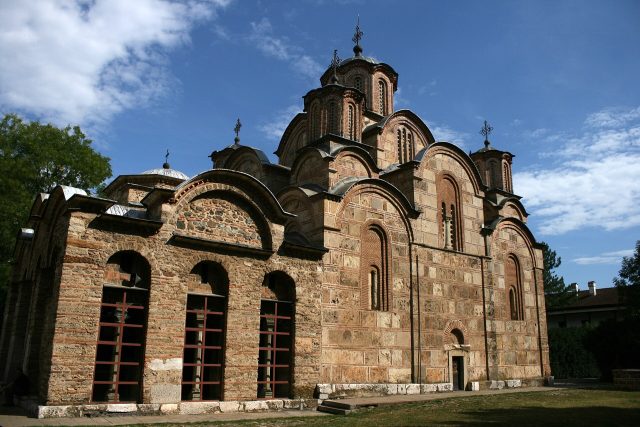
Gračanica itself is worth a visit. The Gračanica Monastery, a UNESCO World Heritage site, stands nearby. Built in the 14th century, it’s a fine example of Serbian medieval architecture. Its frescoes and proportions contrast with the modern monument a few kilometers away. The past is preserved in different ways—some in stone, others in memory.
Gazimestan doesn’t offer easy answers. Its significance shifts depending on who you ask. For some, it’s resistance and sacrifice. For others, a warning about nationalism. What stays the same is its power to make you think. Whether you’re a historian, a traveler, or just passing through, the monument lingers in your mind after you leave.