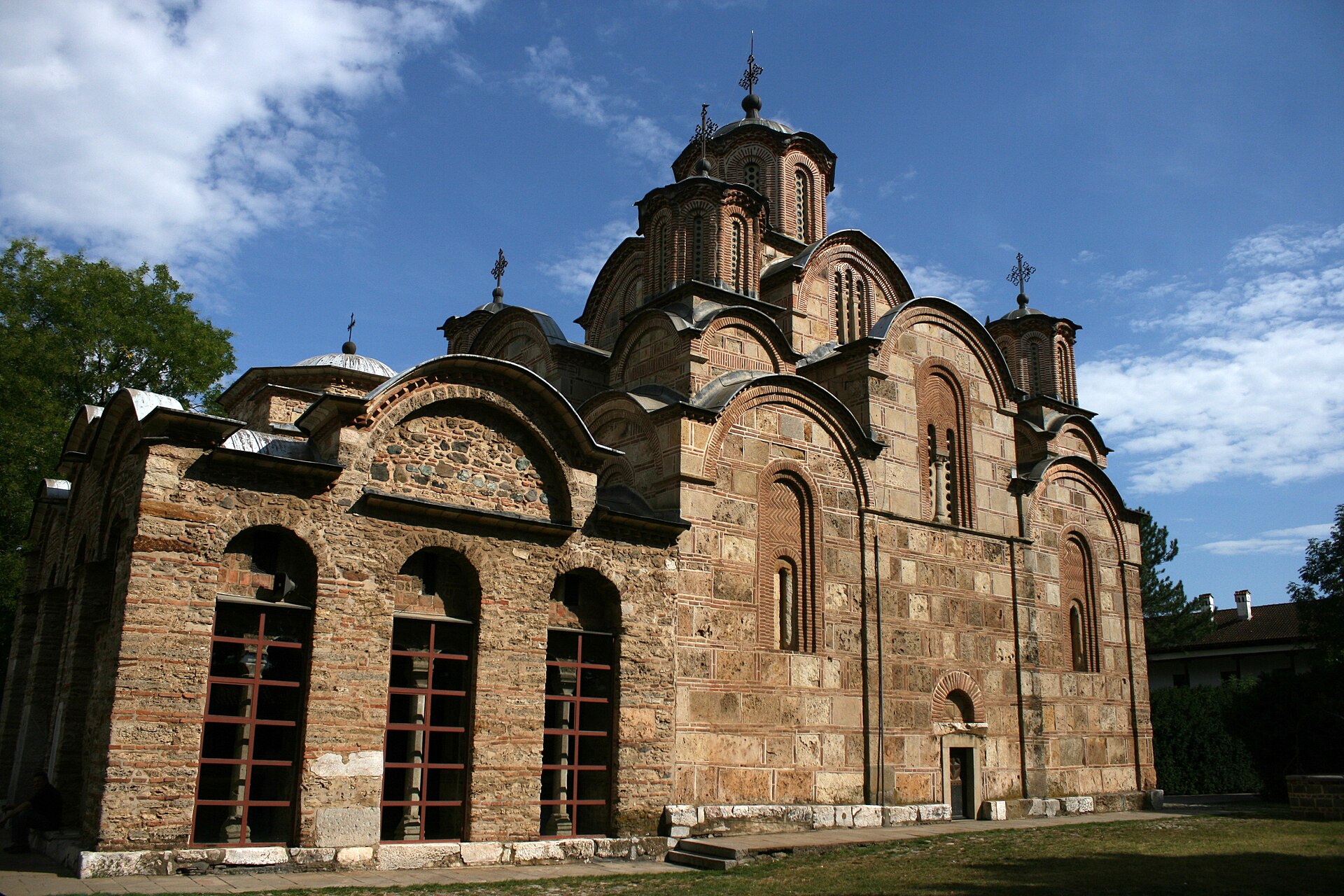
Gračanica Monastery stands as one of Kosovo’s most enduring symbols of medieval Serbian heritage, a place where history, faith, and art converge in quiet defiance of time. Built in the early 14th century under the patronage of King Milutin, it was conceived not just as a religious sanctuary but as a statement of cultural and political identity during a period of shifting borders and power struggles in the Balkans. The monastery’s location, just a short drive from Pristina, makes it accessible yet removed from the bustle of modern life, offering visitors a moment of reflection amid the rolling hills of central Kosovo.
The architecture of Gračanica is a masterclass in the Serbian-Byzantine style, a fusion of Eastern and Western influences that defined much of the region’s medieval art. Its cross-in-square design, crowned by five domes, is both imposing and harmonious, with proportions that seem to defy the limitations of the era’s engineering. The central dome, the tallest of the five, draws the eye upward, while the smaller domes create a rhythmic balance that feels almost musical. The exterior, clad in alternating layers of brick and stone, gives the structure a textured, almost organic quality, as if it grew from the earth rather than being built upon it.
Inside, the monastery’s frescoes are what truly captivate. Painted between 1321 and 1322, they represent some of the finest examples of Palaiologan Renaissance art, a period marked by a renewed emphasis on emotional expression and naturalism. The scenes depict biblical narratives, saints, and the lives of Christ and the Virgin Mary, rendered with a delicacy that makes them feel alive. The colors—deep blues, rich reds, and gold leaf—have retained their vibrancy over centuries, a testament to the skill of the artists and the quality of the materials used. Among the most striking is the depiction of the Dormition of the Virgin, where the figures seem to float in a space that transcends the physical walls of the church.
Gračanica’s significance extends beyond its artistic and architectural merits. For centuries, it has been a spiritual heart for the Serbian Orthodox community in Kosovo, a place of pilgrimage and prayer. During the Ottoman period, when much of the Balkans was under Islamic rule, the monastery endured as a center of resistance and preservation, safeguarding not just religious practices but also manuscripts, traditions, and a sense of identity. Even in more recent times, amid the tensions of the late 20th century, it remained a symbol of continuity, a reminder of the deep roots that tie the region’s people to their past.
The monastery’s surroundings add to its allure. The complex is enclosed by a low stone wall, creating a sense of seclusion that contrasts with the openness of the Kosovo plains beyond. A small cemetery lies nearby, its weathered gravestones bearing the names of those who lived and died in the shadow of the monastery. The landscape itself is unassuming—gentle slopes, patches of woodland, and the occasional glimpse of distant mountains—but it carries a weight of history that makes even the simplest view feel meaningful.
Visiting Gračanica today is a study in contrasts. The monastery is both a living place of worship and a historical monument, its daily rhythms punctuated by the sound of church bells and the murmur of prayers. Yet it also exists in a broader context, one shaped by the complexities of Kosovo’s modern identity. For some, it is a cherished part of their heritage; for others, it is a relic of a past that feels distant or even contentious. This duality is part of what makes the place so compelling—it is not just a relic to be admired from a distance but a space that invites engagement, whether through quiet contemplation or a deeper exploration of its layered history.
The monastery’s role in contemporary Kosovo is as much about memory as it is about faith. It stands as a bridge between eras, a place where the medieval world and the present coexist, sometimes uneasily. The frescoes, the architecture, and even the very stones of the building tell stories that transcend the boundaries of time, offering glimpses into the lives of those who built, prayed, and fought for this place. For visitors, it is an opportunity to step outside the familiar narratives of travel and encounter something more profound—a place where beauty, history, and human resilience intersect in ways that linger long after the visit is over.
There is no grand entrance or tourist infrastructure at Gračanica, no gift shops or guided tours clamoring for attention. Instead, the experience is understated, almost intimate. The monastery invites you to slow down, to look closely at the details—the way the light filters through the narrow windows, the faint scent of incense lingering in the air, the texture of the stone beneath your fingers. It is a place that rewards patience, where the more you observe, the more you begin to understand its quiet power.
In the end, Gračanica Monastery is more than just a destination; it is a testament to the enduring nature of culture and faith. It has survived wars, empires, and the passage of centuries, not as a frozen monument but as a living entity that continues to evolve. Whether you come as a pilgrim, a historian, or simply a curious traveler, the monastery offers something rare—a chance to connect with a past that is still very much alive in the present.