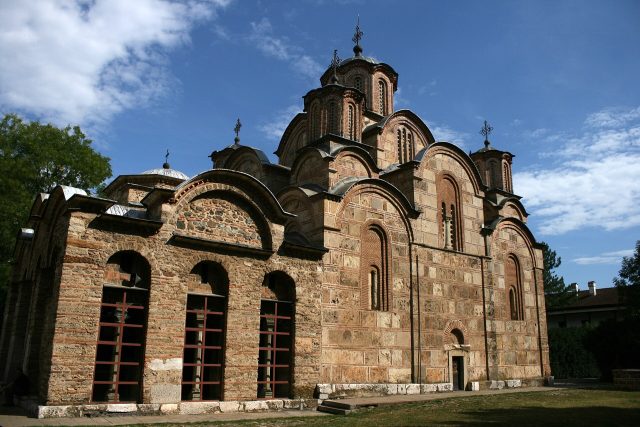
Just outside the quiet town of Gračanica, where the Kosovo plains stretch toward the distant hills, lies a place where the past feels almost tangible. Ulpiana, once a thriving Roman city, now rests as an archaeological park, its ruins whispering stories of empires, trade, and daily life from nearly two millennia ago. The site is modest in size but rich in history, offering a rare glimpse into the region’s ancient roots without the crowds that often gather at more famous Roman ruins elsewhere in Europe.
Founded in the 1st century AD, Ulpiana was named in honor of Emperor Trajan, whose full name was Marcus Ulpius Nerva Traianus. The city flourished under Roman rule, becoming an important administrative and economic center in the province of Moesia Superior. Its strategic location along trade routes connecting the Adriatic coast with the interior of the Balkans ensured its prosperity, while its position near the mining districts of Novo Brdo made it a hub for the extraction and distribution of precious metals. By the 4th century, Ulpiana had grown into a well-planned urban settlement, complete with public baths, temples, a forum, and an early Christian basilica—evidence of its significance in both secular and religious life.
Walking through the park today, the most striking feature is the remains of the city’s defensive walls, which once encircled Ulpiana in an irregular oval shape. Built from local stone and brick, the walls were reinforced with towers and gates, though only fragments survive. Nearby, the outlines of the forum can still be traced, its paved surface long gone but the layout hinting at the bustling marketplace it once was. The forum was the heart of Roman civic life, where merchants, politicians, and citizens gathered, and though the columns and statues that once adorned it have disappeared, the space retains a sense of its former grandeur.
One of the most intriguing discoveries at Ulpiana is the early Christian basilica, dating to the 4th or 5th century. Its foundations reveal a three-aisled structure with an apse, typical of early Christian architecture in the Balkans. The basilica’s location within the city suggests that Ulpiana was an early center of Christianity in the region, a faith that spread rapidly after Constantine the Great’s conversion in the early 4th century. Nearby, the remains of a baptistery further underscore the city’s religious importance. These ruins, though modest, offer a tangible connection to the spiritual life of the time, when pagan traditions were gradually giving way to the new faith.
Beyond the basilica, the park holds other remnants of daily life in Ulpiana. The public baths, though reduced to low walls and scattered tiles, hint at the Roman obsession with hygiene and socializing. These complexes were more than just places to bathe—they were social hubs where people gathered to exercise, gossip, and conduct business. The hypocaust system, which heated the floors and walls, is still visible in places, a testament to Roman engineering. Elsewhere, the remains of private homes and workshops suggest a city that was both prosperous and industrious, with artisans producing goods for local and distant markets.
Ulpiana’s decline began in the late 6th century, as the Roman Empire weakened and the Balkans faced waves of invasions. The city was sacked by Avars and Slavs, and though it was briefly revived under Byzantine rule, it never regained its former glory. By the Middle Ages, Ulpiana had faded into obscurity, its stones repurposed for other buildings, its name forgotten by all but a few. It wasn’t until the 20th century that archaeologists began to uncover its secrets, piecing together the story of a city that had once been a cornerstone of the region’s history.
Today, the archaeological park is a place of quiet reflection. Unlike more famous Roman sites, Ulpiana doesn’t draw large crowds, which makes it all the more special for those who visit. The absence of tourist infrastructure means you can wander the ruins at your own pace, imagining the city as it once was—alive with the sounds of merchants haggling, children playing, and the distant clatter of chariots on cobblestone streets. The surrounding landscape, with its rolling hills and patches of forest, adds to the sense of timelessness, as if the past and present exist side by side.
For those interested in history, Ulpiana offers a rare opportunity to explore a lesser-known chapter of the Roman world. It’s a place where the layers of time are visible in the weathered stones, where the stories of emperors, soldiers, and ordinary citizens are still waiting to be told. The site may not have the grandeur of Rome or the well-preserved mosaics of Pompeii, but that’s part of its charm. Here, history feels raw and unfiltered, a direct connection to the people who once called this place home.
Visiting Ulpiana is also a chance to see Kosovo beyond its modern struggles. The country’s ancient past is often overshadowed by more recent events, but places like this remind us that its history is long and complex. The ruins stand as a testament to the region’s role as a crossroads of civilizations, where Roman, Byzantine, and later cultures left their mark. Whether you’re a history enthusiast or simply someone who appreciates the quiet beauty of forgotten places, Ulpiana offers a journey into the past that’s both humbling and inspiring.