High above the Danube, where the river carves its way through the Iron Gates gorge, a monumental face emerges from the limestone cliff. This is the statue of Decebalus, the last king of Dacia, whose defiance against the Roman Empire nearly two thousand years ago still resonates in these lands. The sculpture, forty meters tall, was hewn directly into the rock over a decade, its stern features gazing out over the water as if watching for the legions that once marched along its banks. There’s no grand pedestal or polished marble here—just the raw stone and the river below, a quiet but powerful reminder of a kingdom that refused to yield.
The idea for the monument came not from the state, but from a private individual: Iosif Constantin Drăgan, a Romanian historian and businessman who saw in Decebalus a symbol worth preserving. Drăgan’s vision was to create something that would endure beyond his lifetime, a tribute not just to a king, but to the resilience of a people. The work began in 1994 and took ten years to complete, blending modern engineering with the age-old craft of stonemasonry. The result is less a statue in the traditional sense and more a fusion of art and landscape, where the natural contours of the cliff shape the king’s features—his broad forehead, the line of his nose, the set of his jaw—just as they might have appeared on ancient coins.
The location was chosen with care. This stretch of the Danube, where the river narrows between the Carpathian Mountains, was the stage for one of history’s great confrontations. It was here, in the Iron Gates, that Emperor Trajan led his armies into Dacia, and where Decebalus, cornered and outnumbered, chose death over captivity. The Romans would later carve their own mark into these cliffs, leaving inscriptions that still stand today. The Decebalus monument, then, is not just a memorial but a counterpoint—a defiant echo of a kingdom that Rome could conquer but never erase. The Latin inscription above the king’s head, *DECEBALUS REX—DRAGAN FECIT*, serves as both a signature and a bridge between past and present.
For Romanians, Decebalus is more than a historical figure; he’s a cultural touchstone, a symbol of resistance that has been invoked in everything from literature to political speeches. The monument, though relatively new, has quickly become a place of pilgrimage, not just for tourists but for locals who see in it a reflection of their own identity. There are no museum exhibits here, no guided tours with rehearsed scripts—just the wind off the river, the weight of the stone, and the sense that history is not something confined to books but something that lingers in the land itself. It’s the kind of place where you might find yourself standing a little longer than you intended, lost in the quiet.
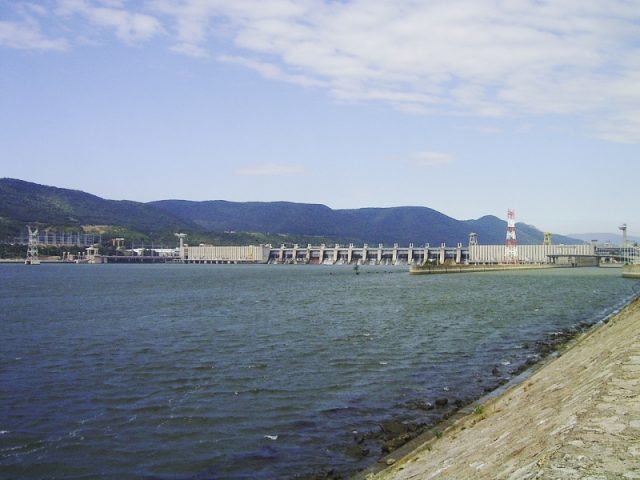
Getting here is part of the experience. The nearest town, Orșova, sits on the Danube’s edge, a quiet place with a history as layered as the cliffs above. Once a Roman port, later a trading hub, it now feels like a pause in time, with its waterfront cafés and the slow rhythm of life along the river. From here, you can drive to the monument in about twenty minutes, winding along roads that hug the shore, or take a boat from the Iron Gates dam. Seeing the sculpture from the water is particularly striking—the sheer scale of it becomes apparent only when you’re on the river, looking up at the face carved into the rock.
The area around the monument is rich in history and natural beauty. The Iron Gates Natural Park stretches along the Danube, where remnants of Roman roads and fortifications still peek through the forest. One of the most famous relics is the Tabula Traiana, a Roman inscription commemorating Trajan’s conquest, carved into the cliffside. The park is also home to hiking trails that lead to viewpoints overlooking the gorge, where the river widens into a vast, shimmering expanse. The air here is different—cleaner, sharper—and the silence is broken only by the sound of water and the occasional cry of a bird of prey circling overhead.
What makes the Decebalus monument unusual is its lack of pretense. There are no gift shops, no crowds jostling for photos, no signs telling you how to feel. Instead, there’s the rock, the river, and the space to think. It’s the kind of place that invites reflection rather than consumption, where the past isn’t packaged for easy digestion but left to speak for itself. Some visitors come for the history, others for the artistry, and some simply because it’s a striking place to stand and watch the Danube flow. Whatever the reason, the monument doesn’t demand admiration—it earns it, quietly, through its presence alone.
In a way, the statue of Decebalus is a testament to the power of persistence—not just the king’s, but the persistence of memory itself. Two millennia after his death, his face still watches over the river, a silent guardian of a land that has seen empires rise and fall. The monument doesn’t rewrite history or glorify war; it simply stands as a reminder that some stories refuse to fade. And perhaps that’s why it feels so compelling. It’s not about victory or defeat, but about the quiet dignity of a place where the past is still alive, etched into the stone and carried on the wind.