The Vasco da Gama Pillar in Malindi isn’t just another monument—it’s one of the few tangible links between East Africa’s Swahili Coast and the age of European exploration. Erected in the early 1500s, it marks a turning point when Portuguese navigators, searching for a sea route to India, first set foot on these shores. At the time, Malindi was a thriving hub where Arab, Indian, and even Chinese merchants traded ivory, gold, and spices. The arrival of the Portuguese didn’t just bring new faces; it reshaped the region’s trade networks and political alliances, leaving behind this quiet stone witness to a pivotal moment in history.
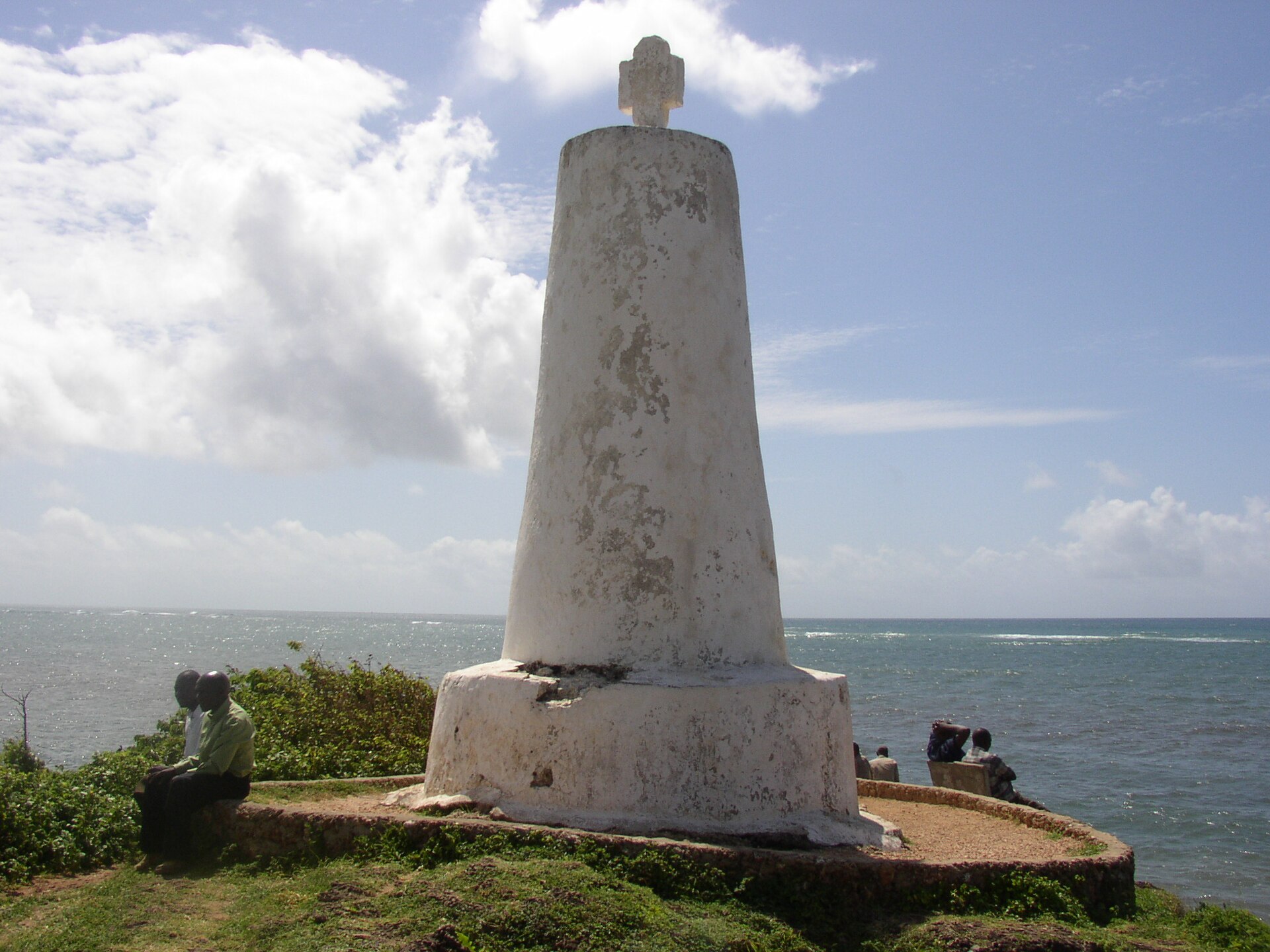
The pillar itself is a simple structure—a tall, tapering column crowned with a cross, its surface etched with the faded coat of arms of Portugal and worn inscriptions in Portuguese. Centuries of tropical weather have blurred the details, leaving only fragments of the original carvings. Yet even in its weathered state, the pillar stands as a reminder of the sailors who once anchored here, their ships bobbing in the same waters that now lap against the shore. Surrounded by palms and shrubs, it occupies a small rise overlooking the Indian Ocean, a vantage point that would have been just as strategic five hundred years ago as it is today.
Malindi in the early 16th century was one of the most prosperous cities along the Swahili Coast, its wealth built on trade and its influence stretching across the Indian Ocean. When Vasco da Gama arrived in 1498, he found a city ruled by a sultan who, unlike his counterparts in Mombasa or Kilwa, welcomed the Portuguese. Some accounts suggest the sultan even provided a local pilot to guide da Gama’s fleet to India—a gesture that may have saved the expedition. In return, the Portuguese erected this pillar, though historians debate whether it was da Gama himself who placed it or a later expedition. Either way, the monument became a symbol of the uneasy alliance between Europe and East Africa, one that would soon give way to conflict and colonial ambition.
Today, the pillar sits slightly off the beaten path, away from the bustle of Malindi’s tourist spots. Visitors often stumble upon it by accident, drawn by curiosity rather than a guidebook recommendation. There are no crowds here, no vendors hawking souvenirs—just the sound of waves and the occasional cry of a seabird. It’s not a place for selfies or quick snapshots; instead, it invites a slower kind of reflection. Standing before the pillar, it’s hard not to wonder about the people who once gathered here: the sailors, the merchants, the rulers who shaped the fate of a continent from this very shore.
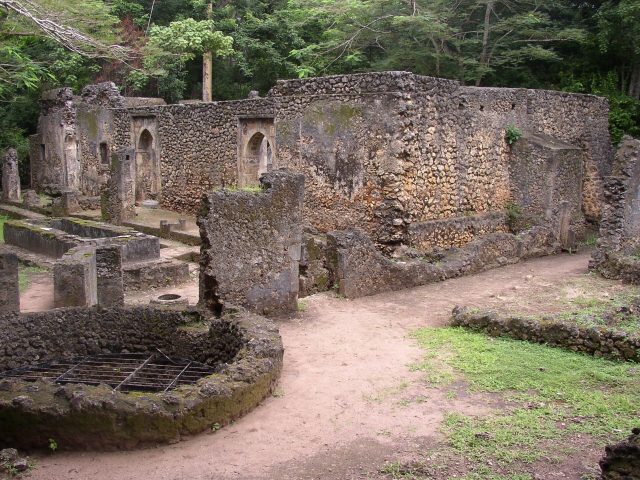
For locals, the pillar is a piece of history, but not the most prominent one. Malindi’s identity is tied more closely to its ancient mosques, the tombs of Swahili sheikhs, and the ruins of the Portuguese fort that still overlooks the town. Yet for those who study the age of exploration, the Vasco da Gama Pillar remains a powerful symbol. It’s a reminder that even a small coastal town like Malindi was once at the center of global events, its harbor a crossroads for cultures and empires. The pillar doesn’t just mark a moment in time; it connects the past to the present, showing how the currents of history have shaped the world we live in today.
Time hasn’t been kind to many of the monuments from this era. Some were lost to war, others swallowed by the jungle or reclaimed by the sea. The pillar in Malindi has survived, but barely. The stone is eroding, its inscriptions fading with each passing year. Local efforts to preserve it are ongoing, but resources are limited. One day, it may be little more than a memory, a footnote in the story of East Africa’s coastal cities. For now, though, it endures—a fragile link to an age when the world was still being mapped, and the shores of Africa were the gateway to the unknown.
Visiting the pillar isn’t like touring a museum or a restored historic site. There are no plaques with detailed explanations, no guides spinning tales of adventure. Instead, it’s a place for quiet contemplation. The ocean stretches out before you, unchanged in its vastness, while the wind carries the same salt tang it did centuries ago. It’s easy to imagine the scene as it might have been: ships anchored just offshore, sailors stepping onto the sand, their eyes scanning the horizon for signs of home or the promise of discovery. The pillar doesn’t offer answers, but it asks questions—about ambition, about connection, about the fleeting nature of human endeavors.
Modern Malindi is a city of contrasts, where luxury resorts stand beside fishing villages and ancient ruins share the landscape with shopping malls. The Vasco da Gama Pillar fits uneasily into this picture, a relic of a time when the world was both larger and smaller than it is today. It’s a reminder that history isn’t a neat, linear story but a patchwork of moments, some grand, some forgotten. The pillar doesn’t demand attention, but for those who take the time to seek it out, it offers something rare: a chance to stand in the footsteps of the past and feel the weight of the centuries that have passed since those first Portuguese ships arrived on these shores. If you ever find yourself in Malindi, it’s worth the detour. Sit by the water, listen to the waves, and let the silence tell its story.