Arabuko-Sokoke is one of Kenya’s last great wild spaces, a rare pocket of untouched forest clinging to the coast where the land still feels like it did before the world took notice. Stretching across nearly four hundred square kilometers, it’s the largest remaining coastal forest in East Africa, yet it remains largely unknown to the crowds that flock to Kenya’s more famous safari destinations. There are no paved trails here, no tour buses, no guides shouting over megaphones—just the rustle of leaves, the distant call of birds, and the occasional glimpse of something moving through the trees. For those who venture here, it’s a chance to see the country stripped of its tourist veneer, a place where the rhythm of life hasn’t changed in centuries.
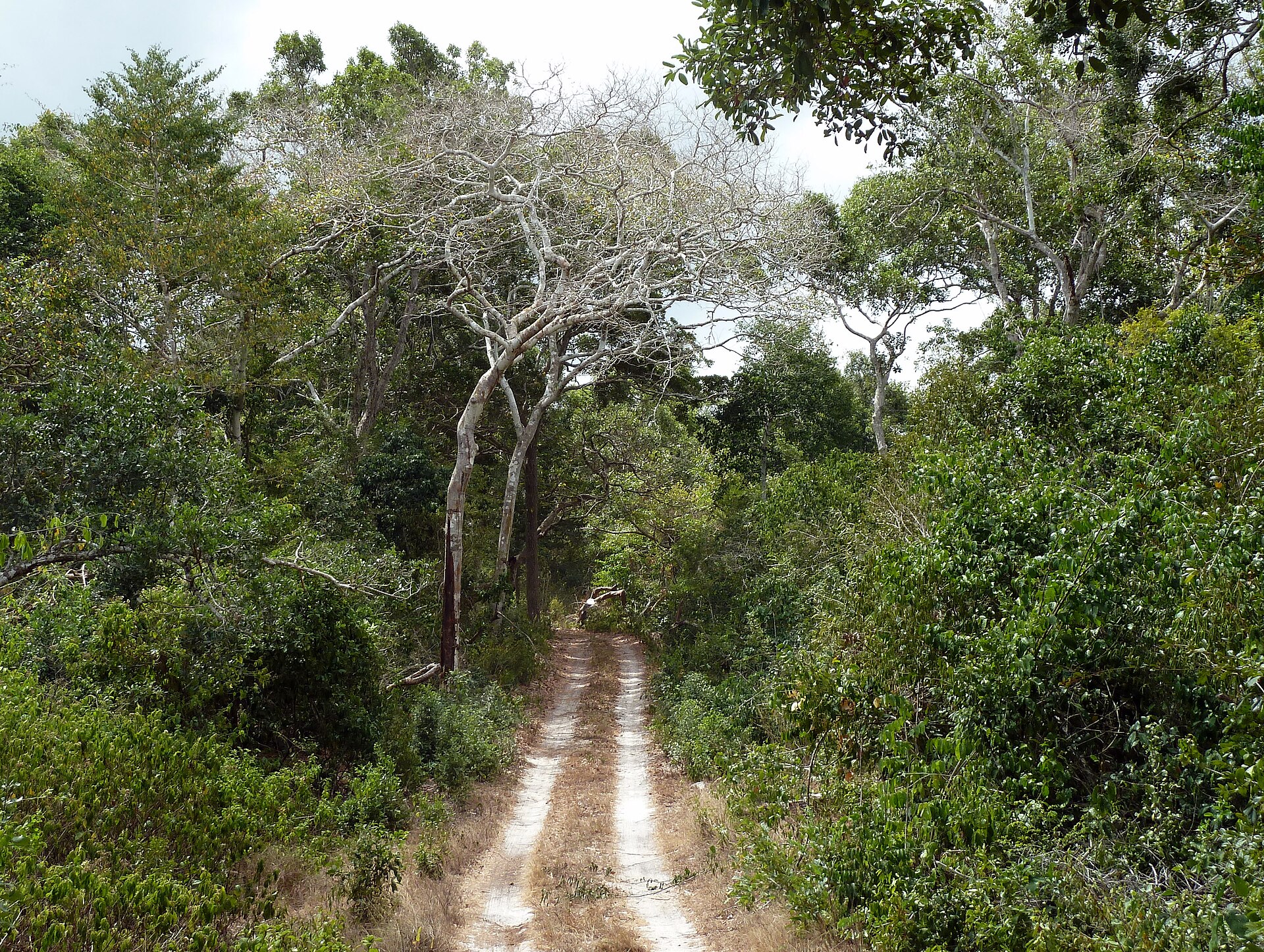
The forest feels different from the dense, humid jungles further inland. The air is drier, the light brighter, filtering through a canopy of brachstegia and other hardy trees adapted to sandy, nutrient-poor soil. The landscape shifts between sun-dappled clearings and thickets so dense they swallow sound, where the only noise is the hum of insects and the occasional crack of a branch underfoot. It’s a place of quiet contrasts—open spaces where sunlight pools on the ground in shifting patterns, and shadowy groves where the trees stand like sentinels. The forest doesn’t overwhelm with its grandeur; instead, it draws you in slowly, revealing its secrets only to those who take the time to look.
Arabuko-Sokoke is a sanctuary for species found nowhere else. The golden-rumped elephant shrew, a tiny creature with a tail like a paintbrush, darts between the undergrowth, while the Sokoke scops owl, one of the world’s rarest birds, watches from the branches. The forest is home to the diminutive Sokoke bushy-tailed mongoose and the Ader’s duiker, a small antelope so elusive it’s rarely seen even by those who spend years studying the area. Over two hundred bird species have been recorded here, including the Fischer’s turaco with its emerald plumage and the crowned eagle, which circles high above the treetops. For wildlife enthusiasts, the forest offers something far more rewarding than a staged safari encounter—the thrill of spotting creatures that exist only in this fragile corner of the world.
The land carries the weight of history, much of it tied to the Giriama people, who have lived in and around the forest for generations. To them, Arabuko-Sokoke was never just a resource to be exploited but a sacred space, a place where ancestors dwelled and spirits lingered. Old paths still wind through the trees, worn smooth by centuries of use, and in some areas, the forest opens into clearings where rituals once took place. Colonial authorities tried to clear the land for plantations, but the Giriama resisted, understanding that the forest was more than timber and soil—it was part of their identity. Today, the forest is a protected reserve, but its survival still depends on the delicate balance between conservation and the needs of the people who live nearby.
Walking through Arabuko-Sokoke is an exercise in patience. There are no marked trails, no signs pointing the way—just narrow paths trodden by animals and the occasional visitor. Local guides, often from the Giriama community, know the forest intimately. They can point out medicinal plants, explain the significance of certain trees, and warn of areas where it’s best not to linger. A short walk might take an hour or two, but those who want to truly experience the forest can spend an entire day wandering its depths, stopping to listen to the calls of birds or watch a troop of colobus monkeys leaping between the branches. The pace is unhurried, dictated by the land itself rather than a schedule.
The best time to visit is early morning or late afternoon, when the heat is less oppressive and the forest comes alive with movement. Dawn brings the chatter of birds and the rustle of small animals in the undergrowth, while dusk settles over the trees like a quiet blanket. Even at midday, the forest offers respite from the sun, its canopy casting dappled shade that cools the air. But this is not a zoo, and there are no guarantees of what you’ll see. Some days, the forest feels empty, save for the birds and insects; other times, a herd of buffalo might cross your path, or a family of monkeys might watch from the branches. The unpredictability is part of the magic.
Arabuko-Sokoke isn’t a place for those seeking instant gratification. There are no souvenir stands, no restaurants, no scenic overlooks with dramatic views. It’s a place for slowing down, for listening to the silence and finding beauty in the details—the way sunlight filters through the leaves, the texture of bark under your fingers, the distant call of a bird you can’t quite place. Photographers and artists often find themselves drawn here, as do travelers weary of the noise and haste of modern life. A day spent in the forest can feel like a retreat, a chance to disconnect from the constant hum of technology and simply be present in a world that moves at its own pace.
Yet the forest faces growing threats. Encroaching farmland, illegal logging, and poaching all take their toll on its fragile ecosystem. Conservation efforts are underway, but resources are limited, and the challenges are immense. Tourism could play a role in protecting Arabuko-Sokoke, but only if visitors come with respect rather than entitlement. The forest doesn’t exist for our entertainment; it’s a living, breathing world with its own rules and rhythms. Those who understand that leave with something far more valuable than a photograph or a souvenir—the quiet understanding that wild places like this still exist, and that their survival depends on our willingness to protect them.
Few people leave Arabuko-Sokoke unchanged. Some take away images of rare birds or memories of a particular moment when the light was just right. Others carry with them a sense of stillness, a feeling that time moves differently here. The forest doesn’t offer easy answers or grand revelations, but it does remind us of something fundamental: how little we truly need, and how much we stand to lose when we forget our connection to the natural world. In a time when so much of the planet has been mapped, measured, and monetized, Arabuko-Sokoke endures as a reminder that some places are still wild—and that it’s up to us to keep them that way.