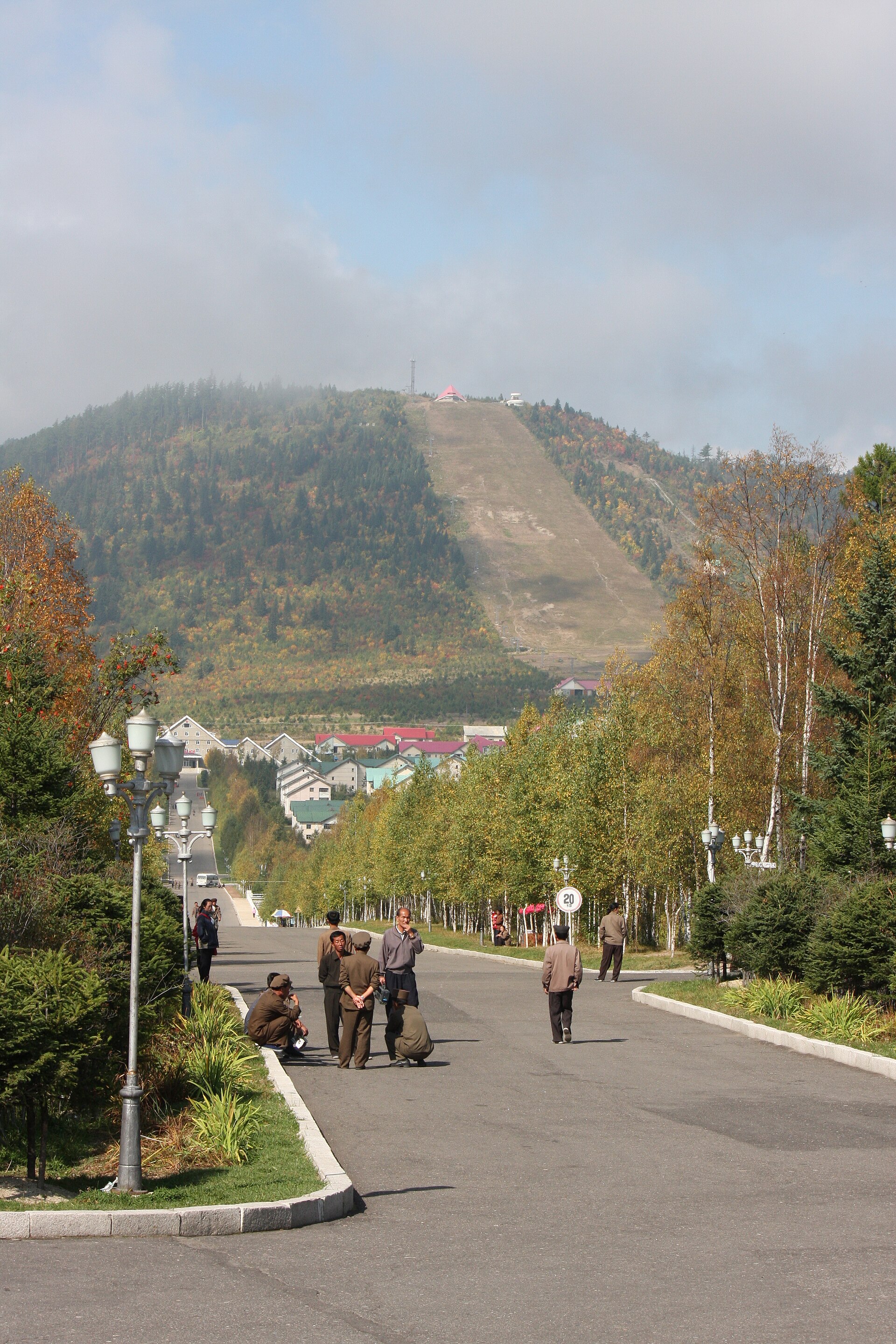
Lake Samji sits in the highlands of Mount Paektu, where the air carries the scent of pine and damp earth, and the sky feels closer than anywhere else. It’s not just a body of water—it’s a place woven into myth, history, and the daily lives of those who live nearby. The lake itself is small, stretching barely two kilometers, but its surroundings give it a quiet grandeur. On one side, the slopes of the sacred mountain rise steeply; on the other, dense forests stretch out, sheltering wildlife in summer and blanketed in snow by winter.
The lake formed over a thousand years ago after an eruption of Mount Paektu, its waters so clear they seem to hold the sky itself. On still days, the surface mirrors not just clouds but the echoes of old stories—of nomads who once passed through, of warriors who rested here before continuing their journeys. There are no crowded tourist paths around Samji, only narrow trails worn by local herders and foresters. In summer, the water warms just enough for a swim, while autumn turns the larch trees gold, painting the scene in hues that feel plucked from an old painting.
Winter transforms the lake entirely. The ice grows thick enough to walk on, and though there are no official skating rinks, locals sometimes glide across the surface, their laughter breaking the silence. Snow piles deep, and the only tracks belong to foxes or wild boars coming to drink. The cold slows everything down, the world narrowing to the rhythm of the wind and the creak of branches under the weight of snow. It’s a place where time feels different, as if the land itself is holding its breath.
For North Koreans, Lake Samji is more than a natural landmark—it’s a site of national significance. According to official history, this was where Kim Il Sung led partisan resistance against Japanese occupation in the late 1930s. Today, a memorial stands on the shore, modest but striking. Granite steles and bas-reliefs depict the struggles of those years, while an open-air museum displays photographs and documents from the era. For many visitors, especially students on organized trips, the site is a place of pilgrimage, a reminder of resilience and devotion to the country’s ideals. Foreigners rarely see it, but those who do often describe an atmosphere that’s both solemn and strangely peaceful.
The architecture here is unobtrusive, designed to blend with the landscape rather than dominate it. The memorial buildings are made from local stone and wood, their lines echoing the curves of the mountains. Even the road leading to the lake winds carefully through the terrain, as if reluctant to disturb the land. In summer, groups of schoolchildren arrive by bus, their voices bright against the quiet of the forest. They come to learn, to pay respects, and to feel the weight of history in a place where the past is never far away.
Beyond its historical role, the lake has a life of its own. In spring, ducks and geese nest along the shores, and rare plants bloom in the marshy edges—species found nowhere else in the country. Local fishermen sometimes cast their lines, though the water is too cold for most fish. Summer evenings bring a thin mist rising from the surface, as if the lake is exhaling into the twilight. It’s easy to imagine the water holding memories, not just of people, but of the land itself.
For those who come not for the memorials but for the solitude, Lake Samji offers a different side of North Korea—one far removed from headlines and politics. Here, the mountains stand silent, the water reflects nothing but the sky, and the only sounds are the wind in the pines and the occasional distant rumble of a truck on the mountain road. There are no crowds, no souvenir stands, no signs pointing the way. It’s a place that demands patience, where beauty isn’t announced but discovered.
Winter makes the lake even more remote. Snow drifts over the paths, and reaching it requires a rugged vehicle or a long walk through the forest. But those who make the journey are rewarded with a silence so deep it feels like a physical presence. The ice groans underfoot, a reminder that nature still sets the rules here. And on clear nights, if luck is on your side, the aurora borealis flickers faintly above the peaks—pale green streaks dancing like remnants of ancient stories.
Lake Samji isn’t the kind of place that draws tourists with grand attractions or polished amenities. There are no cafes, no gift shops, no neatly marked trails. It’s a place for those willing to look beyond the surface, to see what lingers beneath layers of history and time. That might be why it feels so compelling—not because it’s loud or flashy, but because it’s quiet and deep, like the water it holds.