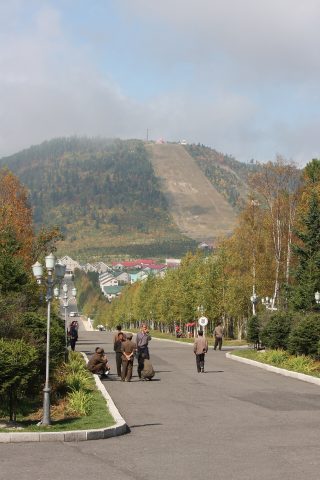
Samjiyon is a quiet town tucked away in the northern reaches of North Korea, a place where the past feels closer than elsewhere. The Revolutionary Museum of Samjiyon stands at its heart, a building that commands attention not just for its size but for the weight of history it carries. Its architecture is unmistakably grand—tall columns, sweeping staircases, and vast halls designed to evoke reverence. Inside, the air is still, broken only by the measured voices of guides recounting stories of struggle and resilience from decades ago.
This museum was built to honor the early years of Kim Il Sung’s resistance against Japanese occupation in the 1930s. The forests and mountains around Samjiyon were more than just a backdrop; they were a strategic stronghold where guerrilla fighters trained, planned, and fought. The exhibits here are a mix of documents, photographs, weapons, and personal items, each piece carefully arranged to paint a picture of life in those harsh times. Some displays recreate scenes from partisan camps—rough shelters, makeshift workshops, and maps outlining routes through the wilderness. The effect is immersive, as if stepping into a moment frozen in time.
The design of the museum reflects the ideals of an era when North Korea was forging its identity. The building’s monumental style is deliberate, meant to inspire awe and respect. Every detail, from the height of the ceilings to the placement of the exhibits, serves a single purpose: to preserve the memory of those who fought. Visitors move through the halls in near silence, the weight of the stories settling over them like the quiet of the surrounding forests.
The landscape around Samjiyon plays its own role in the story. The town is surrounded by dense woods and low mountains, their slopes blanketed in snow in winter and lush with green in summer. For North Koreans, this is sacred ground—the place where the revolution took root, far from the noise of cities. Near the museum, small monuments and plaques mark key moments in the partisan struggle, each one a reminder of how this remote corner of the country shaped its future.
For locals, the Revolutionary Museum is more than a collection of artifacts; it’s a place of pilgrimage. Schoolchildren, veterans, and party officials come here to pay their respects, often as part of organized ceremonies. Speeches about loyalty and sacrifice fill the air, and the past feels alive, woven into the fabric of the present. Samjiyon becomes a living classroom, where history isn’t just studied but experienced.
Beyond its ideological significance, the museum offers a rare glimpse into a lesser-known chapter of Korean history. The exhibits reveal the tactics of guerrilla warfare—how small, poorly equipped groups outmaneuvered a far stronger enemy. There are handmade weapons, tattered uniforms, and maps showing the routes taken through the mountains. These details make the past tangible, bridging the gap between then and now.
Samjiyon itself is a town of contrasts. It has schools, modest factories, and residential blocks, all going about their daily routines. Yet the legacy of the revolution is never far away. Street names, local institutions, and even casual conversations often circle back to those early years. Residents speak with pride about their town’s role in shaping the nation, as if the struggles of the past are still echoing in the present.
Visiting the museum leaves a complicated impression. On one hand, the narrative is tightly controlled, shaped by the country’s official history. On the other, the artifacts themselves tell a story that transcends ideology—one of endurance, ingenuity, and survival. For outsiders, it’s a chance to see a side of Korea rarely discussed beyond its borders. For North Koreans, it’s a reminder of how their country came to be, and why its past still matters.