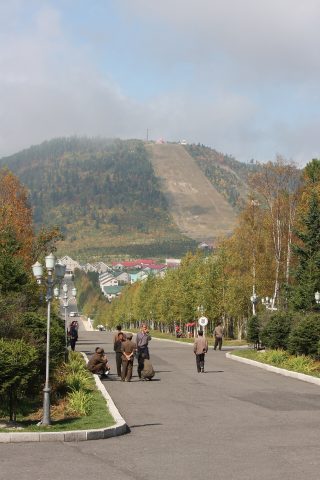
Mount Paektu rises along the border between North Korea and China. The land here feels distant from cities and roads. This volcanic massif is more than rock and soil—it’s part of Korean stories, old and new. Pine forests cover the lower slopes, thinning into alpine meadows near the top. At the center sits Heaven Lake, a crater lake formed after an eruption. Its water shifts between blue and green, depending on the light.
The mountain is over 2,700 meters high. Winter lasts most of the year, with snow lingering until late spring. Summer is short, and even in July, frost can cling to the peaks. Weather changes fast—sun can turn to fog or snow in minutes. The air is thin, the silence broken only by wind or a bird’s call.
Heaven Lake draws visitors despite the hard climb. The water is nearly 400 meters deep, surrounded by cliffs that mirror the sky on calm days. The path to the shore is steep, but the view makes it worth it—you stand at the edge of something vast. In winter, the lake freezes into a smooth, glassy sheet. Local stories say spirits live in its depths, and some believe the water heals, though no one has proven it. The lake’s mystery remains, passed down through generations.
For North Koreans, Mount Paektu is tied to their history. Legend says the founder of the ancient kingdom of Gojoseon was born here. The mountain appears in folktales, poems, and official stories, often called a sacred place where past and present meet. Rituals for ancestral spirits still happen here, and old shrines and altars dot the landscape. In recent decades, the mountain has become a symbol of resilience, its image used in cultural and political life.
The buildings around Mount Paektu are simple, built to fit the land. Small wooden temples and pavilions stand along the trails. Their curved roofs and carvings follow old Korean styles, with joints fitted together without nails. One of the most notable is the Samjiyon Grand Monument, which honors the mountain’s legends. These structures aren’t grand, but they carry a quiet weight, reflecting how the land is seen.
Visiting Mount Paektu requires preparation. Access is controlled, with tours organized through official channels. A typical trip includes a guided climb to Heaven Lake, stops at viewpoints, and visits to nearby cultural sites. There are no luxury hotels—only basic guesthouses serving rice, vegetables, and grilled meat. The infrastructure is minimal, but that’s part of the experience. The focus is the mountain itself, its beauty and the sense of being far from everything.
The air is crisp. The light is soft. The silence is broken only by wind or a bird’s cry. It’s why artists and poets have written about this place for centuries—the landscape feels unchanged by time. For those who visit, the memory stays long after they leave.
For outsiders, Mount Paektu offers a different view of North Korea. There are no political slogans here, no staged displays—just the mountain, the lake, and the people nearby. The land speaks for itself, its grandeur outlasting human ambition. In a world where so much is mapped and measured, Mount Paektu remains wild and unknown. It’s not just a place to visit; it’s a place that shapes how a nation sees itself.