Lake Magadi sits at the heart of the Ngorongoro Crater, a place that feels suspended in time. The crater itself is the remnant of a long-extinct volcano, its collapsed caldera forming a vast, self-contained world where nature operates by its own rhythms. Magadi is no ordinary lake—it’s a shifting, unpredictable body of water that mirrors the seasons. In the dry months, it shrinks to little more than a salt-encrusted pan, while during the rains, it swells into a shallow, reflective expanse that stretches beneath the endless African sky.
When the rains arrive, the lake transforms into a spectacle of life and color. Thousands of flamingos descend upon its waters, drawn by the blue-green algae that thrive in the alkaline shallows. The birds move in slow, deliberate formations, their pink and crimson hues blending with the water’s surface. The sight is mesmerizing—flamingos wading in unison, their reflections rippling as they feed, while the occasional splash of wings breaks the stillness. But the lake’s mood is fickle. By the time the dry season returns, the water recedes, leaving behind a cracked, sunbaked landscape. Yet even then, the area doesn’t lose its vitality. Herds of zebras, buffalo, and antelope still gather at its edges, and predators like lions and hyenas occasionally appear, drawn by the promise of water.
For the Maasai people, the Ngorongoro Crater holds deep spiritual significance, and Lake Magadi plays a central role in their traditions. The Maasai graze their cattle here, relying on the lake’s salt deposits during the driest months to supplement their livestock’s diet. From a distance, you might spot them guiding their herds toward the water, their brightly colored shukas standing out against the muted tones of the savanna. But the Maasai are protective of their land, and visitors rarely get close. The lake remains a place where human presence is fleeting, where the rhythms of nature take precedence over tourism.
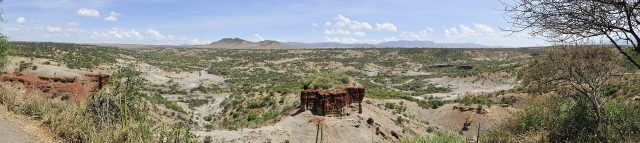
Unlike many of East Africa’s more famous lakes, Magadi doesn’t attract crowds. The crater’s remote location and the lack of roads make it difficult to reach the shore, and most visitors observe it from the rim, where viewpoints offer sweeping vistas of the entire caldera. From this distance, the lake appears as a shimmering mirage, its colors shifting with the light—golden at dawn, silver under the midday sun, and deep blue as evening falls. Even from afar, the lake leaves a lasting impression, a quiet counterpoint to the drama of the surrounding wildlife.
Geologically, Magadi is a product of the crater’s violent past. The Ngorongoro Crater is one of the largest intact calderas in the world, stretching nearly twenty kilometers across and plunging over six hundred meters deep. The lake formed in the crater’s floor, fed by underground springs and seasonal rains. Its alkaline waters are rich in minerals, creating an ideal environment for the algae that sustain the flamingos. But the lake’s influence extends far beyond the birds. It’s a vital water source for the crater’s diverse wildlife, from elephants and rhinos to the smaller creatures that depend on its fluctuating waters.
Visiting Magadi is an exercise in patience and unpredictability. The lake’s appearance changes not just with the seasons, but with the time of day. In the early morning, mist often clings to its surface, obscuring the view, while by afternoon, the heat can make it seem like a distant illusion. Some days, it’s a barren salt flat; others, it’s a vibrant hub of activity, teeming with birds and animals. There’s no guarantee of what you’ll see, but that’s part of the allure. The crater itself feels like a world apart, a place where nature operates on a grand, unhurried scale, and Magadi is its most enigmatic feature.
For travelers on safari, the lake is an unexpected highlight. While the Serengeti’s vast plains offer the spectacle of the Great Migration, the Ngorongoro Crater packs an entire ecosystem into a compact space. Here, you might spot lions lounging in the shade of acacia trees, hippos wallowing in small pools, and flamingos taking flight in a blur of pink. Magadi adds a layer of mystery to the scene—sometimes hidden by haze, sometimes revealed in sudden, breathtaking clarity. It’s a reminder that even in a place as well-trodden as the crater, there are still moments of surprise.
Yet Magadi isn’t a place for those seeking constant action or manicured landscapes. It’s quiet, unassuming, and often overlooked in favor of more dramatic sights. There are no guided tours to its shores, no souvenir stands or restaurants—just the wind sweeping across the open land, the distant calls of birds, and the occasional rustle of grass as an animal moves through the undergrowth. In a way, that’s what makes it special. It’s a rare corner of Africa where the wildness of the continent is still palpable, where the land feels untamed and the old rhythms of nature persist. Magadi doesn’t demand attention; it simply exists, a silent witness to the passage of time.