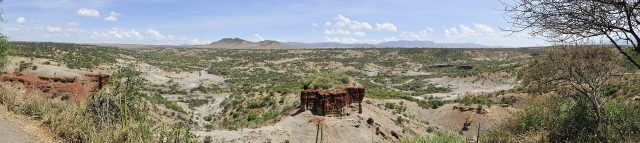
Ngorongoro Crater is one of those rare places where nature seems to have gathered its most extraordinary gifts into a single, breathtaking landscape. Formed by the collapse of an ancient volcano over two million years ago, this vast caldera stretches nearly 260 square kilometers, enclosed by steep walls that rise up to 600 meters high. Inside, a self-contained world thrives—one where lions, elephants, rhinos, hippos, and zebras roam freely alongside hundreds of bird species. But Ngorongoro is more than just a wildlife sanctuary. It’s a living ecosystem where every element, from the soil to the sky, exists in delicate balance, and where the story of humanity intertwines with the land itself.
The crater’s origins trace back to a time when a massive volcano erupted with such force that its cone collapsed inward, leaving behind a natural amphitheater. Over millennia, volcanic minerals enriched the soil, creating fertile ground for lush vegetation. The crater’s unique microclimate—warmer than the surrounding highlands—ensures that water remains year-round, even during dry seasons. This abundance has made Ngorongoro a vital refuge for wildlife, particularly when the plains of the Serengeti grow parched. For many animals, the crater is a last stronghold, a place where survival is still possible when the world beyond becomes inhospitable.
Long before outsiders arrived, the Maasai people knew this land intimately. They called it Empakaai—a place where earth meets sky—and considered it sacred. For generations, they grazed their cattle on its slopes, living in harmony with the wildlife without disrupting the fragile ecosystem. Their presence wasn’t always peaceful; during colonial times, the Maasai were displaced from parts of their ancestral lands. Yet over time, they regained the right to share the crater, coexisting with the conservation area in a way that few other indigenous communities have managed. Today, their traditional bomas, or settlements, still dot the crater’s edges, a quiet reminder of a way of life that has endured for centuries.
What makes Ngorongoro unique from a scientific perspective is how accessible its wildlife is. Unlike other reserves where animals roam vast distances, here they remain largely within the crater’s boundaries. There’s no need to chase after herds or predators—they’re often right in front of you. Dawn breaks with the sounds of the savanna waking up: the calls of birds, the distant roar of lions, the grunts of hippos in the lakes. By midday, the animals retreat into the shade of acacia trees, only to reemerge in the late afternoon, when the light softens and the air cools. It’s a rhythm that feels ancient, as if the land itself dictates the pace of life.
At the heart of the crater lies Lake Magadi, a shallow, alkaline lake that transforms with the seasons. When water levels are high, thousands of flamingos gather along its shores, their pink feathers contrasting against the green hills and blue water. The sight is surreal, like something from a dream. But Ngorongoro isn’t just a spectacle for visitors. It’s also a living laboratory where researchers study animal behavior, migration patterns, and the impact of climate change. Scientists warn that even this seemingly untouched place isn’t immune to outside pressures—droughts, poaching, and growing tourism all leave their mark.
For first-time visitors, Ngorongoro can feel like stepping into a world frozen in time. Yet beneath the surface, it’s a place of constant change. One day, you might see a lioness teaching her cubs to hunt; the next, witness hyenas scavenging a kill. The lake might be full one month and nearly dry the next, forcing flamingos to seek new feeding grounds. There are no guarantees here—no scripted encounters, no predictable outcomes. That unpredictability is part of the magic. Nature doesn’t perform on demand, and that’s what makes it real.
But Ngorongoro isn’t just about wildlife. It’s also a window into humanity’s distant past. The surrounding highlands have yielded some of the most important archaeological discoveries in the world, including the remains of early hominids like the famous "Lucy," who lived over three million years ago. These findings confirm that this region was the cradle of humankind, a place where our earliest ancestors once walked. Standing on the crater’s rim, looking out over the endless savanna, it’s hard to imagine that this same land was once home to Australopithecus and early Homo species. Yet the evidence is there, buried in the earth, waiting to be uncovered.
What lingers most after a visit to Ngorongoro is the sense of how fragile this balance truly is. There are no fences here, no barriers between humans and wildlife—only an unspoken understanding that this place must be protected. The animals are free, but their survival depends on how carefully we tread. Tourists come seeking adventure, but many leave with something deeper: the realization that nature isn’t a theme park, but a living, breathing entity that demands respect. That’s why Ngorongoro remains one of the world’s most revered conservation areas—a rare place where humans and wildlife still coexist, not in opposition, but in quiet, uneasy harmony.