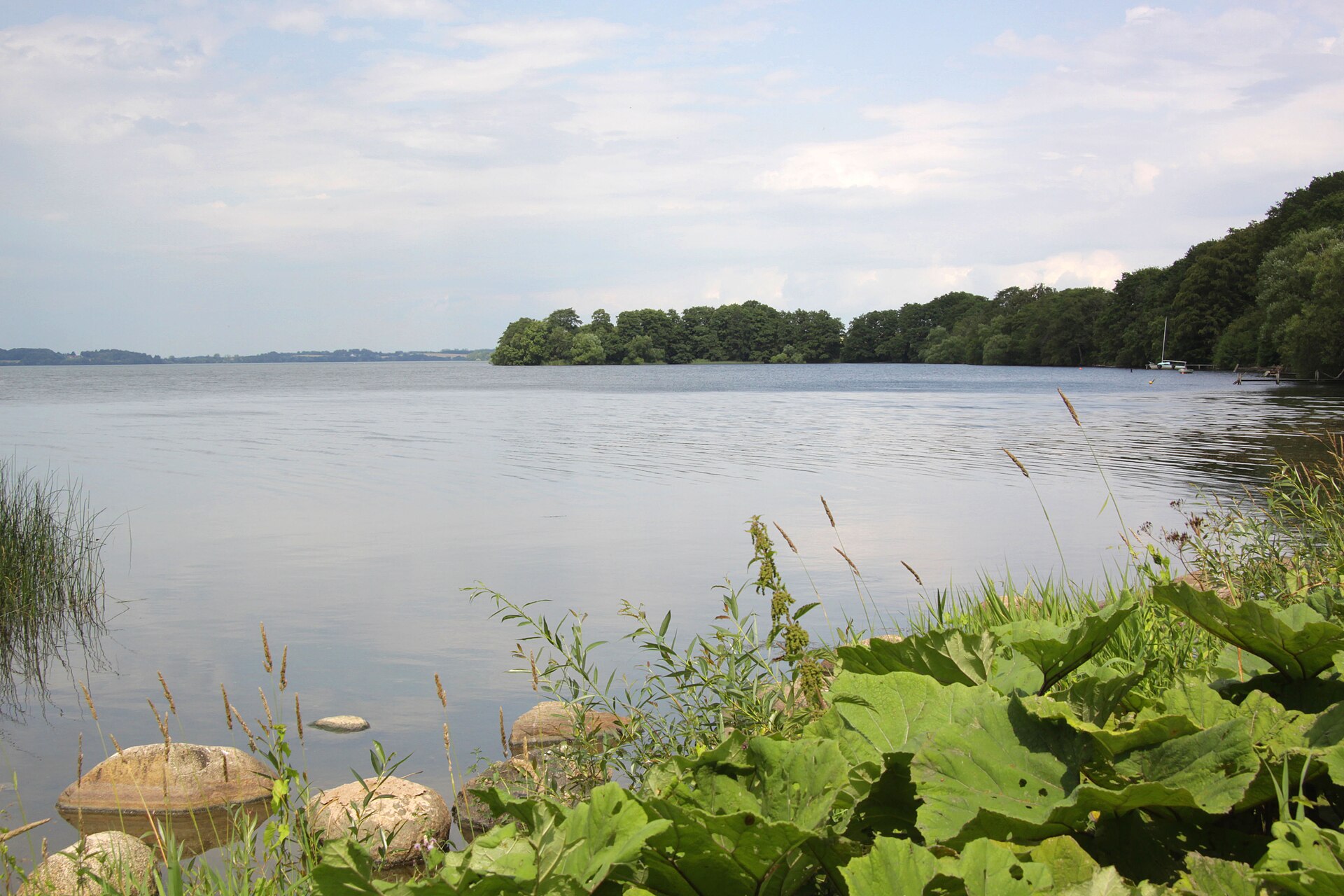
Lake Esrum is one of those quiet corners of Denmark where people come not for grand sights or bustling entertainment, but for the kind of stillness that lingers in the air. Tucked away in the northern part of Zealand, just a short distance from Hillerød, it feels worlds apart from the nearby capital, though Copenhagen is only an hour’s drive away. The lake is cradled by forests and gentle hills, creating a sense of seclusion that makes it easy to forget the outside world. The water is remarkably clear, so much so that on bright days, the surface mirrors the sky until the line between them blurs. Locals often escape here on weekends, seeking a break from the city’s pace, while visitors who stumble upon the place tend to stay longer than they intended.
Esrum isn’t one of Denmark’s largest lakes, but its size is part of its charm. The shoreline winds in soft curves, dotted with small coves and sandy patches perfect for spreading out a blanket or settling in with a book. The water stays cool even in summer, though on warm days, swimming feels refreshing rather than bracing. The northern shore is especially popular, where the forest edges right up to the water, offering shade and a quiet retreat. In winter, the lake freezes over, and locals take to the ice with skates or simply walk across the glassy surface, listening to the faint crackle beneath their feet.
The history of Esrum is closely tied to the forests that surround it. For centuries, these woods supplied timber for Denmark—first for shipbuilding and fortifications, later for the growing cities. Old logging roads still wind through the area, some leading to the remnants of sawmills or boundary markers from a time when this was a working landscape. By the 19th century, the forests around Esrum had become a favored hunting ground for the Danish nobility, and a few of the grand estates from that era still stand nearby, though most remain private.
Ecologically, Esrum is one of Denmark’s cleanest lakes. It’s home to a variety of fish, including pike, perch, and eel, which draw anglers—though a permit is required. The shores provide nesting grounds for birds like herons, ducks, and even the occasional osprey, a rare sight in these parts. In recent decades, conservation efforts have focused on protecting the lake’s surroundings, limiting development and monitoring pollution. The result is a place where nature still sets the rhythm, and humans are merely passing through.
For those who enjoy walking, the area around Esrum offers trails of varying difficulty. The most well-known circles the entire lake, taking about four hours at a leisurely pace. Along the way, informational signs share stories about the landscape’s history, flora, and fauna. Shorter routes lead to viewpoints on the hills, where the lake and forests stretch out below. Cyclists will find paved paths along the shore and dirt trails weaving through the woods, offering a different way to explore.
What makes Esrum special is its atmosphere. There are no crowds, no noisy cafés, no souvenir shops—just the lake, the trees, and a handful of small cottages where visitors can stay for a weekend. In the evenings, mist often rolls over the water, softening the light and slowing time. Locals say these moments are best spent by the shore with a cup of coffee or hot chocolate, listening to the gentle lap of waves. Occasionally, small outdoor concerts or folk music festivals take place in summer, but these are rare exceptions rather than the norm.
Esrum doesn’t impress at first glance. Its beauty reveals itself slowly, in the way sunlight dances on the water, how the sky shifts at dusk, or the scent of pine and damp earth after rain. It’s easy to lose track of time here, especially if you stay for a few days without any agenda. You might spend hours sitting by the water, watching clouds drift by, or head into the forest to forage for mushrooms or berries in season. The key is not to expect anything grand—just to let yourself be present in the moment.
For those who prefer more activity, the lake still has plenty to offer. Kayaks and rowboats can be rented to explore the quiet inlets and small islands scattered across the water. The lake is calm, making it accessible even for beginners. Fishing from a boat is possible, though a permit is required, just as it is from shore. In winter, if the ice is thick enough, the lake becomes a natural skating rink, and snowshoeing through the frozen forest is another way to experience the season.
Esrum is the kind of place that stays with you. It doesn’t demand attention with flashy sights or elaborate attractions. It’s just water, trees, and sky—simple, but precisely what makes it unforgettable. Maybe that’s why people who visit once often return, drawn back by the quiet, the stillness, and the rare sense of connection to nature that feels increasingly hard to find.