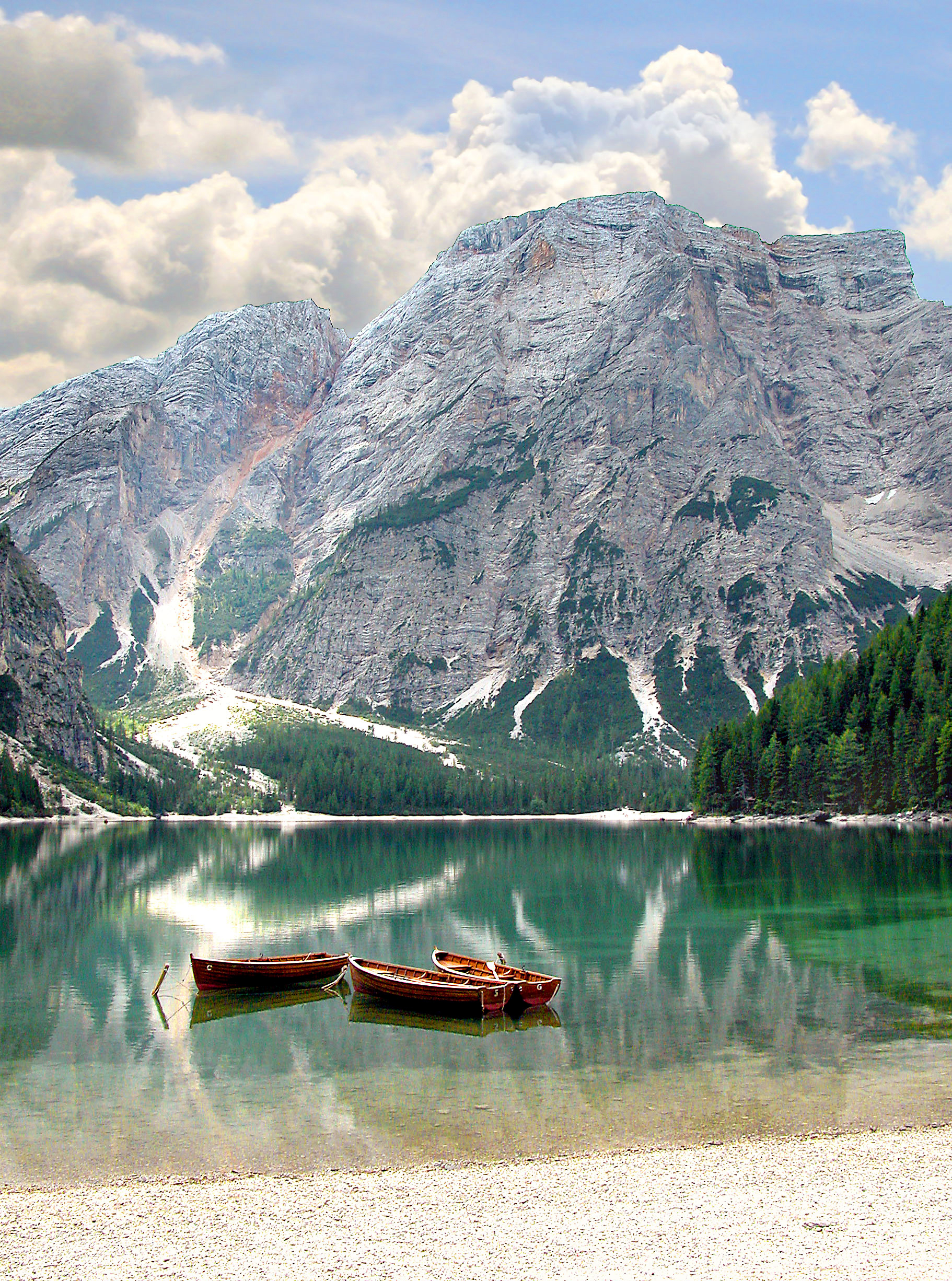
Lake Braies sits quietly in the heart of the Dolomites, a place where the mountains seem to lean in just a little closer, as if sharing a secret. The water here is so clear it feels almost unreal, shifting between shades of blue and green depending on the light—sometimes deep and mysterious, other times bright enough to dazzle. On still mornings, the peaks reflect perfectly in the surface, blurring the line between earth and sky. The lake changes with the hours, from the soft gold of dawn to the sharp clarity of midday, then settling into something warmer as the sun dips behind the ridges.
This wasn’t always a place people could easily reach. The lake formed thousands of years ago when glaciers carved out the valley, leaving behind a basin that filled with meltwater. For most of history, it remained remote, accessible only to those willing to trek through the rugged terrain. Roads came later, in the early 20th century, opening it up to visitors, but even now, the surrounding mountains create a natural barrier. The crowds that flock to Italy’s more famous destinations rarely make it this far, leaving Braies with a sense of solitude that feels increasingly rare.
The architecture around the lake is unassuming, built to blend rather than stand out. Wooden chalets with steep, shingled roofs dot the hillsides, their balconies often draped with flowers in summer. A small church near the shore looks as though it has always been there, its simple lines echoing the quiet rhythm of the place. There are no grand hotels or flashy resorts—just a handful of guesthouses and a lakeside café where visitors can sit with a coffee and watch the light play across the water. In winter, the lake freezes over, turning into a vast, smooth expanse where skaters glide across the surface while snow dusts the surrounding peaks.
The lake isn’t just a pretty view—it’s a vital part of the local ecosystem. The water stays so clean because it’s fed by underground springs and mountain streams, and the forests along its shores are home to deer, chamois, and countless birds. In the early morning or late evening, it’s not uncommon to spot wildlife coming down to drink. The area is a haven for those who prefer to explore at a slower pace, whether that means hiking to hidden waterfalls, photographing wildflowers, or simply sitting by the water with a book.
There’s something about Braies that lingers with people long after they leave. Maybe it’s the way the air feels lighter here, scented with pine and alpine herbs. Or the way the mountains seem to wrap around the lake, creating a sense of shelter. Some visitors talk about the quiet energy of the place, as if the land itself has a presence. Others just find it easier to breathe, to think, to step away from the noise of everyday life. Whatever the reason, many return year after year, drawn back by something they can’t quite name.
The lake doesn’t demand attention the way more famous destinations do. There are no guided tours urging you to hurry, no souvenir shops cluttering the shore. Instead, it offers space—to walk, to sit, to simply be. In summer, you might see a few people renting rowboats or hiking the trails that wind up into the hills, but even at its busiest, Braies never feels crowded. In winter, the pace slows even more, with cross-country skiers tracing paths through the snow and the occasional ice fisherman testing the frozen surface.
For those who want to explore further, the surrounding area has plenty to offer. Trails lead to smaller lakes tucked into the mountains, or to viewpoints where the entire valley unfolds below. Some paths follow old mule tracks, winding through forests and past meadows where cows graze in the warmer months. The food here is simple but satisfying—smoked meats, sharp local cheeses, dark rye bread—best enjoyed at a picnic spot by the water or in one of the rustic mountain huts.
Braies doesn’t try to impress. It doesn’t need to. The lake exists as it always has, framed by peaks that have stood for millennia. Some come for the scenery, others for the silence, and a few for the way the place seems to slow time down. It’s the kind of spot that stays with you, not because of anything grand it offers, but because of the way it makes you feel—like you’ve stepped into a world that moves at its own pace, where the mountains, the water, and the sky are all that really matter.