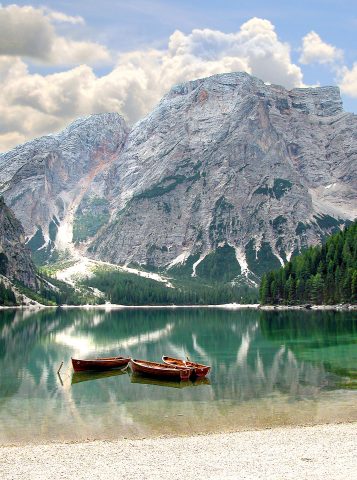
Nestled in the heart of the Dolomites, the Church of San Vito is one of those rare places that feels untouched by time. Perched on a gentle rise, it overlooks the green meadows and traditional alpine houses of Braies, their wooden balconies weathered by centuries of mountain winds. Unlike the crowded tourist spots of Italy’s famous cities, this small church remains quiet, its presence unassuming yet deeply rooted in the landscape. There are no grand facades here, no marble columns or gilded domes—just a simple stone building that has stood firm against the elements, a silent witness to the lives of those who have passed through these valleys.
The origins of San Vito stretch back to the 12th century, though no one knows exactly when it was first built. Some believe it rose from the ruins of an even older sanctuary, perhaps dating to Roman times when this region was part of the province of Raetia. For centuries, the church served as more than just a place of worship—it was a landmark for travelers crossing the alpine passes, a rare point of rest on the long journey between Venice and Germany. In the Middle Ages, Braies lay along a vital trade route, and San Vito offered weary merchants and pilgrims a moment of respite before they braved the treacherous mountain paths.
The church’s architecture is a perfect example of the Romanesque style that once dominated the Alps. Built from local stone, its thick walls and narrow windows were designed to withstand the harsh climate, keeping out the cold and the wind. Inside, the space is modest but striking. Faded frescoes from the 15th century still cling to the walls, depicting scenes from the lives of saints in muted colors that have softened with age. The wooden altar, carved with the skill of local artisans, bears the marks of generations of hands that have touched it in prayer. The bell tower, added later in the 16th century, is short but perfectly proportioned, as if the surrounding peaks themselves had guided its design.
San Vito has always been more than just a building to the people of Braies. It has been a gathering place for baptisms, weddings, and funerals, a constant in a landscape that has seen its share of upheaval. During wars, plagues, and natural disasters, the church often became a refuge, its doors open to those in need. In the 18th century, when Napoleon’s troops swept through the region, many structures were destroyed, but San Vito survived—perhaps because it stood slightly apart from the main roads, overlooked by soldiers more concerned with conquest than with a small stone church in the hills.
Today, the church remains active, though services are less frequent than they once were. In the summer months, visitors can step inside, where the air is cool and still, and spend time tracing the outlines of the old frescoes, their details worn smooth by time. Outside, the meadow around the church is a quiet spot to sit, the grass soft underfoot, the mountains rising in the distance. Locals say that on clear winter nights, when snow blankets the roof and the surrounding hills, the silence here is almost tangible, as if the past itself is holding its breath.
Braies is not a place that draws crowds with grand monuments or famous landmarks. It is a quiet corner of the world, where the beauty lies in its simplicity. San Vito is no exception—it does not impress with size or splendor, like the cathedrals of Milan or Florence. Instead, it offers something rarer: authenticity. There are no tour groups here, no vendors selling trinkets, just the church and the mountains and the slow, steady rhythm of life that has unfolded here for centuries.
If you find yourself in these parts, take your time. Walk the narrow path that leads to the church, sit on the grass, and listen to the silence. Look at the frescoes, their colors faded but still vivid in their own way, and think of all the hands that have touched these walls over the years. Travel is not just about seeing as much as possible—it is about feeling a place, understanding its soul. And the soul of San Vito is in its quiet endurance, in the way it has stood here through wars and storms, through the rise and fall of empires, still holding fast to the land and the people who call it home.