Nestled in the heart of the Dolomites, the Alpine Botanical Garden of Sasso Fratino feels like a place where nature has been left to its own devices. It’s not the kind of garden you’d find in a city, with manicured lawns and neatly labeled flowerbeds. Instead, it sprawls across the slopes of its namesake mountain at around two thousand meters above sea level, where wildflowers, grasses, and shrubs grow as if they’ve always been there—unplanned, unforced, and entirely at home. The illusion of untouched wilderness is deliberate, though. Behind this natural appearance lies decades of careful work by botanists and conservationists who wanted to preserve the unique flora of the Dolomites without disrupting its character.
The garden was established in the mid-20th century, a time when scientists began to realize how fragile alpine ecosystems were becoming. Climate shifts and human activity were threatening species that had thrived in these mountains for centuries. The idea wasn’t to create a traditional botanical collection but to safeguard these plants in a way that respected their natural habitat. Today, Sasso Fratino serves as a living archive of the Dolomites’ botanical heritage, where every plant tells a story of adaptation and resilience. There are no grand displays or exotic imports—just the quiet persistence of species that have learned to survive in one of Europe’s most demanding environments.
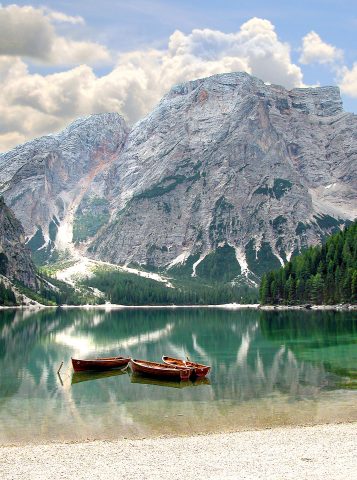
Walking through the garden is less like following a path and more like wandering through the mountains themselves. The trails wind between rocks and boulders, leading to small clearings where endemic plants—those found nowhere else—grow in their natural state. The air is thick with the scent of thyme, juniper, and wildflowers, while the only sounds are the rustle of wind through the grass and the occasional call of a bird. On clear days, the view opens up to the Braies Valley below, where the lake mirrors the jagged peaks above. It’s a place that invites slow exploration, where the details matter more than the destination.
What makes Sasso Fratino remarkable isn’t just the variety of plants but how they’ve adapted to the harsh alpine conditions. Many species here are small, with tiny leaves and short stems, built to withstand strong winds and cold temperatures. Some flowers bloom for only a few weeks each year, taking advantage of the brief alpine summer. The edelweiss, an iconic symbol of the Dolomites, grows here naturally, tucked among the rocks to escape the intense sunlight. Nearby, mountain pines twist and bend, their gnarled trunks bearing the marks of a lifetime spent clinging to the slopes. These plants aren’t showy, but they’re survivors, shaped by the same forces that carved the mountains around them.
Visiting the garden is less about ticking off a list of sights and more about stepping into a different rhythm. There are no crowds, even in peak season, and it’s easy to find a quiet spot to sit on a rock and listen to the wind. The best time to come is between June and September, when most of the plants are in bloom and the weather is mild. But even in early spring, when patches of snow still linger, the garden has its own stark beauty. The first flowers push through the thawing earth, their bright colors standing out against the white, a reminder that life here is always on the edge of possibility.
Sasso Fratino isn’t just for botanists or nature enthusiasts. It’s a place for anyone who wants to understand how delicate and yet how enduring the alpine world can be. There are no tropical plants or rare imports from distant lands—just the species that make the Dolomites what they are. These plants have spent centuries adapting to life at high altitudes, where every season brings new challenges. A walk through the garden is a humbling experience, a reminder that nature doesn’t need human intervention to be extraordinary. It just needs space to exist.
The garden is free to enter, and that’s no accident. It’s part of a philosophy that nature shouldn’t be fenced off or turned into a commodity. There are no signs labeling every plant, no guided tours pointing out the highlights. Instead, visitors are left to notice things for themselves—the way a flower clings to a crack in the rock, or how a patch of moss thrives in the shade of a boulder. Some people come for the photographs, others for the silence, and some stumble upon it by chance while exploring the area. But no matter how you find it, Sasso Fratino leaves an impression that’s hard to shake. It’s a place where the mountains feel alive, not just as a backdrop but as something real, something that doesn’t need words to be understood.