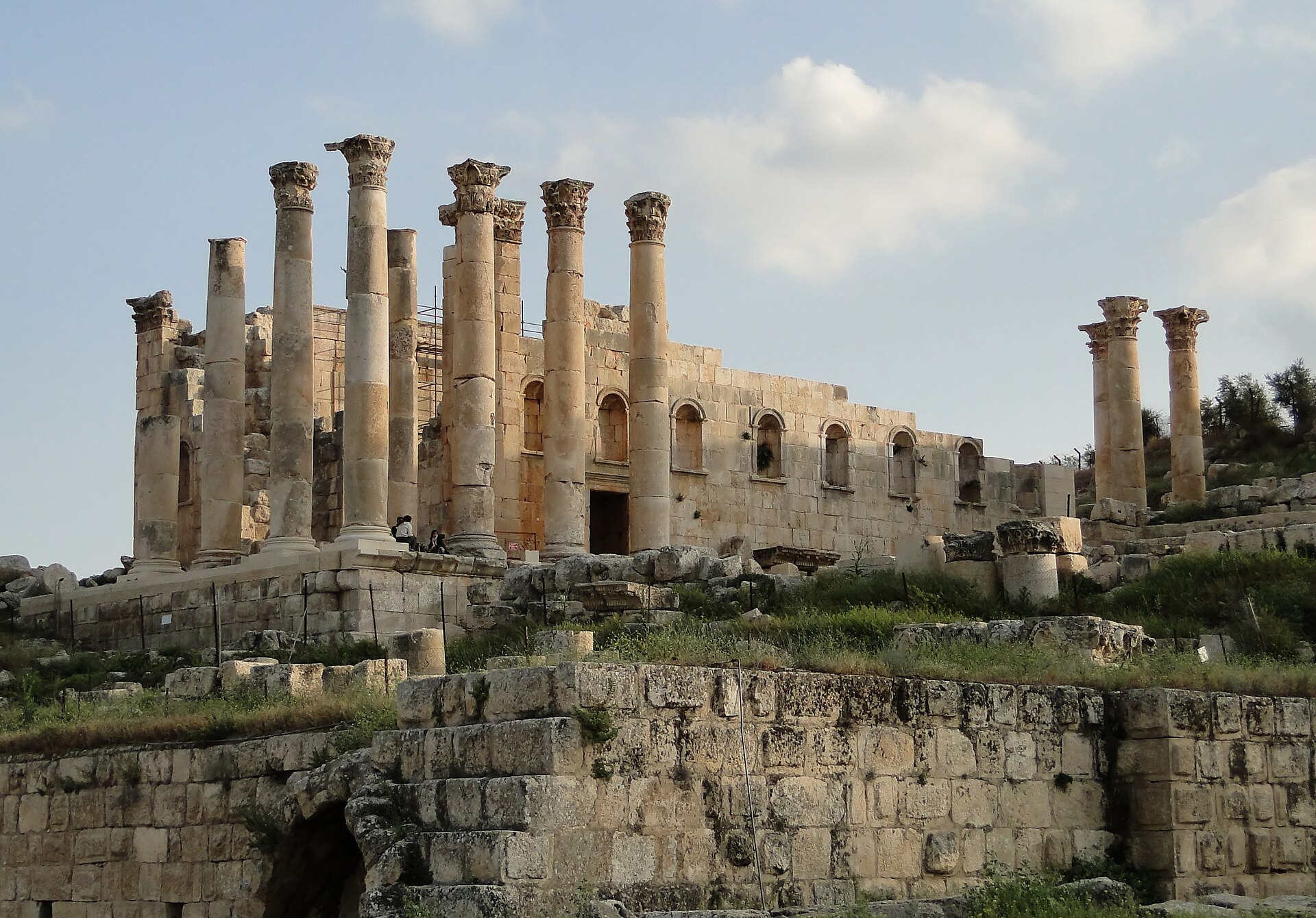
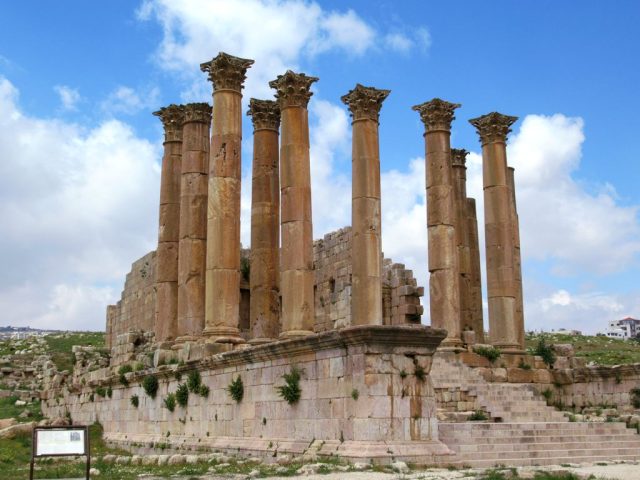
Jerash is one of those rare places where the past isn’t just preserved—it lingers, woven into the fabric of everyday life. Here, in northern Jordan, ancient ruins don’t hide behind glass or museum ropes; they stand openly among modern streets, a quiet reminder of the days when this land was part of the Roman Empire. Among Jerash’s many archaeological treasures, the Oval Forum stands out—not just for its unusual shape, but for how vividly it captures the spirit of the city it once anchored.
The Oval Forum, or Oval Plaza as it’s often called, was the beating heart of ancient Gerasa, as Jerash was known in Roman times. Built in the 2nd century AD, it served as the city’s main public square, a place where people gathered for trade, conversation, and civic life. Its elliptical design is striking, a departure from the more common rectangular forums of the Roman world. A colonnade of Ionic columns once framed the space, supporting a roof that shielded visitors from the sun or rain. Today, the roof is long gone, but the columns remain, their weathered stone still defining the edges of the plaza with a sense of quiet grandeur.
The scale of the Oval Forum is impressive—nearly 90 meters long and 80 meters wide. The massive stone slabs underfoot, worn smooth by centuries of footsteps, hint at the countless lives that once crossed this space. In its center stood an altar dedicated to the city’s patron deities, while statues of emperors and notable citizens lined the perimeter. Now, the plaza is still, but the echoes of the past aren’t hard to imagine: the murmur of voices, the clatter of merchants’ stalls, the footsteps of people hurrying about their day. In the midday heat, the columns cast long, shifting shadows across the stones, and as the sun sets, the plaza glows with a warm, golden light.
What makes the Oval Forum particularly fascinating is how it connected to the rest of the city. It wasn’t an isolated monument but a central hub, with main streets radiating outward toward the Temple of Artemis, the theaters, and the public baths. The Romans were masters of urban planning, and Gerasa was no exception. The forum wasn’t just a place to linger—it was a crossroads, where the paths of locals and travelers intersected. Standing here today, it’s easy to picture the scene: merchants hawking goods from distant provinces, philosophers debating in the shade, children darting between the columns.
The architecture of the Oval Forum tells its own story. The Ionic columns, with their delicate scroll-like capitals, reflect the Greek influence that the Romans readily adopted. Yet the oval shape itself was a Roman innovation, a deliberate choice that spoke to their love of order and symmetry. The stone, quarried locally, has a warm, golden hue that gives the plaza a timeless beauty. Over the centuries, some of the slabs have cracked or settled, but these imperfections only add to the sense of authenticity—as if time itself has left its mark here.
Today, the Oval Forum is one of Jerash’s most photographed sites, drawing visitors eager to see a Roman city center in its original setting. But it’s more than just a backdrop for pictures. This place holds the memories of the people who walked here two thousand years ago—their daily routines, their celebrations, their quiet moments. Standing in the middle of the plaza, you can almost hear the processions that once honored emperors or the solemn rituals held at the altar. It’s not hard to imagine this space as the stage for the decisions that shaped the city’s fate, because public squares have always been where history unfolds.
Jerash is often called the Pompeii of the East, and the Oval Forum is one reason why. Unlike many ancient cities, where ruins lie buried beneath layers of earth, Jerash’s remains are open to the sky, inviting you to step directly into the past. Of course, time has taken its toll—some structures are little more than fragments—but what survives offers a remarkably complete picture of life in a Roman provincial city. The Oval Forum isn’t just a plaza; it’s a symbol of how different eras and cultures can coexist in one place.
Visiting Jerash and the Oval Forum is like stepping into a living history book. There’s no need to imagine what the ancient city looked like—it’s all around you. The stones underfoot, the columns standing sentinel, the silence broken only by the whisper of the wind—it all creates an atmosphere where past and present blur. You could spend hours wandering the ruins, tracing the details of the architecture or simply sitting on one of the worn stone benches, watching the play of light and shadow. And if you’re lucky, for just a moment, you might almost expect a Roman legionnaire to round the corner or a merchant to appear with a basket of dates. In places like this, history stops being something abstract—it becomes real, tangible, alive.