Jerash is a place where the past lingers in the very stones beneath your feet. Tucked among the rolling hills of northern Jordan, the ruins of this ancient city rise from the earth like echoes of another time. Among them, the Roman theater stands as one of the most striking remnants of Gerasa, once a thriving metropolis in the province of Arabia Petraea. Built in the second century, it remains remarkably intact, a testament to the engineering and artistic skill of its creators.
The theater was carved into the hillside using local limestone, its design a masterclass in Roman acoustics. Even today, a whisper on the stage carries clearly to the highest rows, a feat that never fails to impress visitors. The structure could hold up to six thousand spectators, its semicircular tiers rising in perfect harmony with the natural slope. The stage itself was once adorned with columns and niches, though only fragments of its former grandeur remain. The sheer scale of the place—its towering arches, broad staircases, and thick walls—gives it an undeniable presence, as if the weight of history itself is etched into every block.
In its prime, the theater was more than just a venue for entertainment. It was a civic hub where citizens gathered for political debates, religious ceremonies, and public announcements. Gerasa was a prosperous city, strategically positioned along trade routes that connected the Mediterranean to the Arabian Peninsula. The theater reflected its importance, a symbol of both cultural sophistication and civic pride. Performances here weren’t just for leisure; they were a way of reinforcing the city’s identity, a shared experience that bound its people together.
Walking through the theater today, it’s easy to imagine the scenes that once unfolded here. The murmur of the crowd, the rustle of togas, the scent of olive oil and wine sold by vendors between acts. Actors in elaborate masks would have recited lines from Greek tragedies or Roman comedies, their voices amplified by the theater’s design. Over time, the details of daily life have faded, but the sense of vitality remains, as if the stones themselves remember the energy of the people who once filled them.
After the decline of the Roman Empire, the theater didn’t vanish. During the Byzantine era, it was repurposed, its function shifting with the needs of the city. Eventually, it was abandoned, buried beneath layers of sand and time. It wasn’t until the early 20th century that archaeologists began uncovering its secrets, carefully brushing away centuries of neglect to reveal the structure beneath.
Now, the theater is far from a silent ruin. Each summer, it comes alive again with festivals, concerts, and performances. The ancient stones resonate with music, laughter, and applause, bridging the gap between past and present. There’s something magical about watching a play or a symphony in a space that has witnessed nearly two thousand years of history. The modern audience becomes part of the continuum, another layer in the theater’s long story.
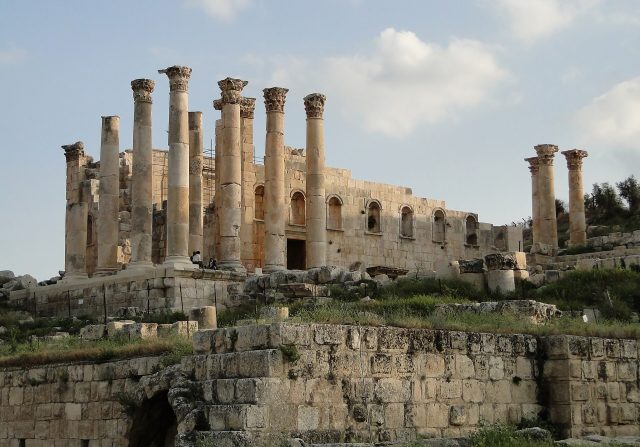
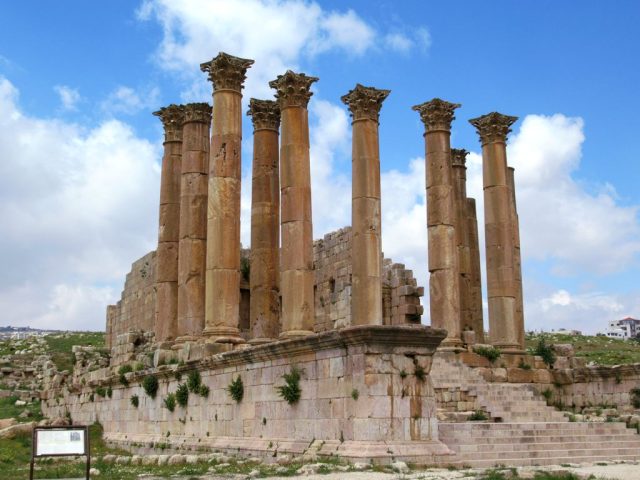
Beyond the performances, the theater offers a quiet space for reflection. Climb to the upper tiers and take in the view. Below, the ruins of Gerasa stretch out in a mix of columns, temples, and paved streets, while beyond them, the modern city of Jerash hums with life. The contrast is striking—the ancient and the contemporary coexisting, each shaping the other in ways that are both visible and unseen. The valley that once carried caravans now carries the weight of memory, its hills bearing witness to the rise and fall of empires.
Sitting on one of the worn stone benches, it’s hard not to feel the passage of time. The wind carries the faintest echoes of voices long gone, and for a moment, the centuries collapse. The theater isn’t just a relic; it’s a living connection to the people who built it, who performed here, who cheered and argued and lived their lives within its walls. It reminds us that while cities may crumble and civilizations fade, the things we create—art, architecture, the spaces where we gather—can endure far beyond us. All it takes is a little imagination to hear the past whispering through the stones.