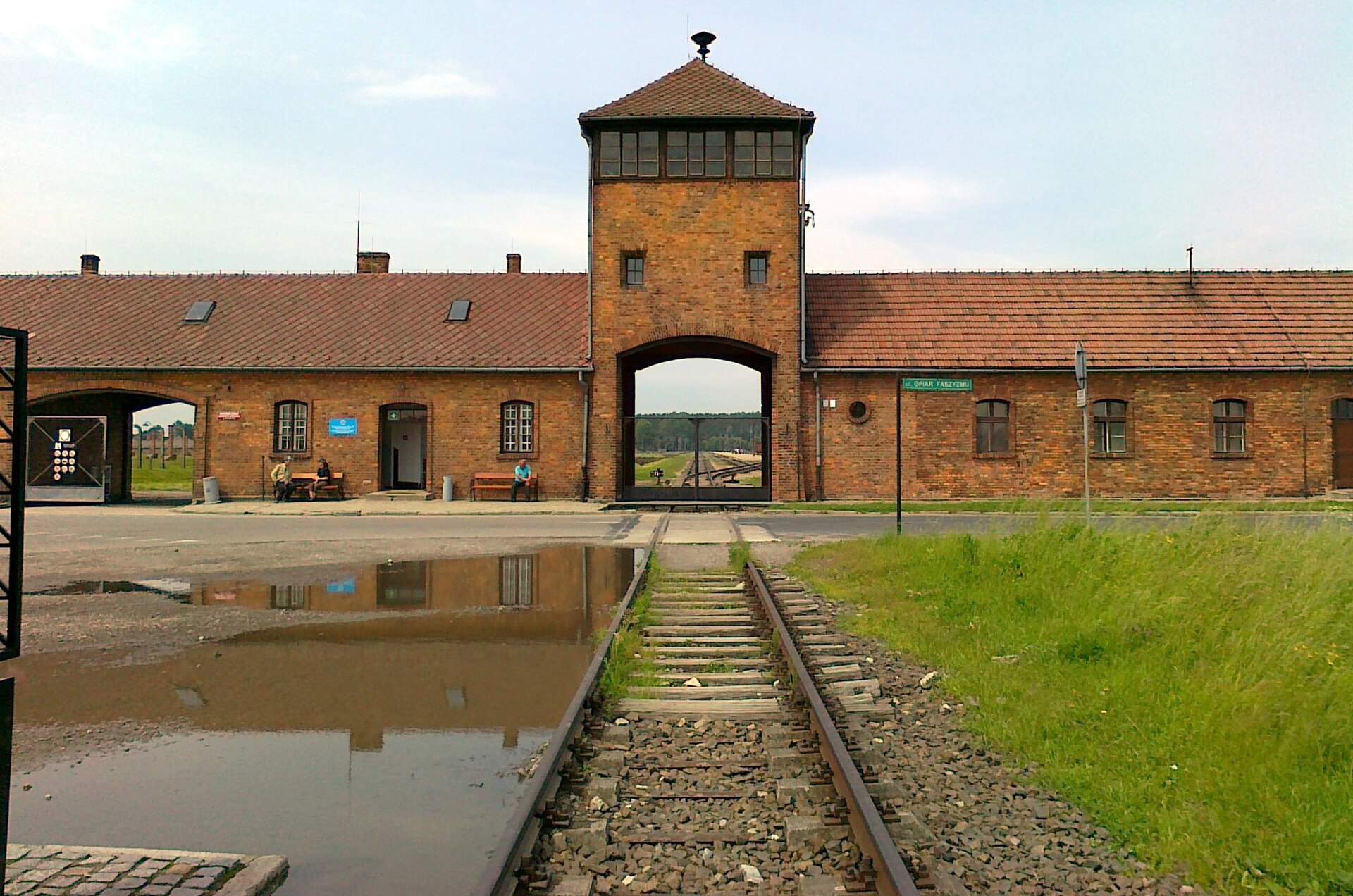
Auschwitz doesn’t lend itself to words. The weight of its history is too heavy. Today, it’s a memorial and museum in a quiet Polish town. During the Second World War, it became the site of the Nazi regime’s most horrific crimes. Over a million people—Jews, Poles, Romani, Soviet prisoners of war, and others—died here in Auschwitz-Birkenau, the largest Nazi concentration and extermination camp.
This isn’t a museum in the usual sense. It’s a place of remembrance. Every brick, every stretch of barbed wire, every remaining barrack carries the scars of what happened.
The camp was established in 1940 by Nazi Germany near Oświęcim, then under occupation. It started as a detention center for Polish political prisoners. Soon, it expanded into something far worse. Auschwitz grew into three parts: Auschwitz I, the administrative center; Auschwitz II-Birkenau, the extermination camp; and Auschwitz III-Monowitz, a labor camp for nearby factories. Birkenau became the epicenter of mass murder. Gas chambers and crematoria operated without pause, designed to destroy human life.
The architecture here is brutally efficient. Long rows of brick barracks, electrified fences, watchtowers—everything was built to kill. In Auschwitz I, some original buildings now hold exhibits. You’ll see personal belongings taken from prisoners: suitcases, shoes, eyeglasses, human hair. These aren’t just objects. They’re fragments of lives cut short. The scale of these collections makes detachment impossible.
Birkenau feels different. It’s vast and empty. Unlike Auschwitz I, this section sprawls across open land. The remnants of barracks, railway tracks, and the ruins of crematoria lie exposed. The Nazis destroyed much before retreating, but what’s left tells the story. A single freight car rusts by the tracks. The wooden barracks, though decaying, still stand. Inside, there’s nothing left of the people who were forced to live here. The silence is overwhelming.
Visiting Auschwitz isn’t like visiting other places. There’s no room for casual curiosity. Hundreds of thousands come each year, not as tourists, but as witnesses. The museum doesn’t soften the truth. Photographs, documents, and survivor testimonies show the reality of camp life: medical experiments, executions, the daily fight to survive. The "Wall of Death," where prisoners were shot, and the gas chambers, though damaged, still evoke a deep response. The weight of history lingers.
Auschwitz isn’t just a historical site. It’s a warning. After the war, survivors and their families came here to remember. In 1947, Poland preserved it as a memorial. Today, it’s a UNESCO World Heritage site. Many educational programs include a visit, but Auschwitz demands more than a history lesson. The atmosphere is heavy, even on sunny days. Visitors often feel sorrow so deep it silences them.
Birkenau’s vastness makes the scale of the atrocities clear. Where thousands once suffered and died, there’s now only open space. The wind moves through the ruins. There are no flashy exhibits—just the land, the sky, and the past. The absence of people makes it haunting. You’re forced to confront the void left behind. The stories of those who suffered—preserved in diaries, drawings, and testimonies—show a resilience that’s hard to understand. These accounts aren’t just records. They’re part of a memory that must never fade.
Auschwitz is also a center for Holocaust research and education. Historians, archivists, and educators work here to preserve the memory of the victims. The museum offers programs for students, exhibitions, and conferences. It ensures future generations grasp the gravity of what happened. But Auschwitz isn’t just about the past. It challenges us today. How could such atrocities occur? What must we do to prevent them?
A visit to Auschwitz is difficult but necessary. It’s not a place for entertainment. It doesn’t provide answers. It forces you to ask hard questions. Why did this happen? How could people participate in such cruelty? What can we do to stop it from repeating? The images and stories stay with you long after you leave. They remind you how fragile human dignity is. That’s why it’s worth coming here—not just to remember, but to carry that memory forward.