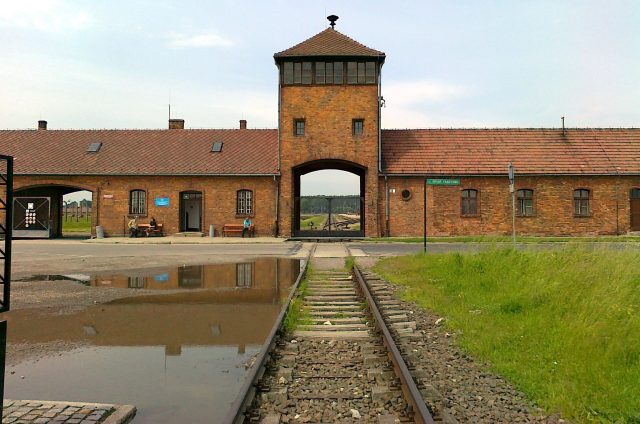
Terezín is a quiet town in the Czech countryside, less than an hour’s drive from Prague, yet its name carries the weight of one of the darkest chapters of the Second World War. Unlike typical tourist destinations, it offers no bright colors or festive atmosphere—only silence, weathered walls, and a history that lingers in the air. This is not a place for casual sightseeing. It is a memorial, a reminder of the thousands who passed through the ghetto and transit camp established here by the Nazis, where suffering was disguised as normalcy and hope was systematically crushed.
In 1941, the Nazis transformed Terezín into a Jewish ghetto, later repurposing it as a transit camp under the cynical label of a "model settlement." Propaganda films were shot here, depicting a false image of cultural life—concerts, lectures, even a children’s opera—while prisoners endured overcrowding, starvation, and the constant fear of deportation to extermination camps like Auschwitz. The Nazis brought in artists, musicians, and intellectuals not to spare them, but to use their talents in a grotesque display of humanity. Behind the staged scenes, people lived in squalor, their lives reduced to survival.
The town itself retains its 18th-century military architecture, with fortified walls, narrow streets, and Baroque buildings that once served as barracks, schools, and administrative offices. Today, these structures bear the scars of their wartime use. The former school became a makeshift hospital, the barracks overflowed with prisoners, and the main square was the site of roll calls and selections. Some buildings now house exhibitions, where visitors can see the drawings of children, the diaries of inmates, and personal belongings—fragile remnants of lives interrupted. These are not just artifacts; they are voices speaking from the past, telling stories that were never meant to be heard.
The Small Fortress, on the outskirts of Terezín, was a Gestapo prison where conditions were even more brutal. Political prisoners, resistance fighters, and those caught trying to escape the ghetto were held here in cramped, lightless cells, subjected to torture and executions. The fortress has been preserved, with its solitary confinement cells, execution wall, and narrow corridors that still echo with the suffering of those who were imprisoned within them. Walking through these spaces is unsettling.
Unlike the extermination camps, Terezín was not designed for mass killings, but its role in the Nazi machinery of terror was no less devastating. From here, trains departed for Auschwitz, Treblinka, and other death camps. Of the more than 140,000 people who passed through Terezín, only about 17,000 survived. Many were children, some of whom were saved in the final days of the war by evacuations. Their stories—of resilience, loss, and the rare moments of kindness—are woven into the fabric of this place.
Today, Terezín serves as both a memorial and an educational center. It hosts programs for students, meetings with survivors, concerts, and exhibitions that keep the memory of the victims alive. Each May, a commemoration ceremony draws people from around the world, a moment to reflect on the lives lost and the lessons that must not be forgotten. For many, visiting Terezín is a deeply personal experience—a chance to honor family members, to learn the truth about the war, and to grapple with the fragility of peace.
A visit to Terezín is not an easy one. There are no guided tours that soften the experience, no distractions from the weight of what happened here. Every step through the town’s streets and former prison cells is a reminder of the suffering endured within these walls. Yet that is precisely why this place matters. It does not allow history to fade into abstraction. It forces you to confront the consequences of hatred and indifference, to recognize how easily civilization can collapse when injustice is ignored.
Terezín is more than a historical site; it is a warning. The stories told here—of propaganda masking atrocity, of art created in the shadow of death, of children who never grew up—are not relics of the past. They are a call to vigilance, a reminder that the forces that shaped this place are never as distant as they seem. To walk through Terezín is to understand that memory is not just about the past; it is about the choices we make today.