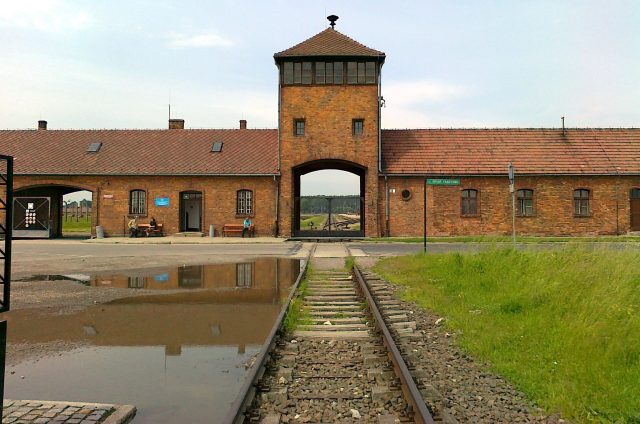
The Small Fortress at Terezín is a place where history speaks in a whisper, yet its voice carries weight. Nestled on the edge of a quiet Czech town, it stands as part of a memorial that honors the victims of the Holocaust, though its origins stretch back much further. Built in the late 18th century under Habsburg rule, the fortress was designed as a military stronghold, its thick walls and bastions a testament to the defensive architecture of the time. There’s a stark functionality to its design—narrow slits for windows, vaulted chambers, and heavy stone blocks that give the impression of impenetrability. Yet despite its imposing presence, the fortress never saw major battle. Its purpose shifted over the centuries, and by the 20th century, it had become something far darker.
During World War I, the Small Fortress held prisoners of war, but it was under Nazi occupation that it gained its grim reputation. From 1940 onward, it became part of the Terezín complex, which the Nazis cynically presented as a model Jewish ghetto while using it as a transit point for deportations to extermination camps. The fortress itself served as a Gestapo prison, where political dissidents, resistance fighters, and those who attempted to escape the ghetto were held. Conditions were brutal—overcrowding, starvation, disease, and systematic abuse took their toll. Many died within its walls before they could be sent elsewhere.
Today, the Small Fortress is a memorial, a place where visitors come not just to see, but to reflect. The exhibitions here don’t rely on graphic displays to convey the horror; the atmosphere of the place does that on its own. The narrow corridors, damp cells, and rusted bars remain largely unchanged. In some rooms, faint inscriptions on the walls—names, dates, desperate messages—still linger, a silent testament to those who were imprisoned here. Walking through these spaces feels less like touring a historical site and more like stepping into a moment frozen in time.
The fortress’s inner courtyard is particularly haunting. It was here that executions took place, and though a memorial now stands in the center, the space itself has changed little. In summer, the wind rustles through the trees; in winter, snow blankets the cobblestones, muffling the world outside. It’s hard to imagine the sounds of gunfire that once echoed here, but the weight of what happened lingers in the air.
Terezín itself is a town with a dual identity. Once a garrison settlement, it became a symbol of both human cruelty and resilience. After the war, life slowly returned—schools reopened, cafes appeared, and people rebuilt their lives. Yet the memory of what happened here never faded. The Small Fortress remains a stark reminder of the past, a place where the line between history and the present feels thin.
Visiting the Small Fortress isn’t an experience that leaves you untouched. It’s not a place for idle sightseeing; it demands something deeper. The exhibits—photographs of prisoners, personal belongings, documents—aren’t just artifacts behind glass. They’re fragments of lives interrupted, stories that were never finished. There’s no attempt to soften the reality of what happened here. Instead, the fortress invites you to confront it, to sit with the discomfort, and to carry the weight of that understanding forward.
The town of Terezín today is quiet, almost ordinary. But the fortress on its outskirts ensures that the past isn’t forgotten. It’s a place where history isn’t just remembered—it’s felt. And perhaps that’s the most important thing it offers: a chance to reflect on how easily humanity can lose its way, and how crucial it is to remember.