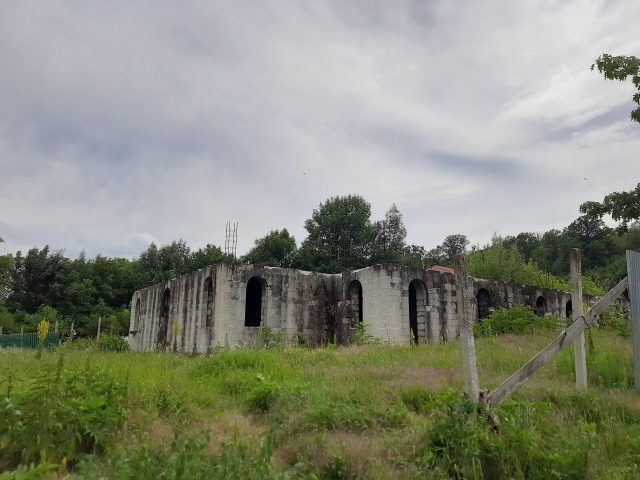
Old Orhei feels like a place where time has paused, leaving behind quiet streets and buildings that carry the weight of centuries. The History and Ethnography Museum of Orhei District isn’t a grand institution with polished displays—it’s something more intimate, a collection of everyday objects that tell the story of a region and the people who shaped it. Housed in a 19th-century mansion, the museum itself is part of that story, its architecture blending Moldovan traditions with the influences of the era. High ceilings, carved wooden doors, and intricate window frames speak of a time when craftsmanship was measured in patience and skill.
The exhibits span centuries, from ancient artifacts to the early 20th century, offering a glimpse into how life here evolved. Tools, clothing, household items, and documents reveal the rhythms of daily existence—how people worked, celebrated, and endured. What makes the collection special is its authenticity; many items were donated by local families, making them not just relics but fragments of personal histories. A handwoven rug, a chipped clay jug, or a set of rusted farming tools might seem ordinary, but in this context, they become windows into the past.
One of the most striking sections is the ethnographic display, where entire rooms have been recreated to show life as it once was. A peasant’s home, with its rough-hewn furniture and simple utensils, contrasts with the more refined interiors of a merchant’s house, where imported goods and finer materials hint at prosperity. These spaces don’t just showcase objects—they reveal how people’s lives changed, how their tastes shifted, and what they valued. The difference between the two rooms is subtle but telling, a quiet testament to the passage of time.
Orhei’s history as a trading hub is another focus of the museum. Centuries ago, the town sat along routes connecting Moldova to neighboring regions, drawing merchants, artisans, and travelers. Coins, scales, and ledgers from different eras illustrate the bustle of commerce—wine, grain, and handcrafted goods flowing in and out of the area. It’s easy to imagine the clatter of carts and the murmur of negotiations in the streets, a reminder that this was never just a sleepy backwater but a place where cultures intersected.
Wine, of course, has always been central to life here. The museum’s collection includes old barrels, grape presses, and bottles with faded labels, tracing the evolution of winemaking in the region. Photographs of vineyard workers and winemakers add a human dimension, showing the labor and pride behind a tradition that has endured for generations. The exhibits don’t romanticize the process—they show the hard work, the tools, and the methods that turned grapes into something more than just a crop.
Beyond the displays, the museum feels alive in a way that many don’t. Local artisans often visit to demonstrate traditional crafts like pottery, weaving, or basket-making. Visitors can try their hand at shaping clay or weaving reeds, turning history from something observed into something experienced. These moments make the past feel immediate, as if the skills and stories of the region are still being passed down, not just preserved.
Old Orhei itself is a natural extension of the museum. After wandering through the exhibits, it’s worth exploring the town’s quiet streets, where small shops sell local honey, cheese, and wine. The Reut River, winding through the landscape, offers a chance to see the same views that have shaped life here for centuries. There’s no need for grand monuments—history is in the details, in the way the light falls on an old stone wall or the way the air smells of earth and herbs.
This isn’t a place for those seeking spectacle or entertainment. It’s for anyone who wants to understand how people lived, what they cherished, and how their world changed over time. There’s no pretension here, just a quiet sense of connection to the past. To visit is to step into a slower rhythm, where history isn’t just something to learn but something to feel. In Old Orhei, the past isn’t distant—it’s right there, in the walls, the objects, and the stories waiting to be discovered.