The Orthodox Church of Ramallah is one of those quiet places that doesn’t demand attention but lingers in the mind long after you’ve left. Tucked away in the heart of the city, it sits among narrow streets and low-slung buildings where the rhythm of modern life brushes up against centuries of history. The church itself is modest in size, yet its presence is far more than architectural—it’s a living thread in the broader tapestry of Orthodox Christianity across the Middle East, a tradition that has shaped this region in ways both seen and unseen.
Its origins trace back to the 19th century, a time when Orthodox communities in Palestine were taking clearer form. Ramallah was then a small town with a predominantly Christian population, and the church emerged as a natural gathering place for worship and community. Unlike grand cathedrals built to impress, this was a space designed for prayer, for preserving faith and customs in a land where stability was never guaranteed. Over the decades, it has weathered wars, political upheavals, and economic hardships, yet it remains standing—a quiet witness to the ebb and flow of history.
The church’s architecture is unassuming, even austere, but that simplicity is part of its charm. Built from local stone, its warm, earthy tones blend seamlessly with the surrounding landscape. Inside, the atmosphere is intimate: a wooden iconostasis, rows of benches, the flicker of candlelight in the soft glow. There are no lavish frescoes or gilded domes, but there is something more meaningful—a sense of refuge, of belonging. The icons here tell stories without words, some brought from elsewhere, others painted by local hands. They speak in symbols, in the quiet language of faith, to those who come with open hearts.
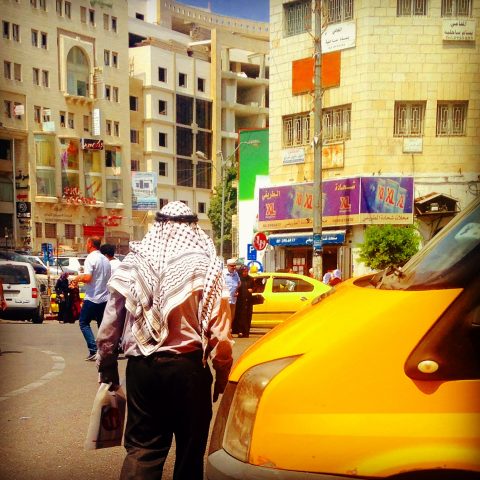
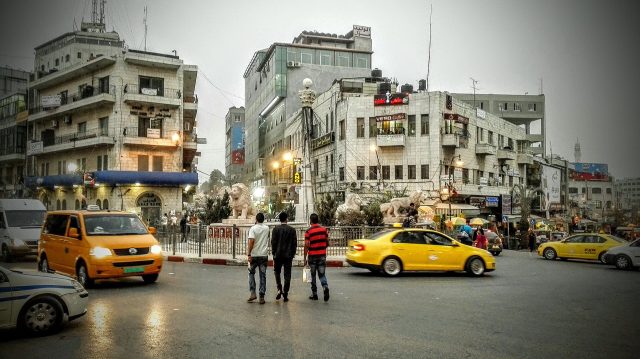
Ramallah today is a city of contrasts, where glass-and-steel office buildings stand alongside traditional Arab homes, and the streets hum with the sounds of daily life—car horns, market vendors, children playing. The Orthodox Church exists in this landscape as a pocket of stillness, a place to step away from the noise. It isn’t a tourist attraction in the conventional sense, which is precisely why visiting it can feel like a rare experience. There are no crowds, no souvenir stalls, no guides reciting rehearsed facts—just the quiet and the chance to sense the spirit of the place.
For the local community, the church is more than a building; it’s a cornerstone of identity. Many families in Ramallah are Orthodox, and the church plays a central role in their lives—baptisms, weddings, funerals. On feast days, the air fills with hymns and the scent of incense as the congregation gathers. Christmas and Easter are especially vibrant, turning the church into the heart of the community. These traditions have been passed down through generations, and even those who have left Ramallah often return for these moments, drawn back by the pull of shared history.
What’s striking about the Orthodox community here is how it fits into the broader religious landscape of the region. Christianity and Islam have coexisted in Palestine for centuries, and in Ramallah, that coexistence is often marked by mutual respect. It’s not uncommon to see Muslim neighbors stopping by the church to offer holiday greetings or simply to visit. This isn’t to say tensions don’t exist, but in everyday life, people find ways to live alongside one another. The church, in its own way, becomes a place that unites rather than divides.
Visiting the Orthodox Church of Ramallah isn’t about ticking off a sightseeing box—it’s about stepping into the rhythm of a city where past and present are so intertwined that the line between them blurs. There’s no strict schedule or set of rules for visitors. On weekdays, the church is usually open, and you might find a parishioner or priest inside, happy to share stories if you’re curious. The key is to approach it with respect, remembering that this is a living place of worship, not a museum.
The area around the church is worth exploring, too. The old city of Ramallah unfolds in a maze of stone-paved alleys lined with small shops selling spices, olive oil, and sweets. In a café, you can sip strong Arabic coffee and watch the city go by. This is history that isn’t frozen in time but alive, shifting, sometimes complicated, but always compelling. The Orthodox Church is just one piece of that story, yet it offers a glimpse into Ramallah’s deeper layers—not just as the administrative center of the Palestinian Authority, but as a city with a rich cultural and religious life.
If you find yourself in Ramallah, take a moment to step inside. Sit quietly, listen to the echo of footsteps under the vaulted ceiling. You won’t find anything extravagant here—no breathtaking architecture, no masterpieces of art—but you might feel something more enduring. It’s the kind of place that stays with you long after you’ve left, a reminder of why we travel: not just to see, but to connect with something real, something that speaks to the heart.