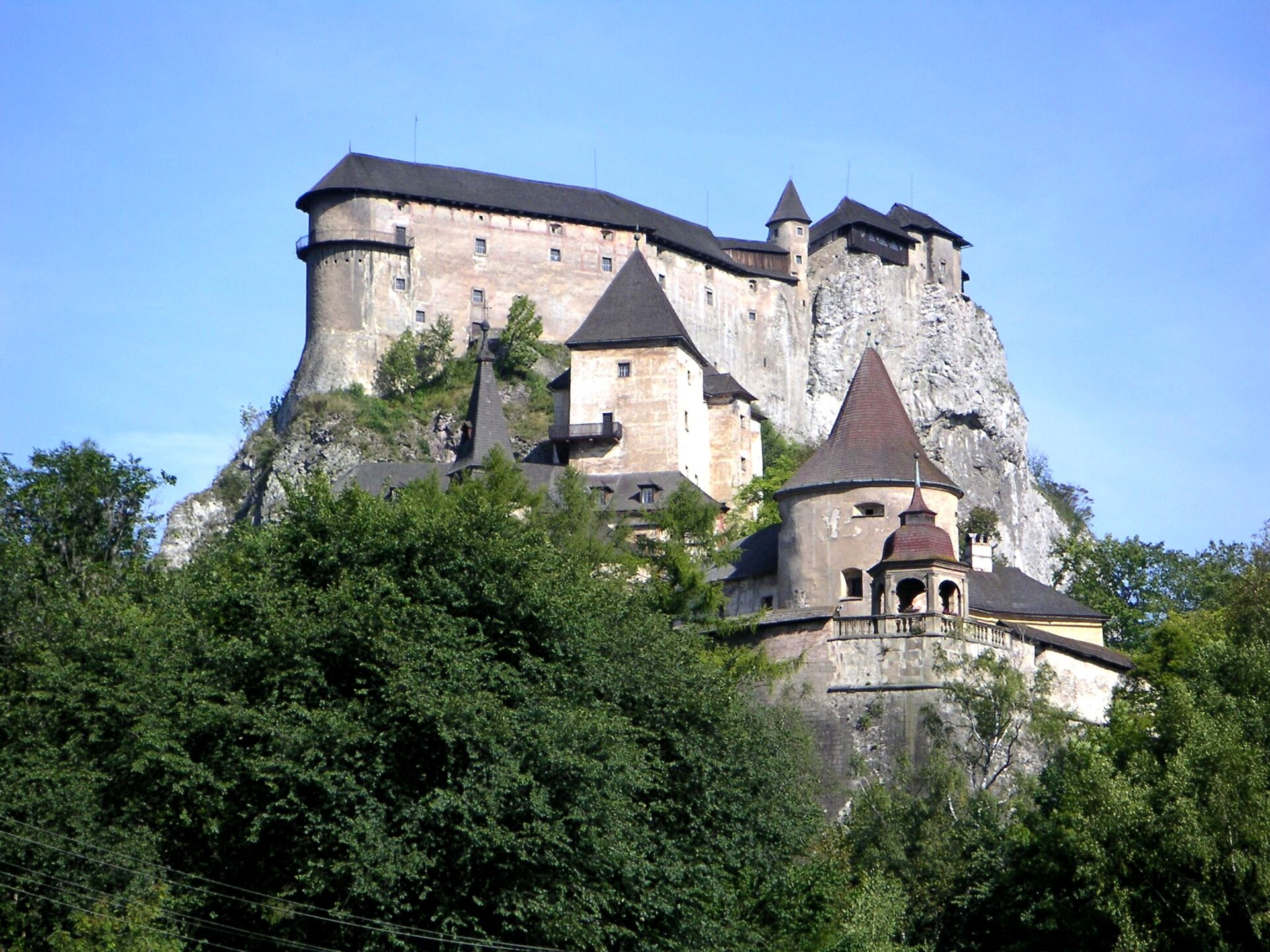
Perched on a steep limestone cliff above the Orava River, Oravský Hrad is one of those rare places where history doesn’t just feel preserved—it feels alive. The castle looms over the village of Oravský Podzámok like a silent guardian, its weathered stone walls bearing the weight of centuries. Unlike many fortresses that exist now only as ruins or polished museum pieces, this one retains a sense of raw, unfiltered time. You don’t just visit Oravský Hrad; you step into a story that began long before the first tourists arrived with their cameras.
The earliest records of the site date back to the 13th century, when a wooden fort stood here, protecting trade routes that wound through the Carpathian foothills. Over the centuries, it evolved from a simple stronghold into a formidable stone castle, its structure shaped by the ambitions of those who ruled it. The most dramatic transformation came in the 16th century under the Thurzós, a powerful Hungarian noble family who turned the fortress into a symbol of their influence. They added the imposing towers, the crenellated walls, and the grand courtyards that still define the castle today. Walking through those courtyards, it’s easy to imagine the clatter of hooves, the murmur of diplomats, and the distant echo of decisions that once rippled across the Kingdom of Hungary.
What makes Oravský Hrad fascinating is how it layers different architectural eras like pages in a book. The Romanesque foundations support Gothic vaults, which in turn give way to Renaissance arcades and Baroque interiors. The Knight’s Hall, with its massive columns and faded coats of arms, is a striking example—this was where feasts were held, alliances forged, and disputes settled. Below ground, the dungeons offer a stark contrast. The air is cooler here, the stone walls damp, and the narrow passages seem to whisper of the prisoners who once languished in them. Local legends claim that the ghost of the last inmate still lingers in one of the towers, though whether that’s true or just a story told to spook visitors is anyone’s guess.
The castle has seen its share of turmoil. In the 17th century, it withstood a siege during the anti-Habsburg uprisings, its walls holding firm against attackers. A century later, fire ravaged part of the structure, leaving it abandoned for years. It wasn’t until the 19th century that restoration efforts began, breathing new life into the ruins. That’s when Oravský Hrad became a museum, its rooms filled with artifacts that tell the story of the people who lived, fought, and died here. Swords, furniture, paintings, and everyday objects—each piece offers a glimpse into a different chapter of the past.
For many, the castle’s most intriguing connection is to the world of cinema. In 1922, it served as the eerie backdrop for *Nosferatu*, F.W. Murnau’s silent horror classic. The film’s shadowy corridors and towering battlements gave the castle a reputation for the supernatural, one that lingers even now. But you don’t need vampires to feel the magic of the place. The climb up the steep path to the main gate is enough to make time feel different—slower, heavier, as if the stones themselves remember every footstep that has ever fallen on them.
Today, Oravský Hrad is one of Slovakia’s most visited landmarks, though it never feels crowded. In summer, visitors wander the ramparts, peer into the 15th-century chapel with its faded frescoes, or simply soak in the views of the Orava Valley stretching below. Winter transforms the castle into something even more atmospheric, its towers dusted with snow, the surrounding forests quiet and still. The lack of crowds makes it easy to linger, to imagine the clink of armor in the courtyard or the distant sound of a lute drifting from the great hall.
For history enthusiasts, the castle is a treasure trove. The exhibits don’t just showcase medieval architecture—they reveal how people lived, what they feared, and what they dreamed of. One of the most intriguing artifacts is the so-called Orava Hoard, a collection of coins and jewelry discovered in the 19th century. It’s a tangible reminder of the wealth that once flowed through these halls, as well as the power struggles that defined the region. The castle’s archives also hold documents that trace the lives of its inhabitants, from noble families to servants, each leaving their mark on the fortress in ways both grand and small.
Beyond its walls, the landscape around Oravský Hrad is just as compelling. The rocky outcrop on which it stands is surrounded by dense forests and rolling meadows, with the Orava River winding through the valley below. The area is home to rare plants and wildlife, and the trails that crisscross the hills offer a chance to step away from history and into the quiet beauty of the Slovak countryside. It’s a place where you can walk for hours without seeing another soul, the only sounds the rustle of leaves and the distant rush of the river.
What makes Oravský Hrad special isn’t just its age or its architecture—it’s the way it makes the past feel tangible. The coolness of the stone walls, the creak of wooden stairs, the way the wind moves through the courtyards—all of it pulls you into another time. You could spend an entire day exploring its nooks and crannies, or you could simply sit on a bench in the courtyard, watching the valley below and wondering how many others have done the same over the centuries. That’s the real allure of the place: it doesn’t just show you history. It lets you touch it.