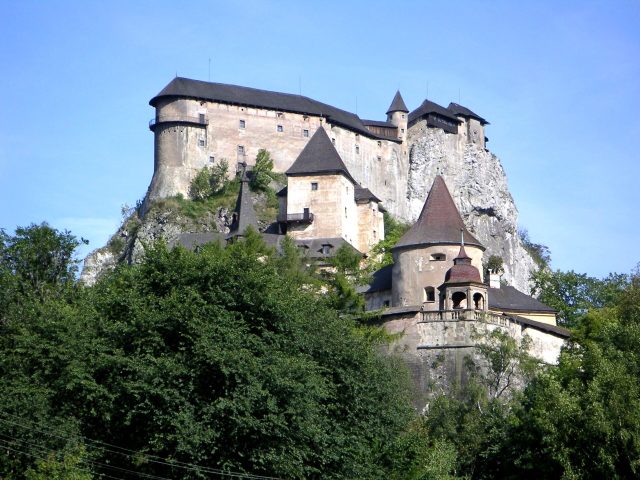
Nestled in the rolling hills of northern Slovakia, just a short walk from the imposing Orava Castle, the Museum of the Orava Village feels like stepping into a living postcard from the past. This open-air museum isn’t a collection of artifacts behind glass—it’s a carefully preserved slice of 19th-century rural life, where every creaking floorboard and weathered wooden beam tells a story. More than thirty original buildings, each relocated from different parts of the Orava region, stand here as they once did: farmhouses with sagging thatched roofs, barns heavy with the scent of hay, workshops where tools still hang in their places, and even a small wooden church that seems to hum with centuries of whispered prayers.
The idea for the museum took root in the mid-20th century, when the rapid march of industrialization threatened to erase the traditional way of life in Slovakia’s rural communities. Local historians and preservationists, alarmed by the disappearance of these structures, began transporting entire buildings to this site, piecing together a village that would serve as a testament to the region’s heritage. What emerged wasn’t a sterile exhibit but a place where the past feels tangible—the low doorways that force you to duck your head, the tiny windows that barely let in light, the hearths where families once gathered to share meals and stories. The buildings aren’t just relics; they’re time capsules, each one a window into the rhythms of daily life in a world where every object had a purpose and every task was woven into the fabric of the community.
One of the most striking structures here is the wooden Church of St. John the Baptist, moved from the nearby village of Terechová. Built in the 18th century without a single nail, it’s a marvel of craftsmanship, its simple lines and unadorned interior belying the skill it took to construct. Inside, the air is thick with the scent of aged wood, and the flickering light from the narrow windows illuminates a collection of icons and a hand-carved iconostasis. The church isn’t just a museum piece—it’s still an active place of worship, especially during religious festivals, when the sound of hymns drifts through the village, just as it has for generations.
Wandering through the museum, it’s the small details that make the experience feel real. A bundle of dried herbs hangs from a doorframe, their earthy aroma lingering in the air. A wooden cart, its wheels worn smooth by decades of use, sits in a courtyard, while inside one of the houses, a loom stands ready for weaving, its threads still taut. In the summer, the village comes alive with demonstrations of traditional crafts—pottery, blacksmithing, basket weaving—where artisans show how everyday objects were once made by hand. There’s no scripted performance here, just the quiet pride of people keeping old skills alive, passing them on to anyone willing to listen.
The Orava region has always been a place of stark beauty and hard-won resilience. Nestled in the Carpathian Mountains, where winters are long and the land can be unforgiving, the people here developed a way of life built on self-sufficiency and community. The museum captures that spirit in the way the buildings are arranged, clustered together as they would have been in a real village, where neighbors relied on one another for survival. It’s there in the hand-stitched embroidery on a linen towel, in the rough-hewn toys tucked away in a wooden chest, in the way the houses face inward, toward a shared space where stories were told and bonds were strengthened. This wasn’t a life of ease, but it was one of deep connection—to the land, to tradition, and to each other.
The museum changes with the seasons, each one offering a different perspective on the past. In the summer, the village buzzes with activity: sheep graze in the fields, smoke curls from the chimneys of the blacksmith’s forge, and the scent of fresh bread drifts from the outdoor oven. Children might be seen playing with wooden hoops or helping to turn the millstone, their laughter blending with the clatter of tools. But in the winter, the village slows down, blanketed in snow that muffles sound and softens the edges of the buildings. The silence is profound, broken only by the occasional creak of a branch under the weight of ice or the distant bark of a dog. It’s in these moments that the museum feels most alive—not as a relic, but as a place where time moves differently, where the past isn’t just remembered but felt.
What makes the Museum of the Orava Village special is its refusal to romanticize the past. There’s no glossy nostalgia here, no attempt to make rural life seem simpler or more idyllic than it was. Instead, the museum presents history as it was: a mix of hard work, ingenuity, and quiet moments of beauty. The houses aren’t pristine; their walls are worn, their floors uneven, their roofs patched with whatever materials were at hand. The tools are rough, the furniture plain, the dishes chipped. And yet, there’s a dignity in that imperfection, a reminder that these were real people, living real lives, with all the struggles and joys that entailed.
For visitors, the museum offers more than just a glimpse into the past—it’s an invitation to reflect on what’s been lost and what endures. In a world where so much is disposable, where traditions are often discarded in favor of the new, the Orava Village stands as a quiet rebuke. It asks us to consider the value of things that last, of skills passed down through generations, of communities built on trust and shared effort. It’s not a place for grand historical narratives or famous names, but for the small, human stories that make up the fabric of history. And perhaps that’s what makes it so moving: it reminds us that the past isn’t just something to study, but something to feel, to walk through, to carry with us long after we’ve left.