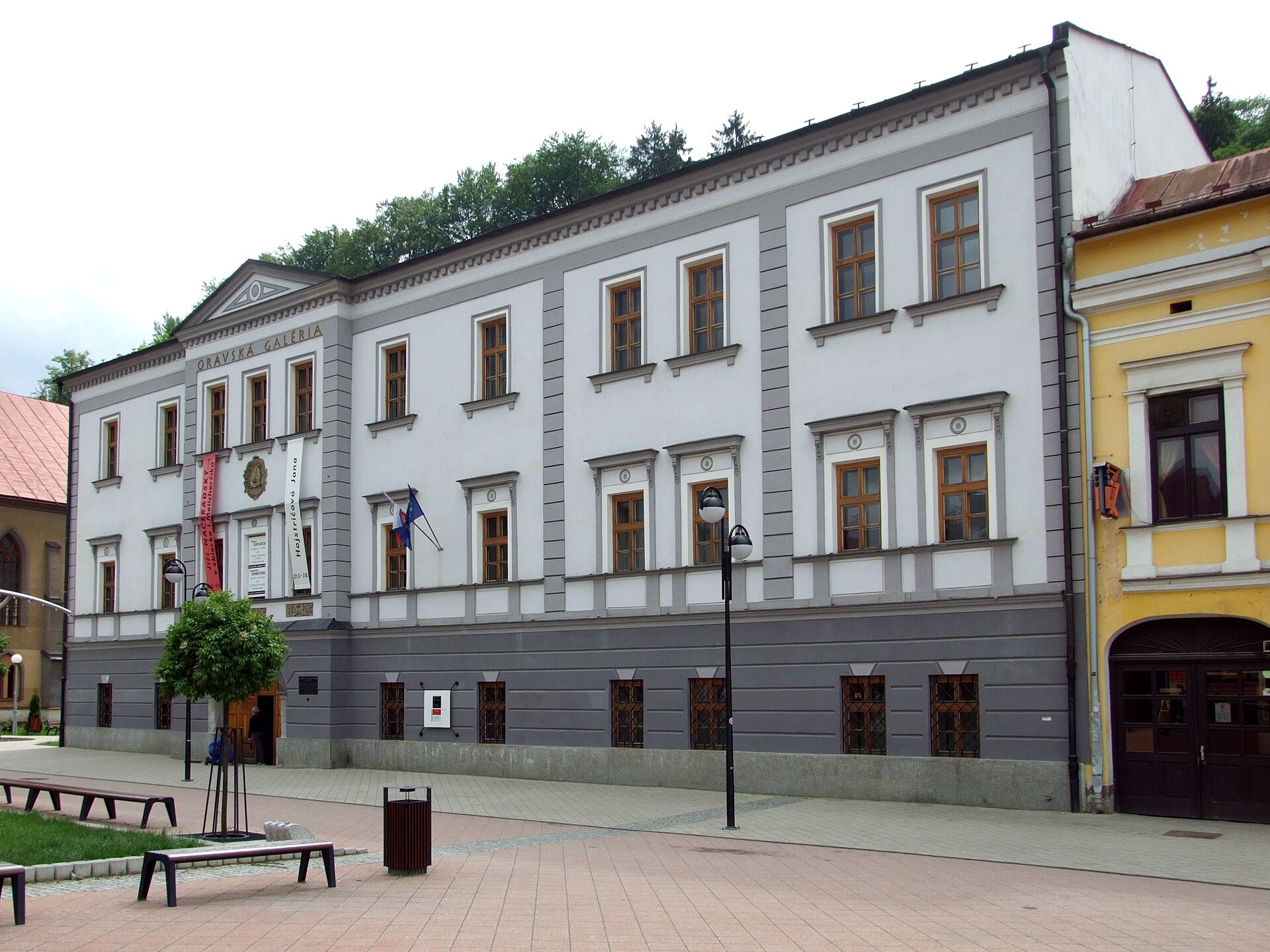
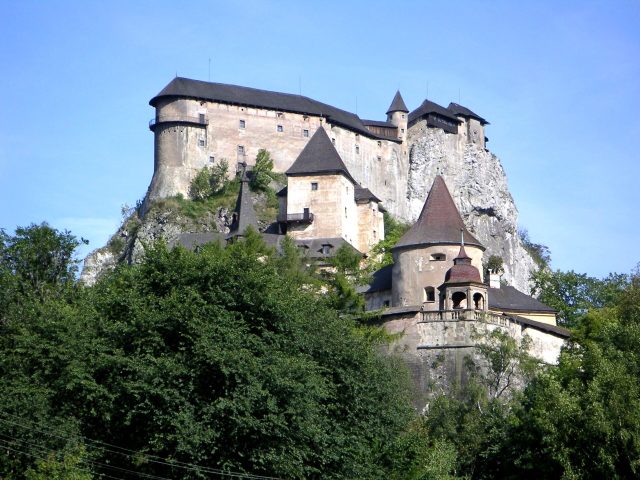
Perched on a rocky hill above the quiet town of Oravský Podzámok, the Orava Gallery occupies part of a castle that has stood here for centuries. The building itself is a piece of history, its thick stone walls and wooden beams bearing the marks of time. Walking through its halls, you move between past and present—medieval fortifications give way to carefully curated art, and the scent of old wood lingers in rooms where paintings now hang.
The castle’s origins trace back to the 13th century, when it was first mentioned in records. Over the years, it served as a fortress, a noble residence, and an administrative hub, surviving wars, fires, and neglect. By the 19th century, it had fallen into disrepair, but restoration efforts preserved much of its character. In the mid-20th century, one of its wings was repurposed to house an art collection, turning a place of defense into a space for reflection.
The gallery’s collection is modest but thoughtful, focusing on works that connect to the region’s heritage. You’ll find medieval icons, religious art, and paintings from the 19th century, when Slovak artists began developing a distinct national style. Many pieces depict the landscapes and traditions of Orava, offering a glimpse into how people here once lived. There are also works by European artists, though the emphasis remains on local and regional creativity rather than grand, international names.
The architecture plays a key role in the experience. Some rooms retain their original features—ornate ceiling frescoes, carved doorframes, and uneven stone floors—while others blend old and new, with modern display cases set against centuries-old walls. The effect is intimate, as if the art is being shared rather than exhibited. There’s no rush here; you can linger in a corridor, studying the grain of the wood or the way light falls through narrow windows.
Exhibitions change regularly, with temporary shows complementing the permanent collection. The gallery also hosts occasional concerts, lectures, and workshops, turning the space into a living cultural hub. The atmosphere is far from formal—visitors are encouraged to engage with the art on their own terms, whether that means sitting on a bench in quiet contemplation or striking up a conversation with a fellow visitor.
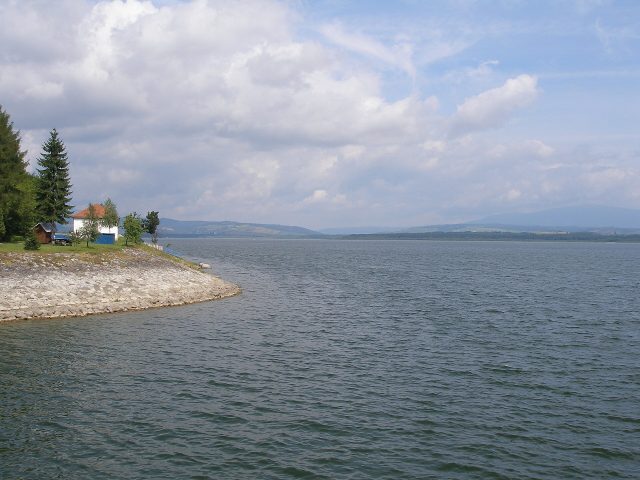
Beyond the gallery, the castle grounds offer their own rewards. From the outer walls, you can look out over the Orava River valley, where patchwork fields and rolling hills stretch into the distance. The town below is small and unassuming, with narrow streets and pastel-colored houses that have stood for generations. A walk along the castle’s perimeter or through the surrounding woods feels like stepping into a different era, one where time moves more slowly.
What makes the Orava Gallery special is its lack of pretension. There are no blockbuster names or crowd-pleasing spectacles, just art presented in a way that feels genuine. It’s a place where history and creativity coexist without competing, where the past isn’t just preserved but given new meaning. For anyone curious about Slovakia’s cultural roots, it offers a quiet, unfiltered perspective—one that doesn’t rely on grandeur but on the power of small, meaningful details.
The gallery doesn’t demand much from its visitors. There’s no prescribed route, no audio guide urging you forward. You might spend an hour here or half a day, depending on how deeply you want to explore. Some come for the art, others for the architecture, and a few simply to enjoy the view from the castle walls. Whatever brings you here, the experience is likely to be understated, personal, and quietly memorable.