Kanazawa moves at its own pace, and nowhere is that more evident than in the quiet lanes of Omiyake-machi. This isn’t the Japan of neon-lit streets or crowded temples—it’s a place where time feels softer, where the past lingers in the creak of wooden floors and the scent of green tea drifting from open doorways. The neighborhood isn’t just a collection of shops and restaurants; it’s a living thread connecting the city’s feudal past to its present, woven into the fabric of everyday life.
Omiyake-machi took shape during the Edo period, when Kanazawa thrived as the seat of the Maeda clan, one of the most powerful feudal lords in Japan. The area became a hub for merchants and artisans who supplied the samurai and nobility with goods, from lacquerware to silk. The buildings they constructed were designed for practicality as much as beauty—narrow, with wooden facades that leaned slightly forward to shield interiors from rain and snow. Many of these structures still stand today, though their purpose has shifted over the centuries. What were once workshops and storehouses have become cafes, galleries, and guesthouses, but the bones of the old district remain unchanged.
Walking through Omiyake-machi feels like stepping into a different era. The streets are so narrow that two people can barely pass without brushing shoulders, and the pavement often gives way to cobblestones worn smooth by generations of footsteps. The houses press close together, their eaves nearly touching, and if you look up, you’ll notice how the rooflines tilt slightly—a deliberate choice to prevent heavy snow from accumulating in winter. Even now, when snow blankets the city, the neighborhood doesn’t lose its warmth. Lanterns glow softly in the evenings, and the sound of laughter spills from open doorways, as if the cold were just another part of the rhythm here.
The shops in Omiyake-machi are small, often family-run, and many still operate as they have for decades. You’ll find confectioners shaping wagashi by hand, their fingers deftly pressing sweet bean paste into delicate molds. Others sell local crafts—lacquer boxes, hand-dyed textiles, or ceramics fired in nearby kilns. The pace is unhurried; there’s no pressure to buy, no sales pitches. Instead, shopkeepers might offer a sample of mochi or a cup of tea, a quiet invitation to linger. Nearby, tiny cafes serve matcha with a side of these same sweets, the bitterness of the tea balancing the sugar in a way that feels almost meditative.
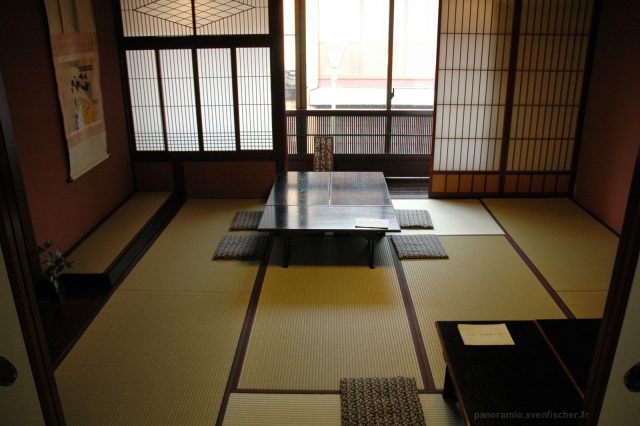
Some of the most striking buildings in the neighborhood are the old inns, or ryokan, that have stood here for centuries. A few still welcome guests, offering rooms with tatami floors, futons rolled out at night, and meals served on low tables. Even if you don’t stay, peeking into one of these inns is like glimpsing a private world. Sliding doors with paper screens filter the light, calligraphy scrolls hang in alcoves, and the scent of incense lingers in the air. It’s easy to imagine travelers from another time pausing here, weary from the road, warming their hands by a charcoal brazier.
Omiyake-machi isn’t a place for grand attractions or guided tours. There are no flashy signs or modern distractions—just the quiet hum of life unfolding at its own pace. In the evenings, when paper lanterns flicker to life, the neighborhood takes on a different mood. Shadows stretch across the cobblestones, and the air fills with the smell of taiyaki, fish-shaped cakes grilled over charcoal. Locals stop to chat with vendors, children dart between doorways, and the sound of a shamisen drifts from an open window. It’s a scene that could have played out a hundred years ago.
What makes Omiyake-machi special is its authenticity. Unlike preserved districts in other cities, where the past is polished for tourists, this neighborhood remains a living part of Kanazawa. The people who shop here, work here, and call it home don’t see it as a relic—they see it as their daily life. That’s why there’s no rush, no need to pose for photos or follow a set itinerary. You can sit on a wooden bench outside a shop, sip tea, and watch the rain slide off tiled roofs. Or wander down a side alley where laundry hangs between buildings, and the only sound is the clatter of geta sandals on stone.
Kanazawa has always been a city that values tradition, and Omiyake-machi is one of its purest expressions. It’s a place where the old ways aren’t just remembered—they’re still practiced, still cherished. That’s why it feels different from other historic districts in Japan. There’s no sense of performance here, no staged authenticity. Instead, there’s a quiet confidence, a sense that the neighborhood doesn’t need to prove anything. It simply is, and that’s enough. Whether you visit once or return again and again, Omiyake-machi offers something rare: a chance to step out of time, if only for a little while.