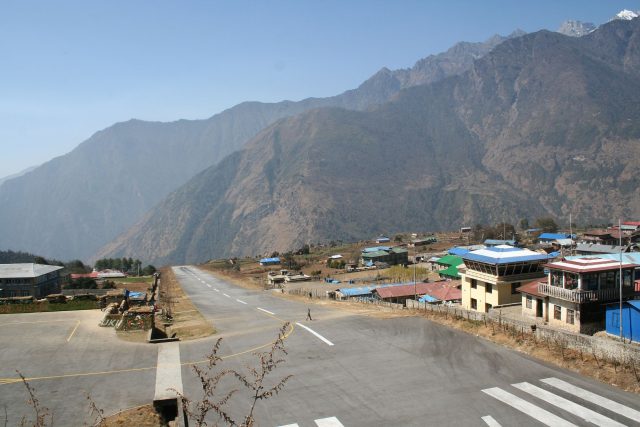
The Sagarmatha National Park office in Salleri isn’t just another government building—it’s the first real introduction to one of the world’s most extraordinary protected landscapes. Tucked away in a quiet town on the route toward Everest, this unassuming place marks the threshold into the Himalayas’ unique ecosystem, where altitudes stretch from two thousand meters to well over eight thousand, and where rare wildlife, ancient forests, and permanent snowfields coexist. This is where trekkers pick up the permits required to enter the park, a necessary step before setting foot on any of its trails. More than that, it’s where travelers get their first sense of what lies ahead in these mountains—both the beauty and the challenges.
The office itself is modest, a single-story structure with wooden shutters and a sign in Nepali and English. Inside, a few small rooms serve as workspaces where park staff process paperwork, answer questions, and ensure visitors understand the rules. It’s here that trekkers learn about routes, weather conditions, and safety precautions—critical information in a region where even seasoned climbers can fall victim to altitude sickness or sudden storms. For many, this is the starting point of a long journey toward Everest Base Camp or other high-altitude trails, a place where the reality of the adventure begins to sink in.
Sagarmatha National Park, whose name translates to Mother of the Universe, was established in 1976. Since then, it has become more than just a protected area—it’s a symbol of the delicate balance between nature and human presence. Covering over a thousand square kilometers, the park encompasses not only Everest but other towering peaks, glaciers, alpine meadows, and valleys where the Sherpa people have lived for centuries. The office in Salleri plays a vital role in preserving this fragile environment, regulating tourist flow, monitoring ecological impact, and supporting local communities.
Salleri isn’t a tourist hub in the usual sense. Life here moves at its own unhurried pace, with none of the luxury hotels or bustling restaurants found in bigger cities. Instead, there are a handful of guesthouses where trekkers can spend the night before heading into the mountains, and small cafes serving dal bhat, the traditional Nepali dish of lentils and rice. The park office sits near the center of town, easy to find with its clear signage. Around it, the landscape begins to reveal itself—the first glimpses of the towering peaks that dominate the horizon. For many travelers, Salleri is the last place with familiar comforts before the road narrows and the wilderness takes over.
The park’s history is deeply tied to the story of Everest itself. Early expeditions passed through these valleys in the early 20th century, and since then, the number of people drawn to the world’s highest peak has only grown. But Sagarmatha National Park is more than just Everest. Its slopes are home to snow leopards, Himalayan tahrs, red pandas, and hundreds of bird species. In spring, rhododendron forests burst into color, painting the hillsides in vibrant hues, while higher up, alpine meadows shelter yaks and blue sheep. The office in Salleri is where this world begins to unfold, where every step forward reminds visitors of nature’s grandeur—and its vulnerability.
For the local Sherpa community, the park office is also a workplace, a place where decisions about conservation and tourism are made. The Sherpas have lived in harmony with these mountains for generations, but the rise of trekking and climbing has brought new challenges. The park helps them adapt, providing jobs as guides, porters, and guesthouse owners while encouraging the preservation of their traditions. In Salleri, old and new ways of life exist side by side—Buddhist stupas stand near the park office, and on the streets, trekkers in high-tech gear pass locals in traditional clothing.
The atmosphere inside the office is calm and efficient. Unlike the crowded tourist centers in Kathmandu or Lukla, things move at a measured pace here. Getting a permit usually takes less than an hour, and the staff, who speak English and Nepali, do their best to assist visitors. Occasionally, locals stop by—not just for paperwork, but to chat, turning the office into a small hub of community life. For them, this isn’t just a job; it’s part of a way of life shaped by the mountains they hold sacred.
Visiting the Sagarmatha National Park office in Salleri isn’t just a bureaucratic stop—it’s the first chapter of a journey into a world where humans are humbled by nature’s scale. Here, the air already carries the crispness of high altitudes, and the surrounding peaks hint at the landscapes to come. The office itself may be a simple building in a small town, but it’s where some of the most memorable adventures in the Himalayas begin. For those who pass through its doors, it’s the starting point of a story that will stay with them long after they’ve left the mountains behind.