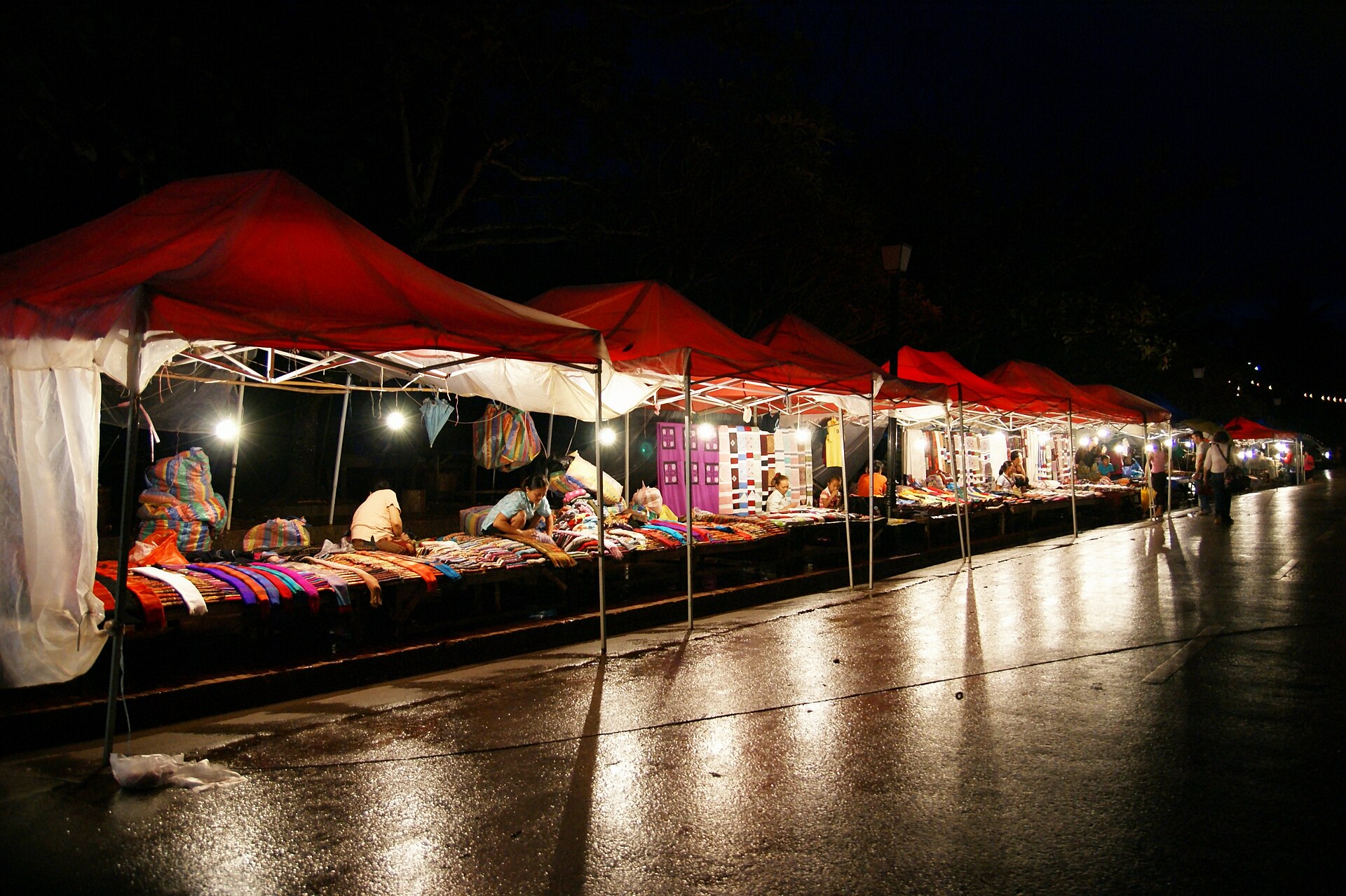
Luang Prabang’s night market isn’t just a place to buy souvenirs or grab a bite—it’s a living piece of the city, shaped by decades of trade, tradition, and the slow rhythm of daily life. As the sun dips below the horizon, Sisavangvong Road transforms into a vibrant corridor of stalls, flickering lanterns, and the murmur of voices. Unlike the crowded markets of Bangkok or Hanoi, this one moves at its own pace, drawing locals and travelers alike who come as much for the atmosphere as for the goods. The market stirs to life in the late afternoon, when the heat eases and the golden light softens the pavement, casting long shadows from the trees and strings of bulbs overhead.
The market’s roots run deep into Luang Prabang’s history. Once the royal capital of Laos, the city has long been a crossroads of cultures—Lao, French, Chinese, and the many ethnic groups of the surrounding hills. Trade here is nothing new; it’s been woven into the city’s fabric for centuries. But the night market, which took shape in the late 20th century, gave that tradition a new form, one that catered to visitors without entirely losing its local character. Many of the vendors are families who have passed down their crafts for generations, and even now, the market retains a sense of continuity, a place where the past and present coexist.
There’s nothing grand about the market’s setup—just rows of simple stalls made from bamboo and fabric, arranged in narrow alleys that invite you to wander. The lighting is soft, coming from kerosene lamps and strings of fairy lights, which give the scene an intimate, almost domestic feel. Unlike the bustle of daytime markets, everything here unfolds slowly. Shoppers linger over handwoven textiles, bargaining in quiet voices, while vendors don’t push their wares so much as invite conversation. It’s less about the transaction and more about the exchange, whether it’s a story, a smile, or just a moment of connection.
The goods on offer are a mix of the practical and the beautiful, but textiles dominate. Silk and cotton scarves, sarongs, and intricately embroidered bags spill across tables, many of them made by the women sitting right behind the stalls, their hands moving deftly over looms. Wooden carvings, silver jewelry, and lacquerware boxes also line the tables—classic Lao souvenirs, but presented without the usual tourist hype. There are no flashy signs or aggressive sales pitches, just the quiet pride of craftsmanship, laid out for anyone who cares to look.
Food is another highlight, with rows of street vendors serving up the flavors of Laos. The air is thick with the scent of lemongrass, garlic, and chili as dishes are cooked right in front of you. You might try *lap*, a tangy salad of minced meat or fish tossed with herbs, or *khao poon*, a fragrant rice noodle soup in coconut broth. For something simpler, there are grilled skewers, fresh fruit shakes, and sticky rice served in bamboo baskets. The food is cheap, but more than that, it’s authentic—no tourist traps, no watered-down versions, just the real taste of the region.
Beyond the shopping and eating, the market is a place where the city’s pulse is easiest to feel. Locals come not just to buy or sell, but to meet friends, catch up on news, or simply enjoy the evening. Children dart between stalls, elders sip tea from low stools, and groups of young people pose for photos against the colorful displays. There’s no rush, no strict schedule—just the easy flow of conversation, laughter, and the occasional strains of traditional music drifting from a speaker.
For visitors, the market offers more than just a chance to take home a piece of Laos. It’s a glimpse into how people live, work, and connect. Many vendors speak some English or French, and if you’re lucky, you might hear the story behind a particular weaving technique or the history of a silver-smithing family. Even without words, though, the market feels genuine, a place where the line between traveler and local blurs just enough to make you feel like you’ve stepped into something real.
The market operates every evening, but weekdays tend to be quieter than weekends. It opens around five and winds down by ten, as the city settles into night. If you want to avoid the busiest hours, arrive early, when the first lights are just coming on and the air still holds the warmth of the day. Or stay late, and watch as the stalls are packed away, the lanterns dim, and the street returns to its usual self, ready to begin again tomorrow.