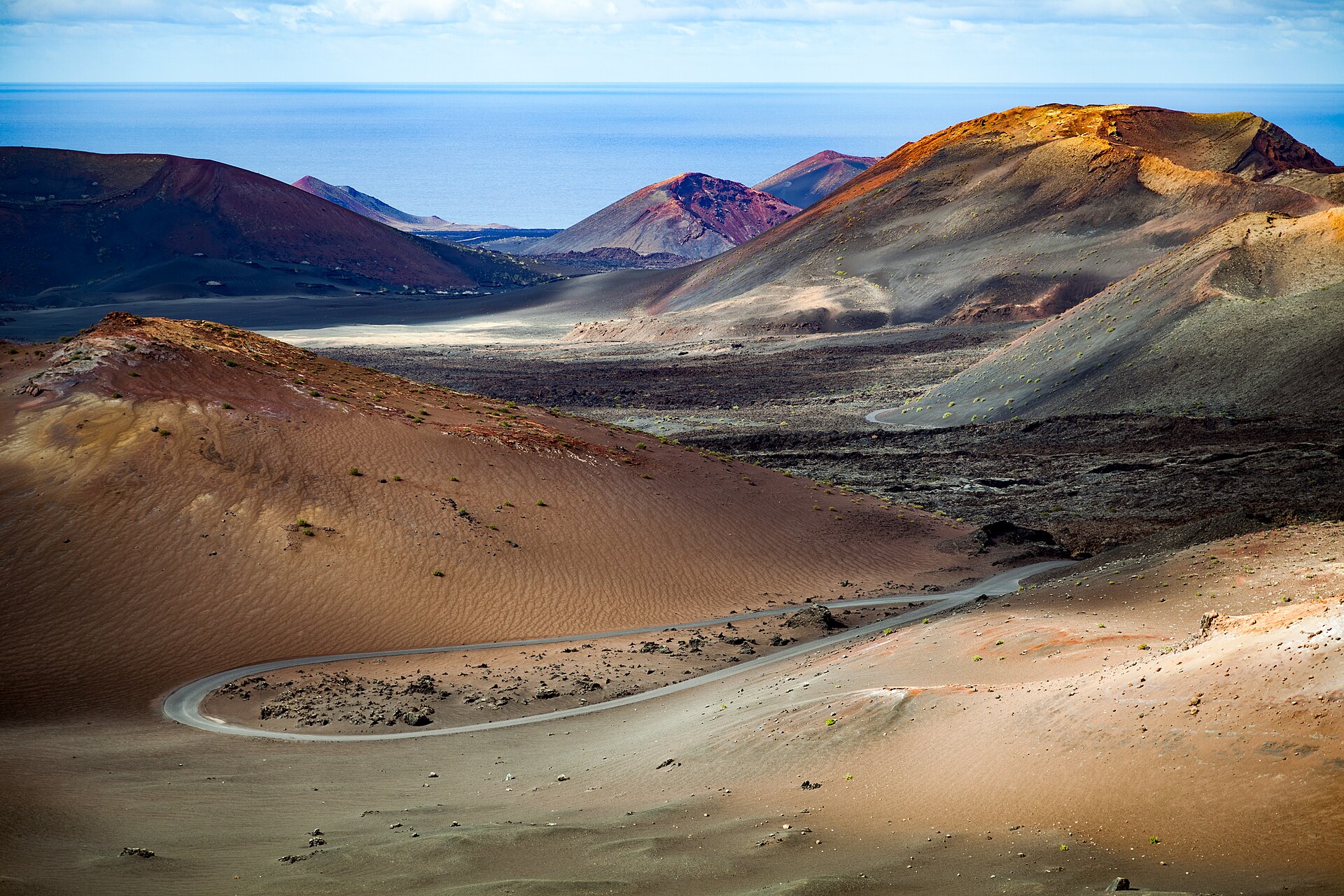
Lanzarote is a place where the earth still remembers how to burn. The island rises from the Atlantic in shades of ash and rust, its landscapes shaped not by gentle rains or the slow work of rivers, but by fire. Timanfaya National Park is the heart of this volcanic world, a stretch of land so unlike the rest of Spain that it feels borrowed from another planet. There are no rolling green hills here, no olive groves or whitewashed villages. Instead, the ground is a mosaic of black and red rock, cracked and twisted by ancient eruptions. It’s a reminder that nature doesn’t always move at a pace humans can predict—or control.
The park exists because of disaster. In the early 18th century, Lanzarote was a quiet island of vineyards and fishing hamlets, its people living much as they had for generations. Then, in 1730, the earth split open. For six years, volcanoes erupted almost without pause, spewing rivers of lava that buried villages and fields. Ash darkened the sky for miles, and the island’s shape changed forever. When the eruptions finally stopped in 1736, the land that remained was unrecognizable. Fertile soil had turned to stone, and where crops once grew, there was only a vast, silent desert. The people who survived were left with a landscape that no longer belonged to them.
Today, Timanfaya covers about fifty square kilometers, though it was once much larger. Over time, parts of the volcanic fields were reclaimed for farming or development, but the core of the park was protected in the mid-20th century. Now, visitors are asked to stay on marked paths, to leave the rocks undisturbed, and to respect the fragile balance of this place. Even the demonstrations of geothermal activity—like the jets of steam that shoot from the ground when water is poured into shallow wells—are carefully managed. The heat beneath the surface is real, and it’s still dangerous.
The volcanoes themselves are the main attraction. Montaña del Fuego, or Fire Mountain, is the most famous, its slopes still warm to the touch. A few meters below the surface, temperatures can reach hundreds of degrees. This heat isn’t just for show; it’s used in small ways, like cooking food in the park’s restaurant. Meat and vegetables are lowered into pits where the ground is hot enough to roast them in minutes. It’s a simple trick, but it drives home the point: this land is alive, even if it doesn’t look like it.
Walking through Timanfaya feels like stepping into a different era. At first glance, the landscape seems lifeless, a wasteland of stone and dust. But look closer, and you’ll see signs of resilience. Lichens cling to the rocks, their pale patches the first hint of color in the monochrome world. Hardy shrubs push through cracks in the lava, their roots finding purchase in the ash. Scientists say that in a few hundred years, this place might support real soil and vegetation. For now, though, it remains a kingdom of minerals and fire, a testament to the slow, relentless work of time.
The park offers a few ways to explore. The most popular is the bus tour along the Ruta de los Volcanes, a winding road that cuts through the heart of the lava fields. In forty minutes, you’ll pass craters, frozen rivers of rock, and strange formations carved by ancient flows. For those who prefer to walk, there’s a coastal trail where the volcanic landscape meets the ocean, the black cliffs dropping sharply into the waves. Neither route is long, but both leave a lasting impression.
Timanfaya has a way of making you feel small. Centuries ago, people watched these eruptions with terror, seeing them as acts of divine punishment. Today, we understand the science behind them, but the sense of awe remains. The park isn’t just for geologists or adventure seekers; it’s for anyone who has ever stood in a place where the earth feels alive in a way that’s both beautiful and unsettling.
Visiting Timanfaya is a strange experience. There are no familiar landmarks—no trees, no rivers, no sounds of running water. Just the wind scraping over the rocks and the occasional cry of a bird circling the slopes. It’s a place that forces you to pay attention, to notice the details: the way the light catches the edges of the lava, the patterns in the ash, the silence that settles when the wind dies down. Lanzarote is often called the Island of Fire, and Timanfaya is its most vivid expression. Here, in this harsh and beautiful landscape, life persists in ways you wouldn’t expect. It’s a reminder that even in the most unforgiving places, the world finds a way to keep going.