Perched above the whitewashed town of Yaiza, the Castillo de San José has long stood as a silent witness to Lanzarote’s layered past. Built in the late 16th century as a fortress against pirate raids, its thick stone walls and narrow slits for archers tell of a time when this stretch of the Atlantic was a lawless frontier between Europe and the Americas. By the 20th century, the castle had lost its military purpose, but its commanding position overlooking the sea and the volcanic plains beyond made it an unlikely stage for one of the island’s most transformative figures.
César Manrique saw potential in the abandoned fortress that others might have overlooked. Born in Arrecife in 1919, he spent his life bridging the gap between Lanzarote’s stark natural beauty and the creative impulse to shape it. The museum that now bears his name isn’t just a collection of his work—it’s a manifesto of sorts, an argument for how art and landscape can exist in dialogue rather than opposition. Manrique didn’t just hang paintings on the castle’s walls; he reimagined the space itself, letting the building’s history and the island’s geology guide the way light falls across the exhibits and how visitors move through the rooms.
The permanent collection offers a cross-section of Manrique’s eclectic output. His early abstract paintings, with their swirling forms and earthy palettes, echo the undulating lava fields that dominate Lanzarote’s interior. Later works reveal his fascination with movement—delicate mobiles crafted from wood and metal that sway with the slightest breeze, as if animated by the same winds that shape the island’s dunes. There are also sketches for the architectural projects that would later define Lanzarote’s modern identity, from the subterranean Jameos del Agua to the wind toys scattered across the island’s highways. Each piece feels like a fragment of a larger vision, one where human creativity doesn’t impose itself on nature but responds to it.
The museum’s design reinforces this idea at every turn. Manrique preserved the castle’s original structure, leaving the rough-hewn stone walls and vaulted ceilings exposed, but he also introduced subtle interventions that blur the line between building and artwork. Staircases curve like lava flows, and windows frame views of the surrounding landscape as deliberately as any painting. Even the lighting is unobtrusive, designed to mimic the soft, diffused glow of the island’s volcanic light. The effect is immersive without being overwhelming—visitors don’t so much tour the museum as inhabit it for a while.
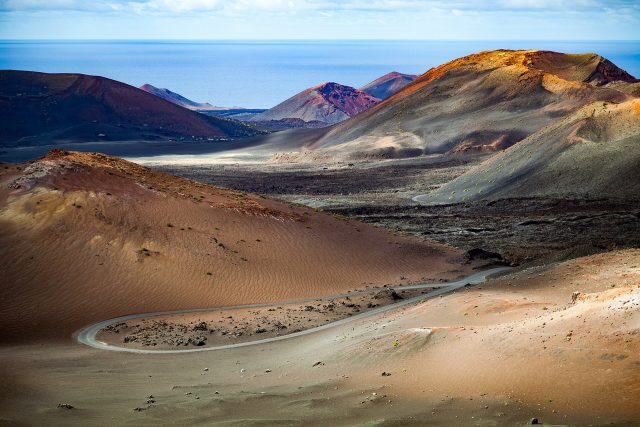
Yaiza itself is a quiet counterpoint to the museum’s creative energy. The town’s low-slung houses, with their limewashed walls and green shutters, cluster around a central square where the pace of life hasn’t changed much in centuries. Beyond the town, the land unfolds in shades of black and ochre, a reminder of the volcanic forces that shaped Lanzarote. Manrique’s work often drew from this landscape, but he also helped shape how the world sees it. His advocacy for sustainable tourism and architectural restraint ensured that the island’s dramatic scenery wasn’t smothered by development, a legacy that’s visible in everything from the preserved vineyards to the carefully placed viewpoints along the roads.
The temporary exhibitions at the museum continue this tradition, showcasing artists whose work engages with themes of nature, sustainability, or the interplay between built and natural environments. These shows don’t just complement Manrique’s vision—they extend it, proving that his ideas about art and ecology remain relevant. The museum isn’t a shrine to a single artist but a living space where those ideas are tested and expanded. That sense of continuity is part of what makes it feel so vital, even decades after Manrique’s death.
A visit here is as much about the journey as the destination. The approach to the castle, winding through Yaiza’s narrow streets, sets the tone. The town’s unhurried rhythm, the scent of salt air mixing with the earthy aroma of volcanic soil, the way the light shifts as you climb toward the museum—all of it prepares you for what’s inside. And when you finally step out onto the castle’s upper terrace, the view of the Atlantic stretching to the horizon, it’s easy to understand why Manrique was so drawn to this place. The museum doesn’t just display art; it offers a way of seeing, a reminder that creativity and nature aren’t separate forces but part of the same conversation.