Perched on a gentle rise in the heart of Yaiza, a quiet town on Lanzarote’s southern edge, the Church of Nuestra Señora de los Remedios doesn’t demand attention. Its whitewashed walls and unassuming facade blend into the landscape, shaped by the same winds that sweep across the island’s volcanic plains. This modest building holds a story that stretches back centuries—one of resilience, faith, and the slow rhythm of life where the earth is still raw.
Built in the 17th century, the church was made to last. Its thick walls, constructed from dark volcanic stone, contrast with the bright white exterior. Small windows let in just enough light to soften the interior, while the heavy wooden door, worn smooth by time, shows the generations who have passed through it. Inside, the single nave feels spacious, its high ceiling drawing the eye upward. The simplicity of the space reflects the island’s character. The altar, crowned by a statue of the Virgin of Los Remedios, Yaiza’s patron saint, is the only adornment, a quiet focal point where silence matters more than decoration.
The church’s history is part of Lanzarote’s own. During the 16th and 17th centuries, pirates targeted the island, and Yaiza, near the coast, suffered raids. The church wasn’t just a place of worship—it was a refuge. Its sturdy walls offered protection, and its doors could be barred against invaders. Over time, as piracy faded, the building’s role changed. It became a gathering place, a symbol of the community’s survival, and a keeper of traditions. Even now, it hosts Sunday masses and local festivals that celebrate the island’s mix of Spanish and Canarian culture.
The square around the church is where Yaiza’s daily life happens. Low, whitewashed houses with flat roofs line the space, their facades softened by bougainvillea and palms. In the mornings, the air carries the scent of coffee and fresh bread from the nearby bakery. In the afternoons, the square becomes a place of rest. Elderly men play dominoes under a tamarisk tree, children chase each other across the cobblestones, and women chat on their way to the market. On feast days, music spills from open windows, dancers in traditional dress move to timples and guitars, and the church bells ring over the crowd.
Yaiza doesn’t announce itself. There are no grand hotels or neon signs here, just a quiet confidence in its own pace. The Church of Nuestra Señora de los Remedios shares that understated presence. It doesn’t try to impress; it simply stands. Visitors who step inside will find cool stone walls and the faint scent of incense. The real draw is the sense of continuity—the feeling that this place has seen centuries of sunrises and storms, births and farewells, and yet remains.
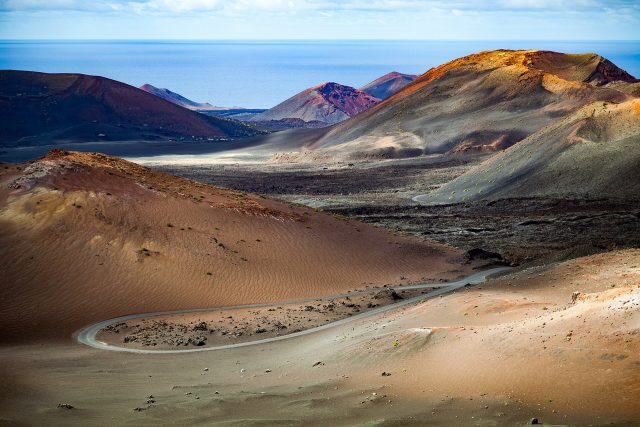
Lanzarote is an island of contrasts. Black lava fields stretch toward the horizon, interrupted by vineyards or the white flash of a village. The harshness of the landscape is softened by the people who have made it home, and the Church of Nuestra Señora de los Remedios stands as part of that balance. It reminds you that beauty isn’t always obvious—sometimes it’s in the quiet persistence of a building that has weathered time, or in how a community gathers to celebrate and carry on.
If you’re in Yaiza, walk up the hill. The path is lined with low stone walls that have stood for generations. When you reach the church, step inside. The coolness of the stone, the light through the small windows, the faint echo of footsteps—it all adds up to something real. This isn’t a place for selfies or quick visits. It’s a place to pause, to listen, and to let the island reveal itself. And if you’re lucky, you might see what makes Lanzarote more than just a destination—it’s a way of life.