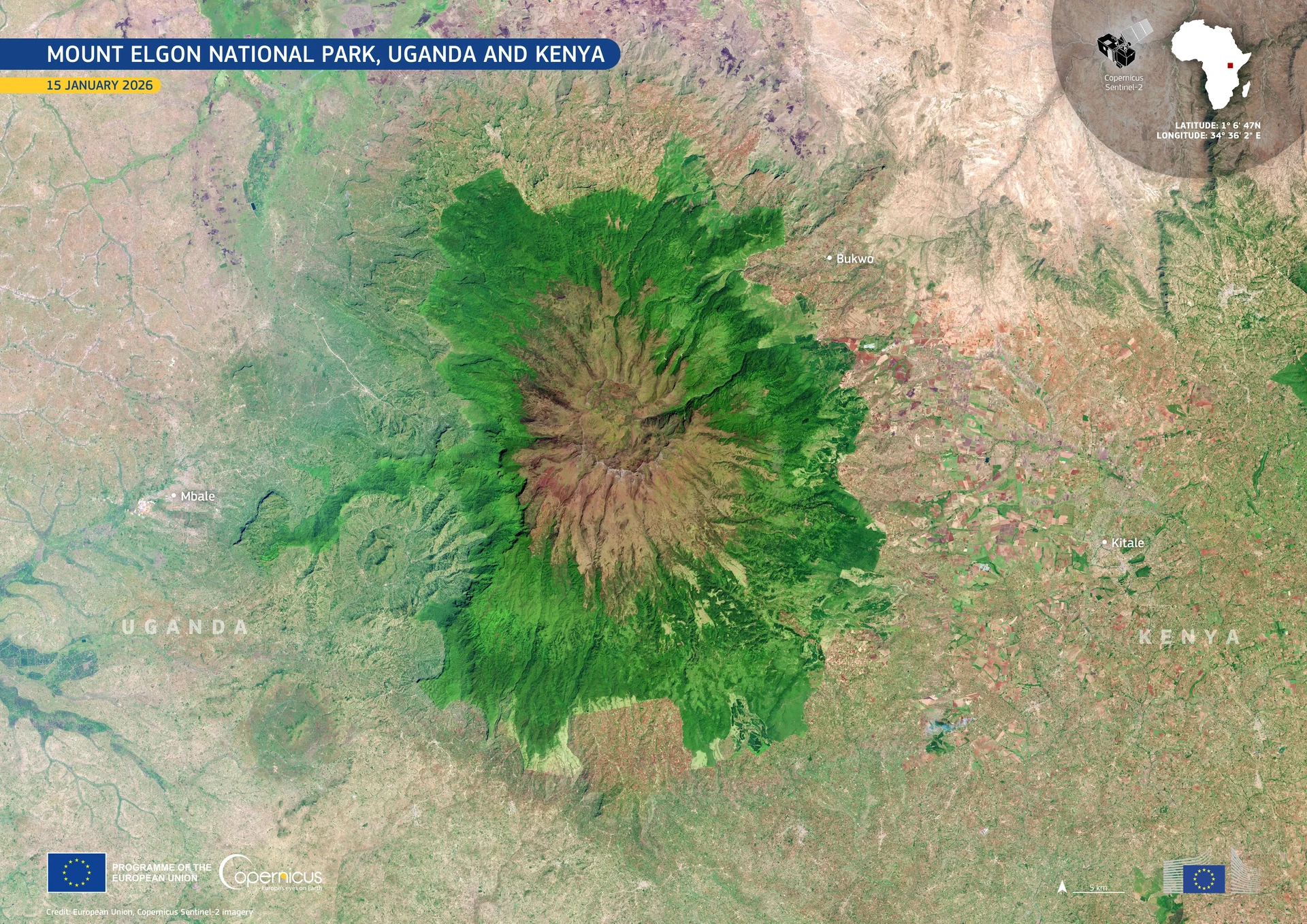
Mount Elgon National Park feels like a world apart from the Kenya most travelers imagine. There’s no endless savanna here, no prides of lions or herds of elephants framed against the horizon. Instead, the park is defined by the mountain itself—one of Africa’s oldest volcanic peaks, its slopes draped in dense forests, hidden waterfalls, and caves that seem to breathe with time. Elgon isn’t as towering as Kilimanjaro, but its sheer scale is humbling. The caldera stretches nearly eight kilometers across, a silent testament to eruptions that shaped the land millions of years ago. For the Kalenjin and Bukusu people, the mountain has always been sacred, a place where ancestors linger in the mist and the wind carries whispers of the past. Even now, some communities leave offerings of grain or cloth at cave entrances, a quiet acknowledgment of the spirits they believe still dwell here.
The journey into the park begins where the farmland around Kitale gives way to wildness. The road winds upward through banana groves and tea plantations, then suddenly dissolves into a wall of forest. There’s no pavement, just a dirt track that turns to mud after rain, forcing you to slow down. That’s part of the point—Elgon doesn’t reward haste. The park entrance sits at around two thousand meters, and from the first steps, it’s clear this is a place for those willing to move at the mountain’s pace. The air is cool and damp, thick with the scent of moss and decaying leaves. Birds call from the canopy, and something unseen rustles in the undergrowth. Elephants roam these forests, but spotting one is rare. More likely, you’ll see black-and-white colobus monkeys swinging through the trees or the flash of a turaco’s crimson wings.
The caves are the heart of Elgon, and Kitum Cave is the most famous. It stretches two hundred meters into the mountain, its walls scarred by the tusks of elephants that once came here to mine salt. Guides say the elephants still visit at night, though few have seen them. The entrance yawns like a mouth, its edges softened by moss, and inside, the darkness is absolute, broken only by the steady drip of water. Other caves, like Makengi or Chepnyalil, are smaller but no less intriguing. They’ve sheltered warriors and hunters for generations, and now travelers huddle around fires inside, warming themselves after a downpour.
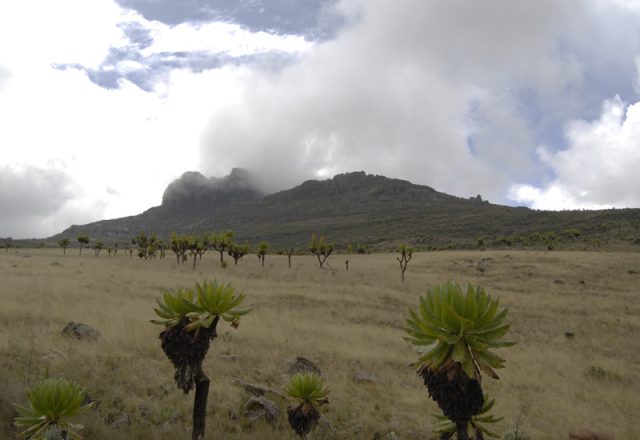
Climbing Elgon isn’t about conquering a peak—it’s about stepping into a different rhythm. The trail starts in the forest, where trees are tangled with vines and the ground is a carpet of fallen leaves. After a few hours, the trees thin, revealing heathland dotted with low shrubs and wildflowers. The air grows thinner, the sky closer. By four thousand meters, the landscape shifts again, becoming a rocky expanse where only hardy grasses cling to life. The summit, Wagagai, stands at 4,321 meters, but reaching it doesn’t require technical gear. The descent is quicker, though by then, every step feels like an effort, your legs heavy with fatigue.
Beyond the caves and the summit, there are other reasons to linger. Eldoret Falls tumbles over a cliff, its spray catching the light to form rainbows. In the rainy season, the water roars, and the air around it is cool and fresh. Jackson’s Lake, a small, quiet body of water ringed by forest, is another spot worth visiting. There’s little fish in it, but herons and kingfishers are common, and if you’re lucky, you might spot a crowned crane. Local guides know hidden paths to meadows where orchids bloom in season and morning mist curls between the trees.
This isn’t a place for those who measure their experience in checklists or Instagram shots. Elgon moves to its own slow beat. Mornings begin with fog blanketing the valleys, and by midday, the sun burns through, casting long shadows across the slopes. Evenings are spent around campfires, listening to the distant whoops of hyenas or the hoot of an owl. Nights are cold—even in a tent, you’ll need a sleeping bag—and in the morning, frost might glisten on the grass. During the rainy season, trails become slick, rivers swell, and the forest comes alive with birdsong and the soft patter of water on leaves.
For travelers used to crowded safari routes, Elgon can feel almost empty. There are no souvenir stalls, no tour buses, no orchestrated wildlife encounters. Instead, there are quiet trails, chance meetings with herders grazing cattle on the slopes, and long conversations with guides who grew up in the nearby villages. They’ll point out elephant tracks, teach you to recognize the call of a turaco, and share stories of the spirits that still wander the forest. Whether you believe them is up to you.
Elgon doesn’t offer instant gratification. To understand it, you need to spend time here—waking before dawn to watch the first light paint the summit pink, walking through the forest with the crunch of leaves underfoot, sitting by a fire under a sky dense with stars. There’s no dramatic savanna or snow-capped grandeur, but something deeper: a sense of timelessness, of a place that has existed for millennia and will continue long after you’ve left. Maybe that’s why those who come here often find themselves returning.