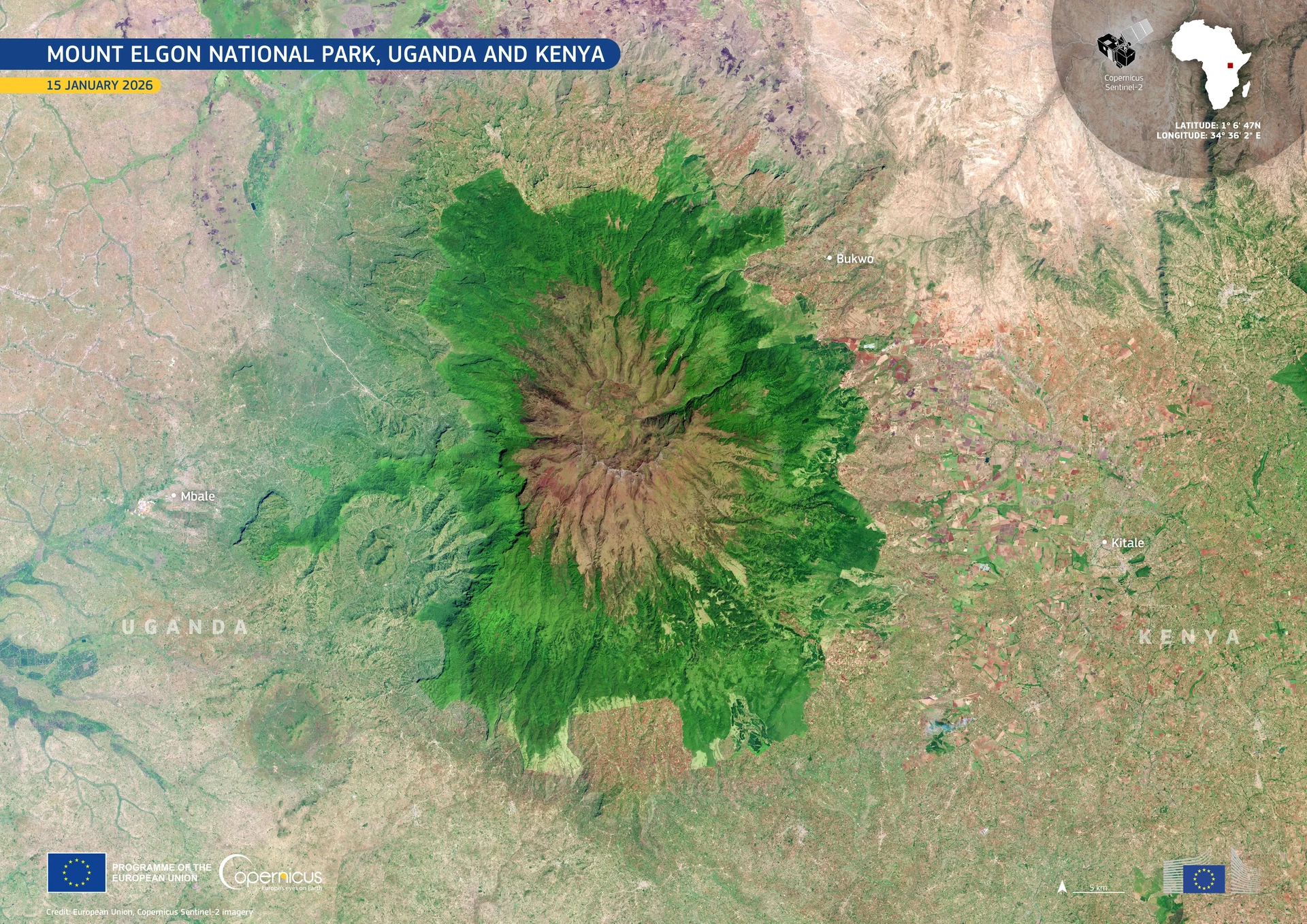
Mount Elgon stands quietly on the border between Kenya and Uganda, often overlooked in favor of its more famous neighbors like Kilimanjaro or Mount Kenya. Yet its presence is no less commanding. This ancient volcano, one of the oldest in Africa, last erupted roughly twenty-four million years ago, and time has softened its once-fierce contours. The slopes have mellowed into gentle, forested hills, while the summit has settled into a vast plateau crowned by a caldera so wide it feels like a hidden world. Stretching nearly eight kilometers across, the crater holds lakes, marshes, and even small waterfalls, all tucked away beneath towering rock walls. For the Saboat people who live in its shadow, the mountain is known as Masindja—the home of the gods—and they believe it shelters the spirits of their ancestors.
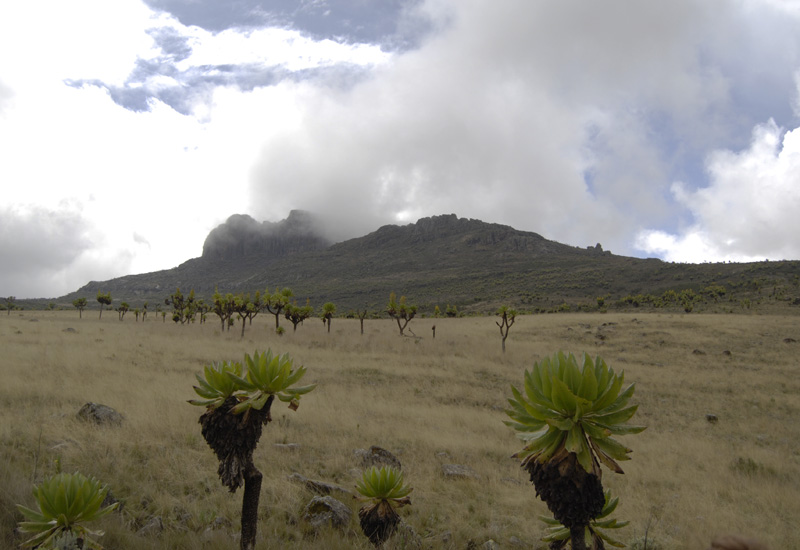
At just over four thousand meters, Elgon is modest by African peak standards, but that doesn’t make the climb any easier. The trails here are varied and demanding, especially when they wind through dense forests where humidity clings to the air and the vegetation grows thick enough to muffle sound. Lower down, giant lobelias and heather trees rise like sentinels, while higher up, the landscape shifts to alpine meadows and then to windswept, rocky barrens. Rain turns the paths slick, and fog can roll in without warning, swallowing landmarks whole. Yet this unpredictability is part of the appeal. Those who come aren’t chasing a summit for its own sake; they’re seeking something quieter—a sense of connection to a place that feels untouched by time.
The Kenyan side of Mount Elgon is protected within Mount Elgon National Park, established in 1968, though people have lived in these hills for far longer. Archaeological finds suggest that hunter-gatherers roamed here in the Stone Age, and later, farmers settled the lower slopes. By the 19th century, Maasai herders were driving their cattle onto the highland pastures, a tradition that continues in some communities today. The park isn’t just a sanctuary for wildlife; it’s a place where the old ways still exist alongside the wild. Nearby towns like Kitale serve as gateways for visitors, offering a glimpse into the rhythms of rural Kenyan life before the climb begins.
Kitale itself is a town that most travelers pass through without a second thought. It lacks the bustle of Nairobi or the tourist infrastructure of Nakuru, but that’s part of its charm. Life here moves at a slower pace—mornings start with the scent of fresh bread from roadside bakeries, and evenings find elders gathered outside shops, talking in low voices. There are no luxury lodges or souvenir stalls, just a quiet, unassuming place where the mountain looms in the distance. For those heading to Elgon, Kitale is the last taste of civilization before the trail, a place to stock up on supplies and listen to the stories of local guides who know the mountain’s secrets.
A typical ascent takes four to five days, depending on the route. The most popular starts in the village of Endebess and winds through forests toward the Kitum and Makindu caves, which were once frequented by elephants searching for salt. The walls of these caves are scarred by generations of tusks, and the floors are still coated in mineral deposits that the animals licked away over centuries. Elephants visit less often now, but their presence lingers in the worn paths and the occasional footprint. Campsites along the way are simple clearings where travelers gather around fires at night, listening to the sounds of the forest and watching the stars emerge in a sky unspoiled by city lights.
The summit of Elgon doesn’t have the snow-capped drama of Kilimanjaro, but it has its own kind of magic. The caldera is a vast, enclosed space, its rocky walls rising like the sides of a natural amphitheater. At its center lies Suam Lake, shallow and dotted with reeds, while the rest of the crater floor is a mix of stone and sparse vegetation. On clear days, the view stretches across the plains of Kenya and Uganda, with other mountain ranges visible in the distance. Even when clouds roll in, there’s a stillness here that feels almost sacred, broken only by the call of a bird or the rustle of wind through the grass.
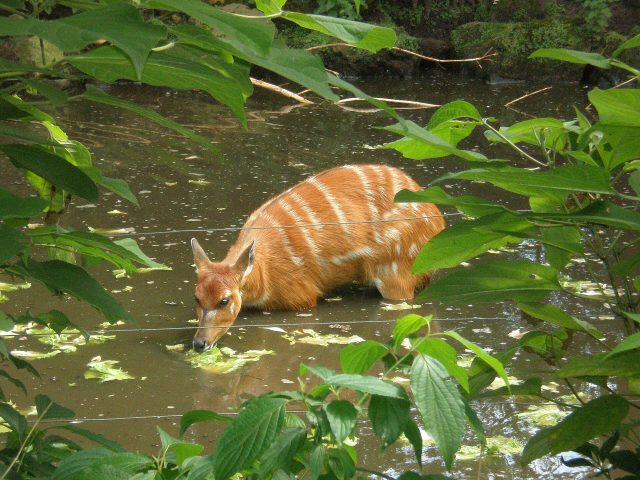
Elgon is more than just a mountain—it’s a living ecosystem. The forests are home to black-and-white colobus monkeys, leopards, buffalo, and even elephants, though the latter tend to avoid human contact. Over three hundred species of birds flit through the trees, from the iridescent turacos to tiny sunbirds that dart between flowers. The landscape changes with the seasons: in the rains, the slopes burst into bloom, and streams swell into rushing torrents; in the dry months, the forest takes on a quieter, more austere beauty. It’s a place of contrasts, where life adapts and thrives in ways that feel both ancient and fragile.
For those who aren’t up for a multi-day trek, there are gentler ways to experience the mountain. A day trip to the Chepkitale waterfalls offers a taste of the landscape without the climb, while shorter hikes to the caves provide a glimpse of Elgon’s geological wonders. Local guides lead walks through the forest, pointing out rare plants and sharing stories about the people who have lived in these hills for generations. Near Kitale, tea and coffee farms welcome visitors, offering a chance to see how the crops are grown and processed—a reminder that the land here sustains more than just wildlife.
What makes Mount Elgon special is the way it reveals itself slowly. There are no crowds, no souvenir vendors, no pressure to perform for an audience. Instead, there’s space—space to breathe, to listen, to notice the small things. The mountain doesn’t demand attention; it earns it, one quiet moment at a time. Maybe that’s why those who come here often return. Not for the bragging rights of a summit photo, but for the chance to stand in a place where the past feels close enough to touch, and the wind carries whispers of something older than memory.