Kakadu National Park is one of those rare places where the land doesn’t just exist—it speaks. Stretching across the northern edge of Australia’s Northern Territory, its vast expanse feels more like a country than a park, a world where every turn reveals something unexpected. Towering sandstone escarpments rise abruptly from the plains, their surfaces etched with ancient rock art that has witnessed tens of thousands of years of human history. Below them, wetlands swell and shrink with the seasons, teeming with birds, crocodiles, and fish that thrive in the shifting waters. Dense monsoon forests hide waterfalls and quiet billabongs, while open savannas stretch toward the horizon, broken only by the occasional termite mound or wandering wallaby.
The park takes its name from the Gagudju people, one of the many Aboriginal groups who have called this land home for at least fifty thousand years. For them, Kakadu is not a wilderness to be preserved but a living landscape, rich with ancestral stories and sacred sites. The rock art scattered across the park is their history written in ochre and charcoal—some of the oldest known human art in the world. Figures of hunters, animals, and spirit beings cover the walls of shelters and overhangs, their meanings still understood by the traditional owners who continue to use these sites in ceremonies. Walking among them, you sense that this history isn’t frozen in time; it’s still unfolding, passed down through generations in songs, dances, and the quiet knowledge of the land.
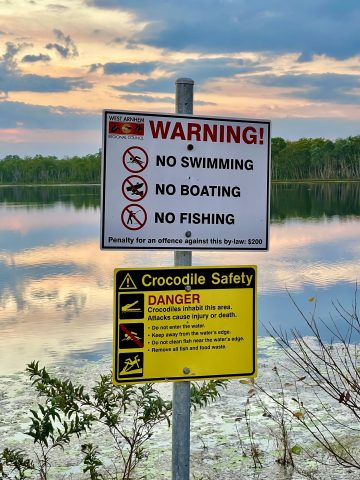
The seasons here are dramatic, reshaping the park in ways that feel almost theatrical. From November to April, the wet season turns Kakadu into a vast, shimmering wetland. Rivers burst their banks, flooding the lowlands and creating a labyrinth of waterways where magpie geese, jabirus, and egrets gather in their thousands. The air hums with the calls of birds, while saltwater crocodiles patrol the shallows, their presence a reminder of the land’s wildness. Fishermen arrive from across Australia, drawn by the promise of barramundi, a prized fish that thrives in the warm, murky waters. By May, the rains retreat, and the landscape begins to dry. The floodplains recede, revealing golden grasses and cracked earth, while the escarpments stand stark against the sky. The contrast is striking—a land of extremes, where life clings to the edges of both abundance and scarcity.
One of the most compelling places in the park is Ubirr, a low sandstone outcrop where the rock art is particularly vivid. The paintings here are a mix of the practical and the spiritual: images of fish and turtles, hunters with spears, and the mysterious Mimi spirits, slender figures said to have taught humans how to hunt and paint. Some of the art is so well-preserved that the ochre still glows in the sunlight, as if it were applied yesterday rather than thousands of years ago. Local guides explain that these aren’t just pictures—they’re stories, maps, and lessons, a visual language that connects the past to the present. Climbing to the top of Ubirr at sunset, you can see the floodplains stretching into the distance, the last light catching the water in flashes of gold and silver. It’s one of those moments that makes the long journey here feel worthwhile.
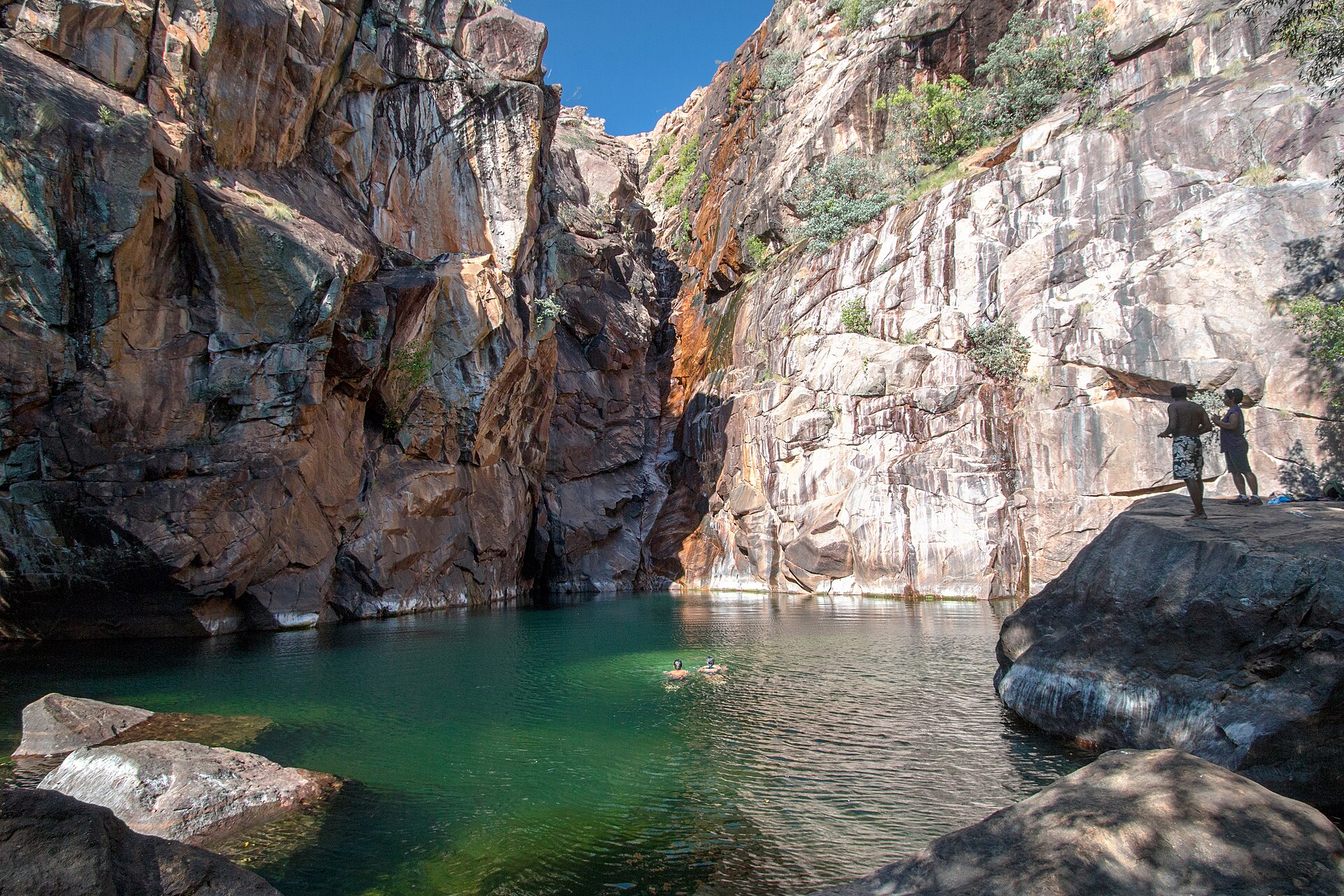
In the southern part of the park, the Jim Jim and Twin Falls plunge from the escarpment into deep gorges, their power shifting with the seasons. During the wet, they roar with water, sending mist high into the air and turning the surrounding forest into a steamy, green world. In the dry, the falls shrink to a trickle, but the journey to reach them becomes an adventure in itself. The hike to Jim Jim involves scrambling over boulders and wading through shallow pools, while Twin Falls is best approached by boat, gliding past towering cliffs that seem to lean over the water. Along the way, you might spot a goanna sunning itself on a rock or hear the rustle of a wallaby in the undergrowth. These walks aren’t just about the destination; they’re a chance to move through the landscape at its own pace, to feel the heat of the sun and the coolness of the shade, to notice the small details that make Kakadu feel alive.
What sets Kakadu apart is the way people and land have shaped each other over millennia. The Aboriginal communities here still live on their traditional country, hunting, fishing, and gathering as their ancestors did. They know which plants can heal, which animals are in season, and how to read the signs of the land—when the water will rise, when the bush plums will ripen. For visitors, there are opportunities to learn from them, whether it’s through a guided walk, a demonstration of traditional fire-making, or a meal of freshly caught fish cooked over an open flame. It’s a rare chance to see the world through the eyes of people who have never lost their connection to it, who understand that survival here isn’t about domination but about balance.
There’s no luxury in Kakadu, no grand resorts or manicured paths. What you find instead is something far more valuable: a place that hasn’t been tamed. Staying here means sleeping in a tent under a sky so clear you can see the Milky Way spill across it, waking to the sound of birdsong, and spending your days moving at the rhythm of the land. You might cast a line into a billabong at dawn, watching the water ripple as a barramundi takes the bait, or sit quietly by a rock pool, listening to the stories of a guide who has spent their life in these hills. It’s not the kind of place you visit for a quick photo or a checklist of sights. It’s the kind of place that lingers in your memory long after you’ve left, a reminder that the natural world isn’t just a backdrop to our lives but something we’re still a part of, if we take the time to listen.